
Cauvery Water Dispute: SC Seeks Fresh Update As Karnataka Says It Will Struggle To Maintain 12,000 Cusecs Flow To Tamil Nadu
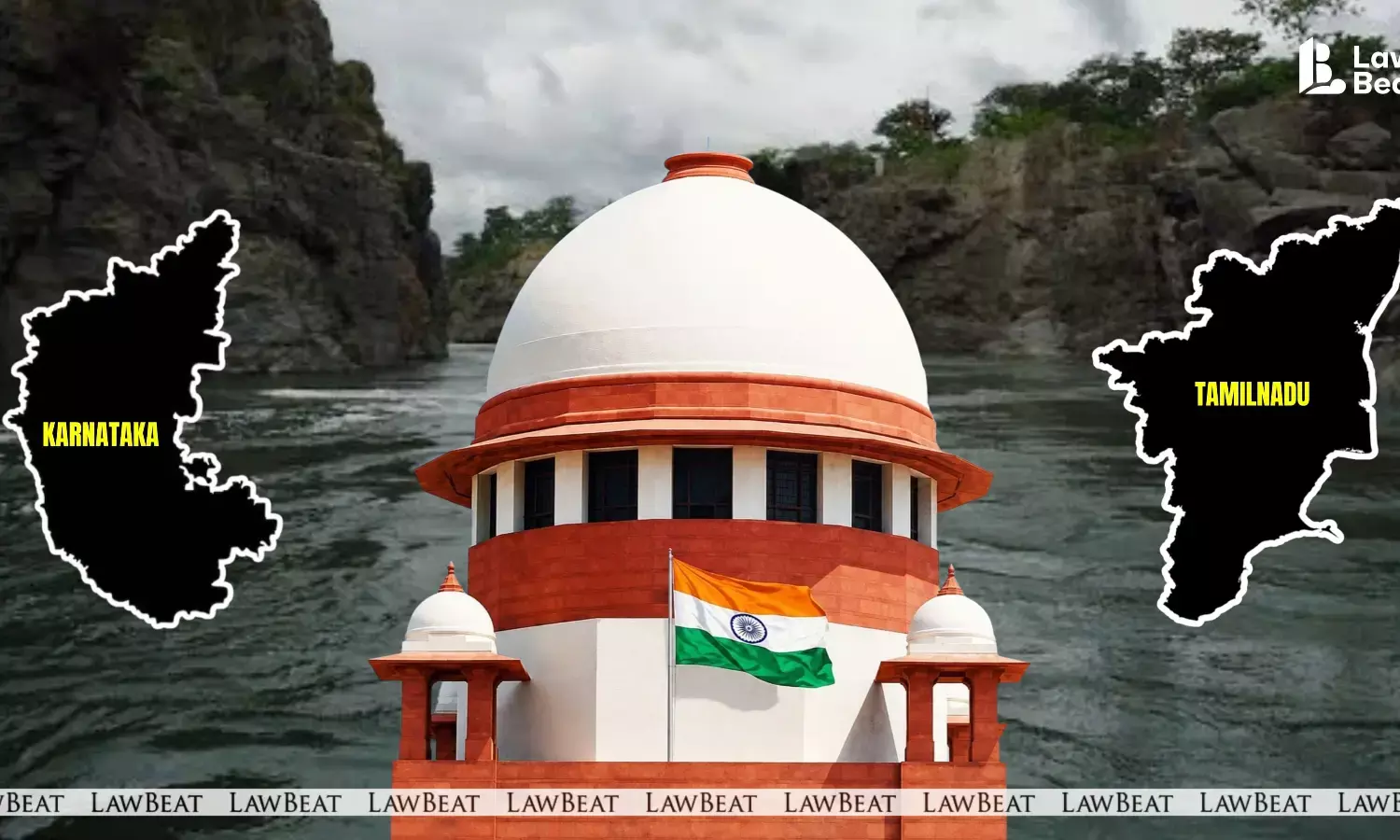
Supreme Court adjourned the Cauvery water dispute hearing as Karnataka cited water distress and assured compliance with the CWMA's 12,000-cusecs flow direction
The Supreme Court on Monday adjourned the hearing on Tamil Nadu's plea seeking directions to Karnataka to release its due share of Cauvery water, after Karnataka maintained that it was complying with the directions of the Cauvery Water Management Authority (CWMA) despite severe water distress in the basin.
Tamil Nadu submitted that while the Cauvery Water Regulation Committee's recommendations and subsequent CWMA directions required Karnataka to release water, the actual flow had remained substantially below its entitlement. It told the Court that Karnataka currently had around 76% live storage in its reservoirs and could not retain the entire reservoir storage when Tamil Nadu was facing difficulty in supplying water to farmers.
Background
Notably, Dravida Munnetra Kazhagam (DMK) had moved the Supreme Court seeking urgent release of Cauvery River water by Karnataka to Tamil Nadu in compliance with the recent directions of the Cauvery Water Management Authority which recently upheld the direction of the Cauvery Water Regulation Committee to release 3500 cusecs per day to Tamil Nadu, for 15 days.
The Cauvery water dispute is a long-standing dispute between Karnataka and Tamil Nadu which started way back in 1974 when Karnataka, the upper riparian State, started diverting water without Tamil Nadu's consent.
DMK has claimed that as per the final order of the Tribunal, the monthly stipulated flows to be ensured by Karnataka at Biligundlu during June to January every year are as follows: June to September - 123.14 TMC, October to January - 44.11 TMC, June to January - 167.25 TMC.
The application further highlights that in the current water year, the South-West Monsoon has been deficient in the Cauvery basin. It is alleged that the flows realized at Biligundlu have been dismally low - only about 10% of what is stipulated for the period. According to the applicant's estimate (accounting for distress-sharing basis), the backlog due to Tamil Nadu at Biligundlu stood at 9.46 TMC on July 26 (to fulfill which requirement about 7000 cusecs per day must be released for 15 days).
DMK submits that despite the decisions of the statutory authorities, Karnataka has not released the water. On the contrary, the state representatives have been reported as saying that the state will not release the water. The application underlines the significance of the current period by highlighting that out of the annual quantum of 167.25 TMC, nearly 3/4th is required to be realized at Biligundlu between June-September, as this is the time when the Kuruvai paddy crop is raised and operations for the Samba crop are undertaken.
Last year, Supreme Court had also refused to interfere with the Mekedatu Reservoir Project proposed by the Karnataka government in Cauvery river against which a plea was made by State of Tamil Nadu against the balancing reservoir at Mekedatu in Kanakapura Taluk of Bengaluru South District on the Karnataka-Tamil Nadu border.
Earlier, Union government had clarified that it has not accorded “any approval" for the construction of new dams across the Cauvery river. In a written reply to a question in the Rajya Sabha, Raj Bhushan Choudhary, minister of state for Jal Shakti, had said no permission was given for a new dam.
Notably, in 2023 the Supreme Court had also refused to interfere with the Cauvery Water Management Authority (CWMA) order on directions to the State of Karnataka on releasing Cauvery water to Tamil Nadu. A bench comprising Justices BR Gavai, PS Narasimha and Prashant Kumar Mishra had opined that the CWMA and CMRC consisted of various experts in the field of water resource management they had taken into consideration the shortfall of water this year before passing said order.
Case Title: State of Tamil Nadu v. State of Karnataka
Bench: Justices Vikram Nath and Sandeep Mehta
Hearing Date: August 17, 2026