
CJI Surya Kant Applauds Delhi High Court For Taking "Disproportionate Burden" Off Supreme Court
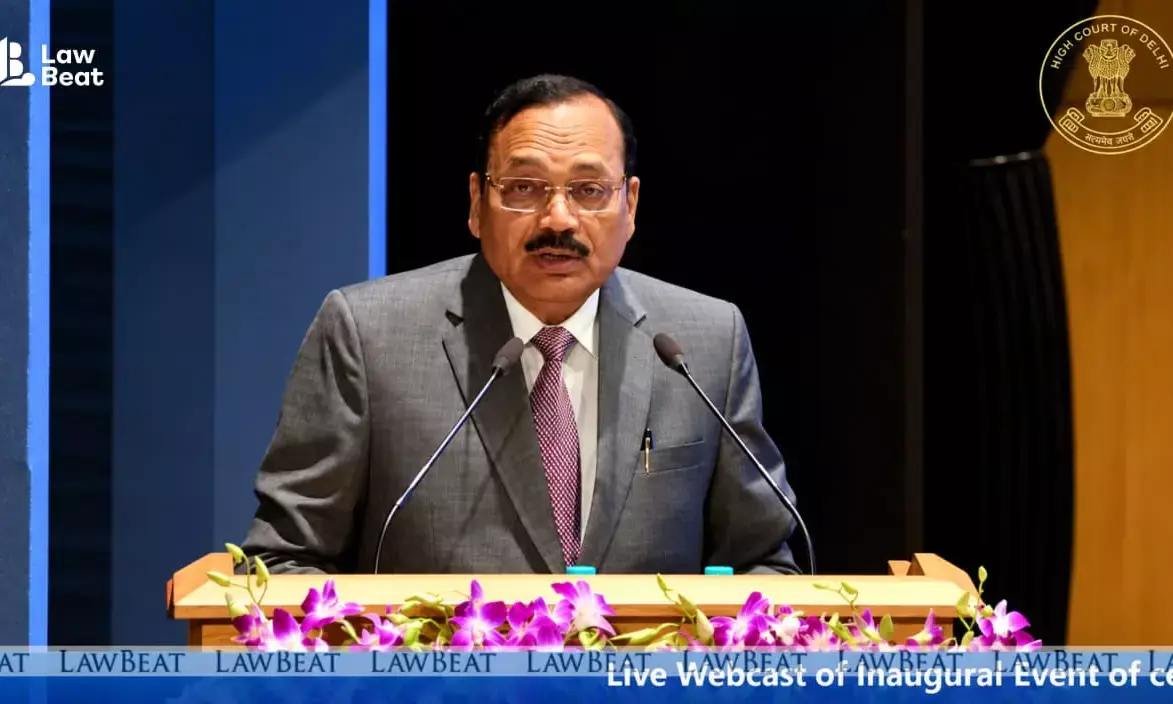
CJI Surya Kant spoke at the inaugural event marking the Delhi High Court's diamond jubilee.
Chief Justice of India Surya Kant delivered the presidential address at the inaugural event of celebration of 60 Years of Delhi High Court today.
CJI Surya Kant complimented the special relationship shared between the High Court and the Supreme Court and applauded it for taking off many cases from the supreme court's plate and sharing the burden.
"As a compliment, I would say that the Supreme Court of India has always maintained a special relationship with the Delhi High Court, not because we are practically neighbours rather because this High Court takes off disproportionate burden of the Supreme Court as compared to other High Court. Many a times when a matter is mentioned before us, we find ourselves reminding the Counsel that the Delhi High Court is just around the corner and that relief may well await them there before their matter, even reaches our board. Behind this affectionate familiarity, however, lies a responsibility of extraordinary magnitude," the CJI has said.
Tracing the High Court's history, the CJI remarked that when the court was established in 1966, it was not merely another High Court serving a growing city but it stood at the very seat of the nations, political and administrative life.
"Questions of government authority, individual liberty, and public accountability were bound to reach its courtrooms with consequences extending for beyond the capital. Those responsibilities have only multiplied many times with the passage of time. And the past few decades, Delhi has expanded in every direction, its commerce has flourished and millions more have made it. Their home litigation has naturally grown as has the number of advocates and litigants before the court. What began as a court of just four judges today and institution that resolve disputes of remarkable variety and complexity," CJI added.
CJI also highlighted the specialised intellectual property division of the High Court which has earned a formidable reputation at home and abroad for the quality of its jurisprudence.
"We now confront questions, scarcely imaginable, a decade ago. Whether a work generated by artificial intelligence can claim copyright protection, how the law should do deepfakes and how innovation be encouraged without letting technology undermine individual rights. Such questions will rarely find answers in the statute books where the law is silent. It is the constitution that must guide us. The Delhi High Court can meet the unknown with an open mind, with a changing world without ever losing sight of the person it exists to protect," he said.
Notably, Justice Vikram Nath of the Supreme Court also spoke at the inaugural event. He attributed the Delhi High Court's standing over six decades to the collective work of its judges, its Bar, its registry and its staff, observing that the Court's location in the national capital has placed on it responsibilities that reach well beyond the affairs of Delhi.