
CJI Surya Kant, Russian Supreme Court Chairman Sign Landmark MoU On Judicial Cooperation
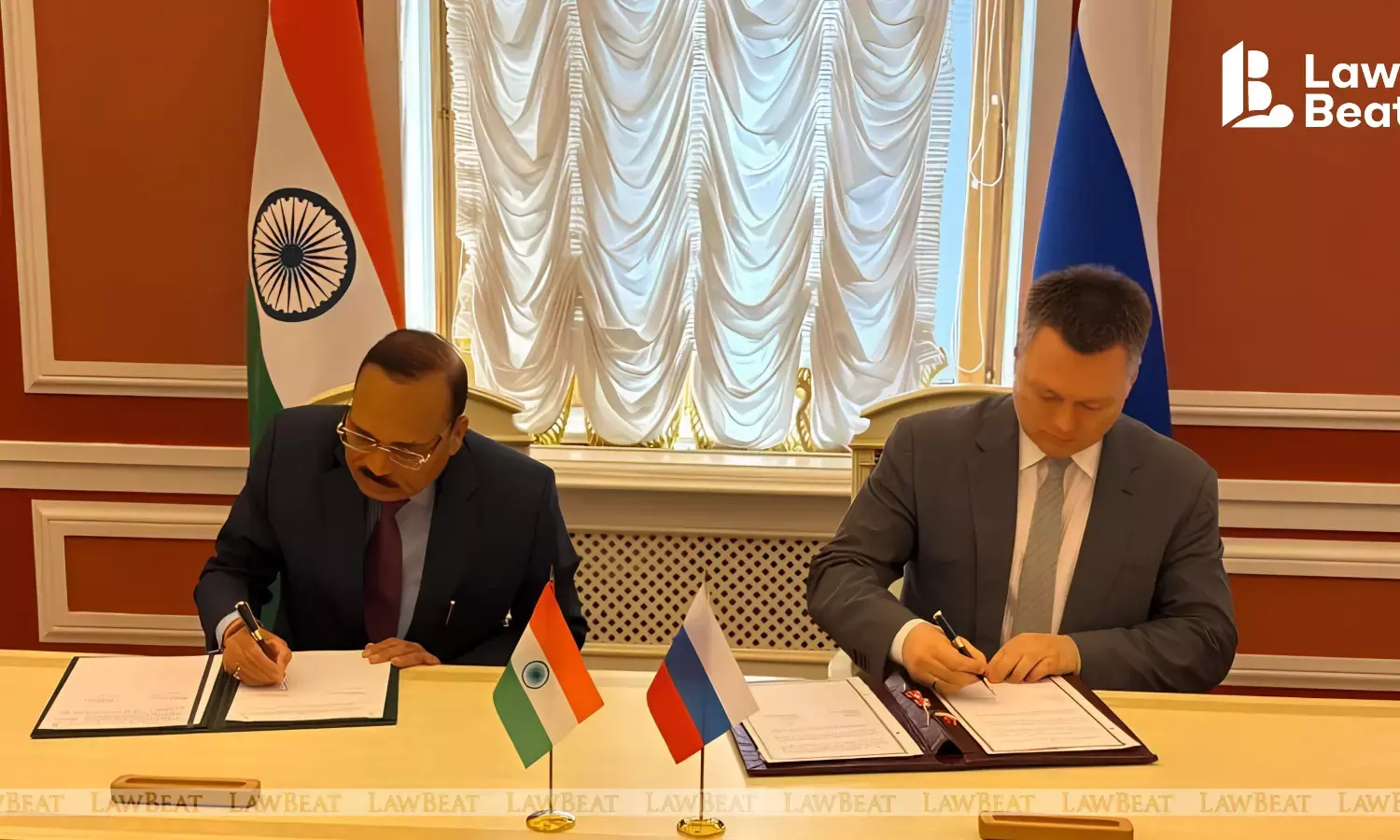
Chief Justice of India Surya Kant and Russian Supreme Court Chairman Igor Krasnov signed a landmark MoU in Moscow to strengthen judicial cooperation, technology integration and professional training
In a first-of-its-kind initiative, the Supreme Courts of India and Russia on Tuesday signed a landmark Memorandum of Understanding (MoU) in Moscow to strengthen judicial cooperation, with a particular focus on technology-driven court administration and professional capacity-building.
The MoU was signed by Chief Justice of India (CJI) Surya Kant and Chairman of the Supreme Court of the Russian Federation Igor Krasnov during the Indian delegation's visit to Moscow.
The agreement seeks to institutionalise cooperation between the apex courts of the two countries through the exchange of judicial experiences, sharing of best practices in information technology, and programmes relating to professional training and personnel development.
Addressing a meeting with the Russian delegation, CJI Surya Kant highlighted the common challenges faced by the two jurisdictions in preserving public confidence in the administration of justice while adapting to rapid technological change.
The CJI emphasised that technology has become an indispensable component of India's justice delivery system, pointing to initiatives such as digitisation of court records, virtual hearings, video conferencing facilities and online access to court records.
He also highlighted the increasing use of Artificial Intelligence in judicial administration and legal research. Referring to the Supreme Court's initiatives, the CJI noted that tools such as SUVAS (Supreme Court Vidhik Anuvaad Software) have enabled translation of judicial documents into multiple regional languages, while the recently launched AI-powered chatbot Su Sahy assists litigants, lawyers and the public with information relating to court procedures and case status.
At the same time, CJI Surya Kant stressed that the administration of justice must fundamentally remain a human endeavour. He underscored that artificial intelligence may assist judges by organising information and streamlining administrative processes, but it cannot determine outcomes, assess witness credibility, evaluate evidence or exercise judicial discretion.
The discussions between the two delegations centred on two key themes: the use of modern and advanced technologies in judicial practice and investment in judicial education, advanced training and capacity-building for court personnel.
The MoU marks a significant step in judicial diplomacy between India and Russia and is expected to facilitate greater institutional collaboration between the two Supreme Courts in the areas of technology, training and knowledge exchange.