
CJI Surya Kant Says Institutional Arbitration In India Must Build Trust To Compete Globally
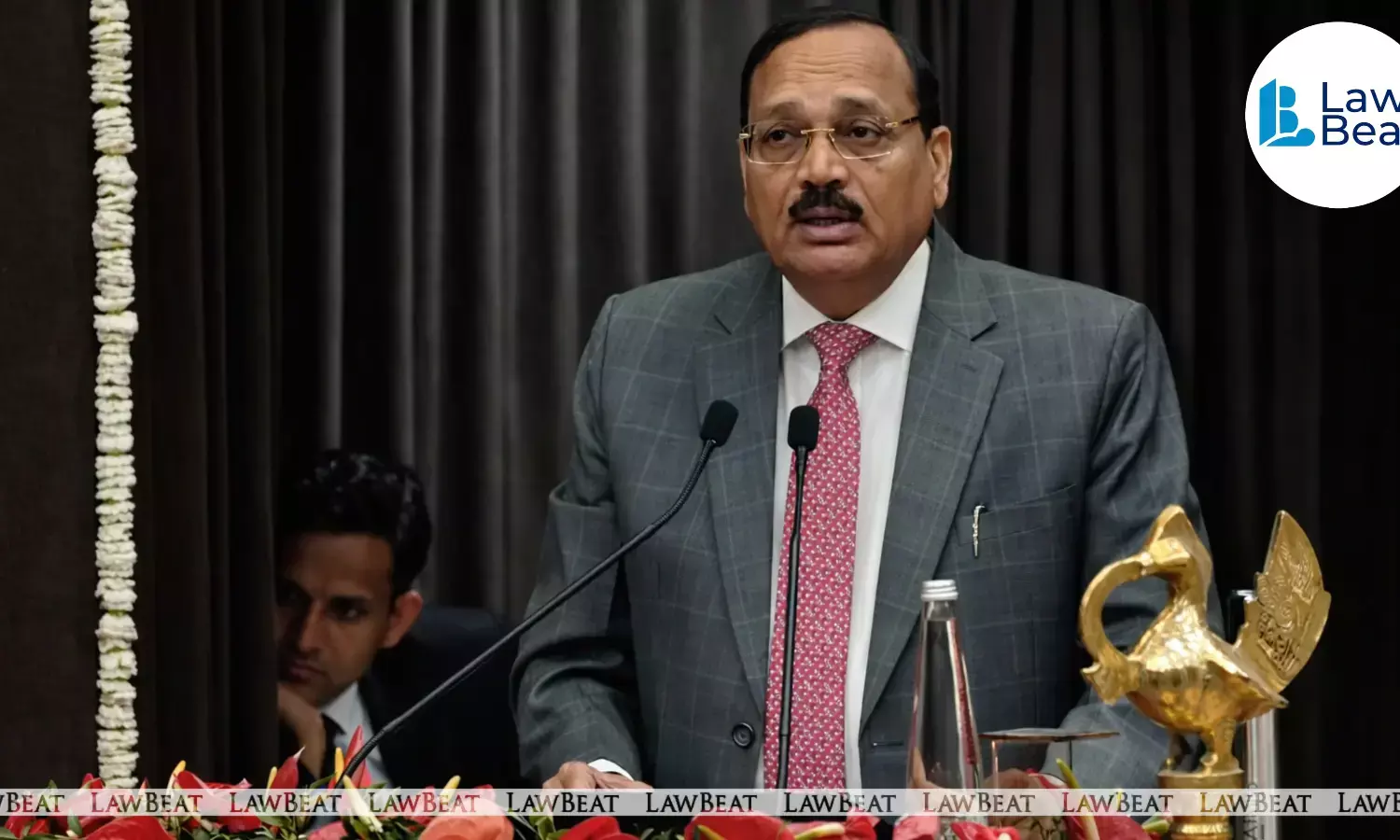
CJI Surya Kant has written to all High court Chief Justices calling for urgent action to fill up judicial vacancies.
Chief Justice of India Surya Kant on Saturday said that while India’s arbitration framework has matured significantly, serious challenges remain in building trust, strengthening institutional capacity and creating a robust pipeline of trained arbitral professionals.
Speaking after laying the foundation stone for the Gujarat High Court Arbitration Centre (GHAC) in Ahmedabad, the CJI said India must measure its arbitral ecosystem against the standards of leading global arbitral seats and the expectations of parties who opt for arbitration as a faster and more efficient alternative to litigation.
“I must acknowledge that India’s arbitration framework has by now matured considerably,” he said, referring to legislative reforms to the Arbitration and Conciliation Act that emphasise minimal judicial intervention, time-bound proceedings and neutrality in appointments. He added that judicial pronouncements have reinforced party autonomy and clarified doctrinal uncertainties.
However, he cautioned that institutional arbitration in India continues to occupy a smaller space than it should, with a significant number of disputes still proceeding through ad hoc arbitration. Many high-value institutional arbitrations, he noted, are also seated outside India.
“The question we must confront is not whether arbitration is viable. The question is whether our institutions inspire sufficient trust to become the most preferred choice and destination,” the CJI said.
Addressing the first major challenge; trust, he stressed that confidence in institutional arbitration depends on neutrality in appointments, procedural integrity and effective enforcement of awards. “That trust is not built by rules on paper. It is built through consistent, transparent and demonstrably fair practice over time,” he observed.
The second challenge, according to the CJI, is institutional capacity. Despite India’s large volume of commercial disputes, the number of institutional arbitrations remains disproportionately low. Many parties still prefer ad hoc mechanisms or courts because institutions have not adequately demonstrated the value they add. Institutional infrastructure, internal panels of arbitrators, case management systems and administrative competence, he said, are not matters of prestige but of relevance.
He described the third and most consequential challenge as professionalisation. Arbitration, he said, is a specialised discipline requiring legal acumen, case management skills and sensitivity to commercial realities. “India must invest seriously in training arbitrators and developing a coherent pipeline of qualified arbitral professionals,” he said, warning that institutional expansion without quality enhancement would undermine credibility.
The CJI emphasised that the way forward lies in institutional honesty; assessing India’s arbitral framework not by incremental improvement but by global benchmarks.
The event was also addressed by Gujarat Chief Minister Bhupendra Patel, who highlighted the growing importance of institutional arbitration within India’s legal and commercial framework, particularly for a state that leads in industrial and technological development.
The upcoming GHAC facility will include 16 arbitration conference rooms, seven mediation rooms and an online dispute resolution system to cater to both domestic and international disputes. The Centre also hosted a two-day conference on “Institutional Arbitration at Crossroads: Challenges and the Way Forward,” bringing together arbitrators, advocates and stakeholders to deliberate on the future of institutional arbitration in India.
In a related news, delivering the keynote address at a State-level symposium on “Mediation: Dialogue as Cornerstone of Justice” organised by the A.P. State Legal Services Authority (APSLSA) in Vijayawada, the CJI said mediation is gaining wider acceptance as an effective tool for amicable dispute resolution. He noted that settlements reached through mediation are enforceable as decrees under the 2023 legislation, reinforcing its legitimacy within the justice delivery system.
Justice Surya Kant observed that mediation is no longer merely an alternative mechanism but an integral part of dispute resolution, capable of significantly easing the burden on conventional courts. He pointed out that while special courts, such as family courts, have helped reduce pendency to some extent, mediation can further streamline caseloads by resolving disputes in a less adversarial manner. Compared to arbitration, mediation is less expensive and less time-consuming, he added, noting its popularity in foreign jurisdictions.
Calling upon both the Bench and the Bar to actively promote mediation, the CJI emphasised that the temperament, conduct and integrity of mediators are crucial to successful outcomes. Stressing the importance of professional training, he said mediators must understand the nuances of the process to achieve meaningful settlements. Referring to Indian mythology, he remarked that Lord Krishna’s attempt to broker peace before the Mahabharata war could be seen as an early example of mediation, underscoring the longstanding cultural roots of dialogue-based resolution.