
CJI Surya Kant Seeks Report On Andhra HC Judge Over Lawyer Custody Row; Bar Intervention Halts Arrest
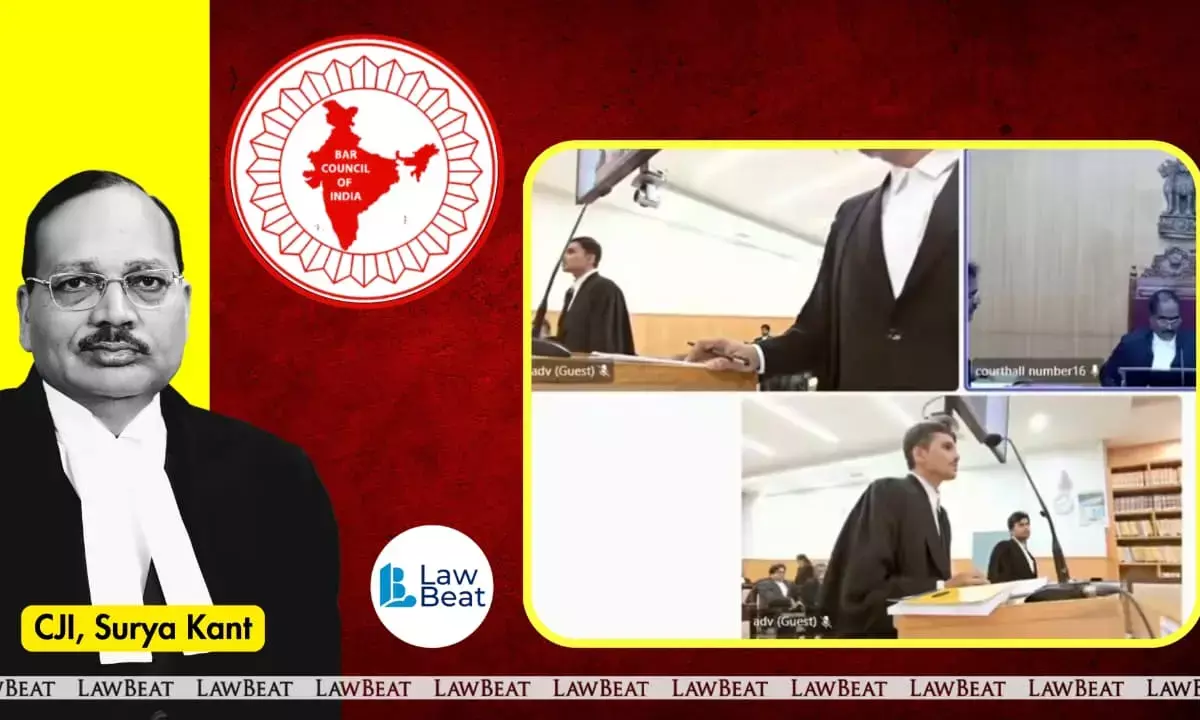
CJI sought report after Andhra Pradesh High Court courtroom incident where a lawyer custody direction was not enforced following Bar intervention
Chief Justice of India (CJI) Surya Kant has sought a report from the Andhra Pradesh High Court administration over a controversial courtroom exchange involving a lawyer, even as the direction to send the advocate to judicial custody was ultimately not enforced following intervention by the Bar.
The incident took place earlier this week before Justice Tarlada Rajasekhar Rao during the hearing of a petition challenging the issuance of a Look Out Circular (LoC) and the impounding of a passport.
The controversy stems from a hearing held on May 4. During the proceedings, Justice Rao reportedly rebuked the advocate appearing for the petitioner, criticising his conduct and questioning his professional standing. A video clip of the exchange, which has since circulated widely, shows the advocate apologising and pleading for leniency, stating that he was unwell and “begging for grace.” Despite this, the judge directed police personnel to take him into custody for 24 hours.
Subsequently, the Court recorded in its order that the counsel had behaved “indolently” and directed the police to take him into custody, while also asking other advocates present in court to identify themselves as witnesses to the incident. The judge further directed the lawyer to appear before the judicial registrar.
However, the direction was not carried out. According to reports, members of the High Court Bar Association intervened, urging restraint, following which the situation de-escalated and the custody order was not executed. The matter was thereafter adjourned.
Senior Advocate Sanjay Hegde criticised the conduct, stating that such behaviour was unacceptable and that the Bar must respond.
Supreme Court lawyer and political spokesperson Jaiveer Shergill also weighed in, emphasising that judicial office does not grant a licence to mistreat or humiliate members of the Bar and underscoring the need for dignity in courtroom conduct.
In a related news, the Bar Council of India (CBI) has written to the CJI seeking urgent intervention over an incident involving an Andhra Pradesh High Court judge who allegedly directed that a young advocate be taken into police custody during court proceedings.
In a letter dated May 6, BCI Chairman Manan Kumar Mishra flagged concerns regarding the conduct of Justice Tarlada Rajasekhar Rao, stating that the episode raises serious questions about judicial temperament, proportionality, and fairness.
In its letter, the BCI expressed strong disapproval of the direction, stating that such actions could have a “chilling effect” on young members of the Bar and undermine confidence in the justice system. “An advocate, particularly a young member of the profession, may be corrected, cautioned, or proceeded against in accordance with law. However, sending a young advocate to judicial custody for 24 hours in such a manner appears prima facie grossly inappropriate,” the Council stated.
The BCI also noted that the dignity of the court is not enhanced when a lawyer is publicly humiliated for a procedural lapse, adding that such incidents instill fear among junior advocates. Importantly, the Council took the position that there was nothing objectionable in the advocate’s conduct in the present case.
Calling for institutional response, the BCI urged the Supreme Court to take cognisance of the incident and sought directions for calling the video recording of the proceedings, the order passed, and all related materials. The letter further emphasised that judicial authority must be exercised with restraint and sensitivity, especially when dealing with young lawyers who are still in the early stages of their careers. “A young lawyer standing before the Court is not an adversary of the Judge. He is an officer of the Court, entitled to correction without humiliation,” the BCI stated.
Additionally, the Council sought administrative measures against the judge, including withdrawal of judicial work pending review, transfer, and appropriate training on judicial temperament, court management, and Bar–Bench relations.