
Conversion To Christianity Ends SC Status, No SC/ST Act Protection: Supreme Court
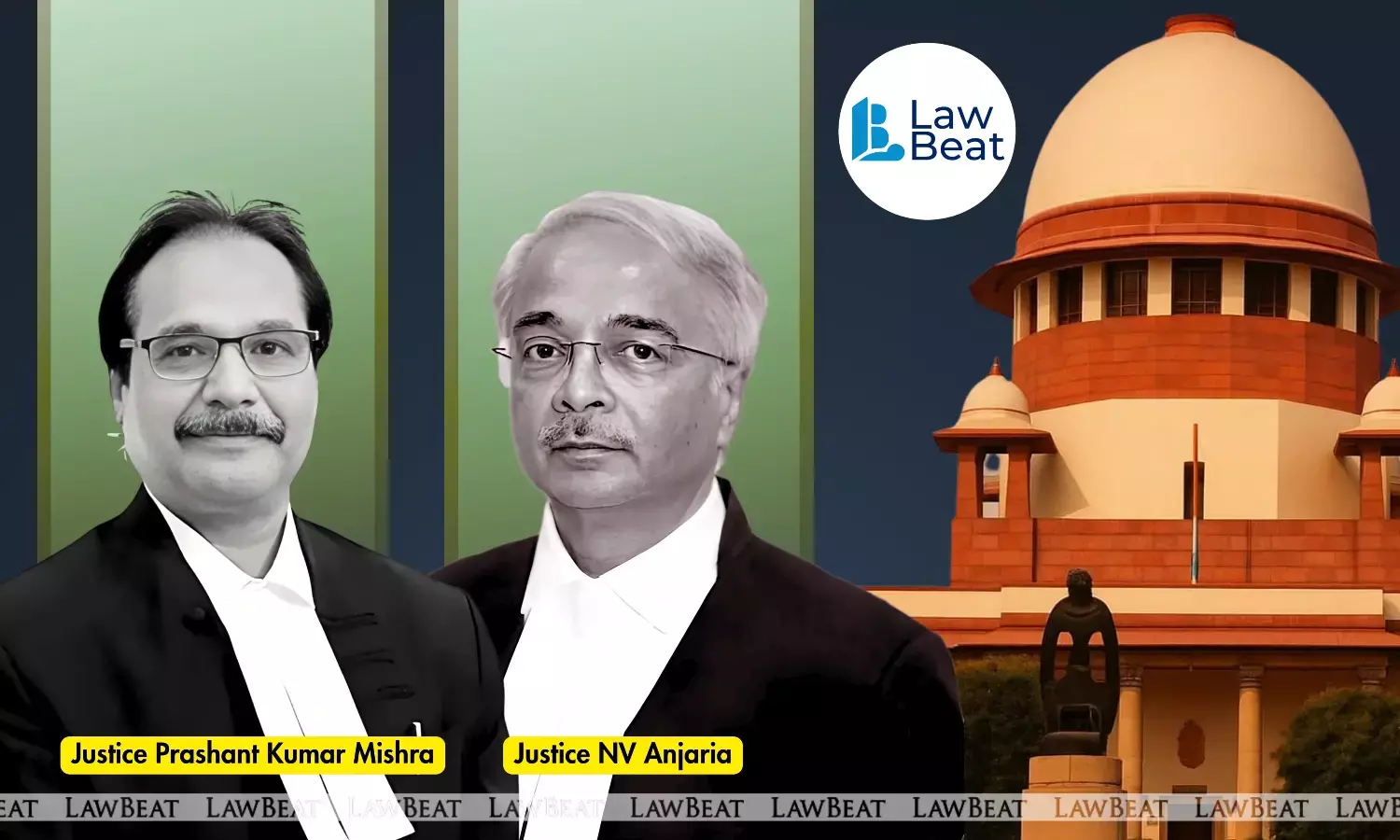
Supreme Court rules that conversion to Christianity results in loss of Scheduled Caste status and SC/ST Act protection
The Supreme Court on Tuesday held that a person who converts to a religion other than Hinduism, Sikhism or Buddhism ceases to be a member of a Scheduled Caste and cannot claim protection under the Scheduled Castes and Scheduled Tribes (Prevention of Atrocities) Act.
The bench of Justices Prashant Kumar Mishra and N V Anjaria upheld a judgment of the Andhra Pradesh High Court, ruling that conversion to Christianity results in the “immediate and complete loss” of Scheduled Caste (SC) status.
“No person who professes a religion other than Hindu, Sikh or Buddhist shall be a member of Scheduled caste. Conversion to any other religion results in loss of Scheduled caste status,” the Court held.
The judgment came in an appeal filed by a pastor, Chinthada Anand, who had challenged a May 2025 judgment of the Andhra Pradesh High Court. Anand had alleged that he was subjected to caste-based abuse and assault by certain individuals and had invoked provisions of the SC/ST Act.
An FIR was registered on his complaint. However, the accused approached the High Court seeking quashing of the case, contending that Anand, having converted to Christianity and functioning as a pastor, was no longer entitled to claim Scheduled Caste status.
Accepting this argument, the High Court quashed the FIR, holding that caste distinctions are not recognised within Christianity and that conversion disentitles a person from invoking protections available to Scheduled Castes.
Affirming the High Court’s view, the Supreme Court relied on the Constitution (Scheduled Castes) Order, 1950, which restricts SC status to persons professing Hinduism, Sikhism or Buddhism.
The Bench clarified that the bar under Clause 3 of the 1950 Order is absolute.
“No statutory benefit, protection or reservation… can be claimed by or extended to any person who by operation of Clause 3 is not deemed to be a member of the Scheduled Caste. This bar is absolute and admits no exception,” the Court observed.
The Court emphasised that a person cannot simultaneously profess a religion outside those specified in the Order and claim Scheduled Caste status.In the facts of the case, the Court noted that Anand had not reconverted to his original religion or re-entered the fold of his caste community. On the contrary, evidence showed that he had been actively practicing Christianity and working as a pastor for over a decade, including conducting regular prayer meetings.
“These facts leave no room for doubt that he continued to remain a Christian on the date of the occurrence,” the Court held.
Accordingly, it ruled that Anand could not invoke the SC/ST Act, as he was not a member of a Scheduled Caste at the time of the alleged incident.
The Court also addressed the argument that Anand continued to hold a Scheduled Caste certificate. It held that mere non-cancellation of such a certificate does not confer entitlement to SC benefits after conversion.
The validity of a caste certificate, the Court said, must be examined under the relevant statutory framework, but it cannot override the constitutional bar arising from religious conversion.
Upholding the High Court’s decision, the Supreme Court dismissed the appeal and reiterated that conversion to Christianity or any other religion outside the ambit of the 1950 Order results in loss of Scheduled Caste status, thereby disentitling individuals from statutory protections, including those under the SC/ST (Prevention of Atrocities) Act.
Case Title: Chinthada Anand v. State of Andhra Pradesh and Ors.
Bench: Justices Prashant Kumar Mishra and N V Anjaria
Judgment Date: March 26, 2026