
Courts Must Intervene When Rights Are Violated, Human Rights Commissions Must Identify Systemic Failures: CJI Surya Kant
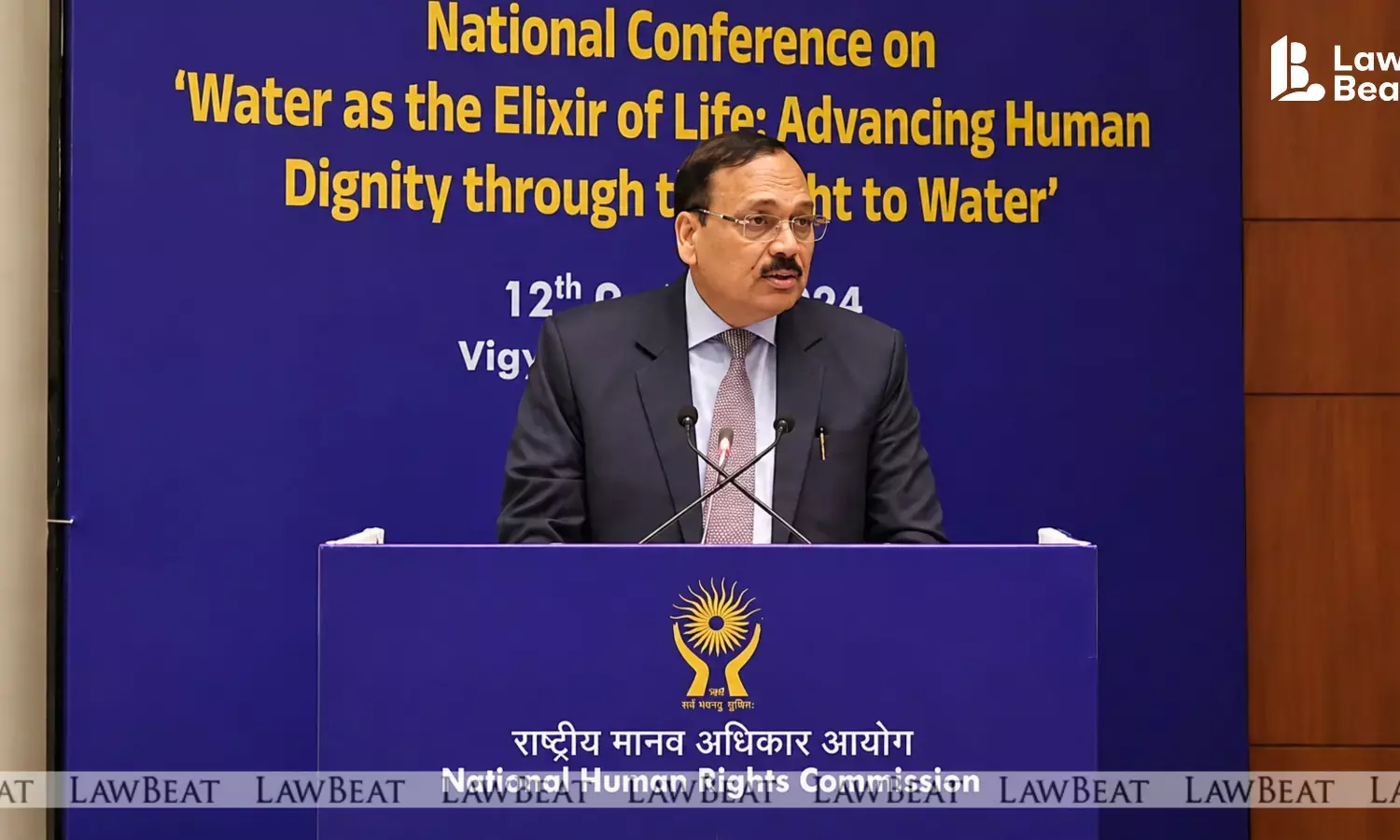
Chief Justice of India Surya Kant addressing the 33rd Foundation Day of the National Human Rights Commission on Monday, 12 October 2026
Chief Justice of India Surya Kant on Monday said, "Courts and Human Rights Commissions carry separate, complementary duties in enforcing constitutional rights". He was speaking at the 33rd Foundation Day of the National Human Rights Commission (NHRC).
“Courts must intervene when constitutional rights are violated. Human Rights Commissions must investigate complaints, identify systemic failures, and ensure that concerns which may otherwise remain invisible receive institutional attention,” the CJI said.
The remark came as CJI Kant set out how responsibility for access to safe water is shared among institutions. According to the CJI, such a problem “cannot be treated as a responsibility of any one institution”. Alongside the role of courts and commissions, “Government must build and maintain the systems through which water reaches people”, while “international institutions can contribute scientific knowledge, experience, and cooperation.”
CJI Kant explained why a non-judicial body was needed at all. “The framers of our Constitution understood this and they entrusted the responsibility of enforcement of rights for courts. But a person in a remote district may find it difficult to even reach a courtroom.” That, the CJI said, was where the Commission had its place: “If the Constitution is the promise, the Commission is one of its keepers.”
Describing what sets the Commission apart from a court, he said, “It listens to those who cannot easily speak, and it can act on its own without waiting to be asked.”
Responding to the common criticism of the Commission’s limited powers, CJI Kant offered “another perspective”. He said, “The influence of a human rights institution does not come from the coercive force of its orders, but from the credibility it earns over time. Its moral authority is like a bank balance. It is built slowly, deposit by deposit, and it can be spent very quickly. Every careful inquiry, every timely intervention and every honest report adds to that balance.”
Pointing to the Commission’s interventions in custodial torture and deaths, bonded labour, silicosis from industrial exposure and the rights of marginalised communities, the CJI said human rights protection “must go beyond identifying a violation. It must also seek accountability, meaningful relief for those affected, and changes that prevent the violation from recurring.”
CJI Kant said that the Commission’s thematic advisory groups and national conferences bring together public authorities, experts and civil society on issues such as mental health, disability, children’s rights, gender-based discrimination and the environment. Such forums help surface problems that would otherwise lie scattered across individual complaints. “This convergence ultimately translates into a more responsive institution and better protection on the ground,” he added.
Noting that in a country as large as India the experience of rights is shaped in villages, neighbourhoods and households rather than in the capital, the CJI said the National Commission “can set standards and draw attention to larger patterns, but state commissions are often closer to the ground where the violations occur.”
The CJI noted that the Commission has registered more than 24 lakh cases in 33 years and disposed of over 23 lakh, a disposal rate above 98 per cent. Yet he cautioned against treating numbers as the test. “The true measure of a human rights institution is therefore not only the number of cases it decides, but whether it can be heard by those who are least able to make themselves heard.”
Welcoming the launch of the NHRC India mobile application and the digitalisation of records, he said, “By bringing justice to the fingertips of every citizen, this app will make the Commission more accessible to those who have traditionally found it difficult to approach formal institutions.”