
Delay In Pronouncing Judgments: Supreme Court To Issue Guidelines For High Courts
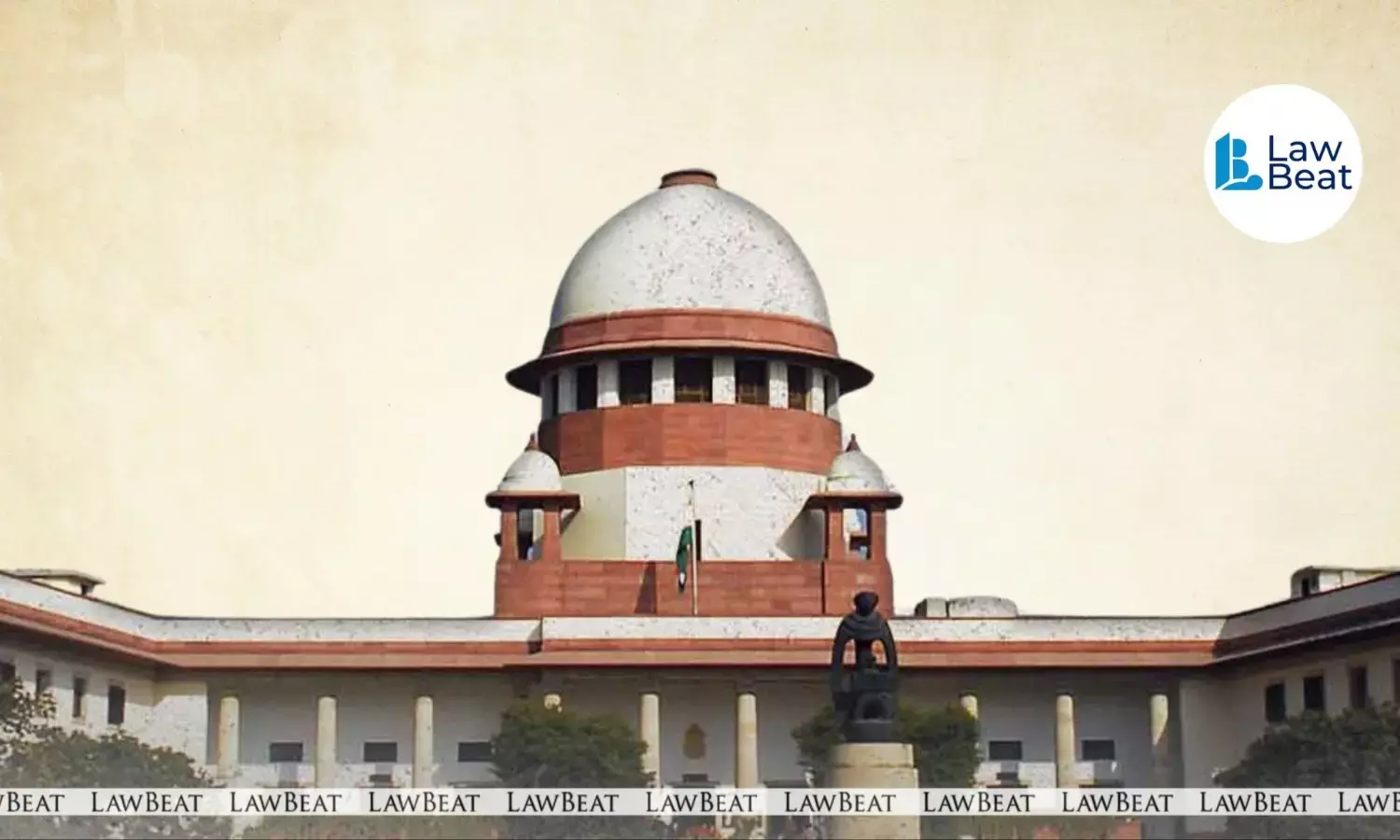
Earlier, Supreme court had asked High Courts for suggestions to improve and for a uniform pattern of disclosure of information to the general public.
The Supreme Court has sought responses from high courts across the country on draft guidelines to ensure timely pronouncement of high court and trial court judgments after they are reserved.
“These guidelines are only to enhance accountability in our system and strengthen the judicial institution,” said a bench of Chief Justice of India Surya Kant and Justice Joymalya Bagchi on Monday as it heard a case concerning reserved judgments of appeals from life convicts that have been pending for years before the Jharkhand high court.
Advocate Fauzia Shakil, appearing as amicus curiae, presented before court draft guidelines. The bench closed the matter for a judgment while seeking responses on the suggested guidelines.
Calling Shakil’s proposed framework eloquent and commendable, the bench directed, “The registry of this court shall circulate the guidelines to registrar generals of all high courts, giving them 10 days...to submit their suggestions on the practical difficulties they may face in implementing these guidelines."
The draft guidelines propose that a judgment be pronounced within a maximum of three months from the date it is reserved, and real-time monitoring of cases on the websites of high courts, etc.
Instant issue was taken up by the Supreme Court after it was approached by convicts whose criminal appeals against conviction had been heard but the judgments were awaited for a long time.
Earlier Supreme Court had directed all the High Courts through their Registrar Generals to submit details of the judgments reserved after 31.01.2025 and the dates of their respective pronouncement till 31.10.2025, along with the dates when they were uploaded on the website.
The existing mechanism evolved by the High Court to bring into the public domain, the date when the judgment is reserved; the date of its pronouncement and the date when it is actually uploaded on the website, was also sought to be presented before the Supreme Court within four weeks.
"The High Courts may also give their suggestions for improvement and for a uniform pattern of disclosure of information to the general public in respect of the ‘subject issue’ and the difficulties or adverse consequences, if any, which the High Courts might apprehend to experience in the event of such information being brought to the public domain.", the order said.
The issue before court came to light when a writ petition, was filed by some convicts, whose criminal appeals against conviction had been heard but the judgments were awaited for a long time. This prompted the Supreme Court firstly to obtain a status report from the concerned High Courts. Notably, a Writ Petition was filed seeking a direction to the Jharkhand High Court for pronouncement of judgments in Criminal Appeals which, according to the petitioners, were finally heard by a Division Bench of the High Court on 27.04.2022, 05.05.2022, 07.06.2022 and 05.01.2022, respectively.
Upon perusal thereof, a direction was passed to the Registrar Generals of all the High Courts to submit reports in respect of the cases where judgments were reserved on or before 31.01.2025 and which were awaiting pronouncement as on the date of the order, i.e., 05.05.2025. The Registry was directed to inform all High Courts, along with a copy of the order, and to submit compliance reports. In deference thereto, the High Courts of Karnataka, Bombay, Orissa, Jharkhand, Meghalaya, Manipur, Sikkim, Tripura, Himachal Pradesh, Madras, Rajasthan and Calcutta have submitted their respective reports.
The court was further informed that meanwhile, the High Courts of Andhra Pradesh, Chhattisgarh, Delhi, Gujarat, Madhya Pradesh, Uttarakhand, Punjab & Haryana, Kerala and Gauhati have also submitted their reports, these reports, complete in all respects, are yet to be received by the learned amicus curiae. The amicus, however, collated the information obtained from the first 10 High Courts, whose reports were received between 06.10.2025 to 17.10.2025. Court further found that, unfortunately, the High Courts of Allahabad, Jammu & Kashmir and Ladakh, Patna, and Telangana have neither submitted their reports nor sought any extension of time. They are not coming forward even to assist this Court, as no one has entered an appearance on their behalf, the bench noted.
Case Title: PILA PAHAN @ PEELA PAHAN & ORS. VERSUS THE STATE OF JHARKHAND & ANR.
Bench: CJI Surya Kant and Justice Bagchi
Hearing Date: March 16, 2026