
Digital Arrest Scams: Supreme Court Pushes Banks, RBI & Govt for Urgent Safeguards
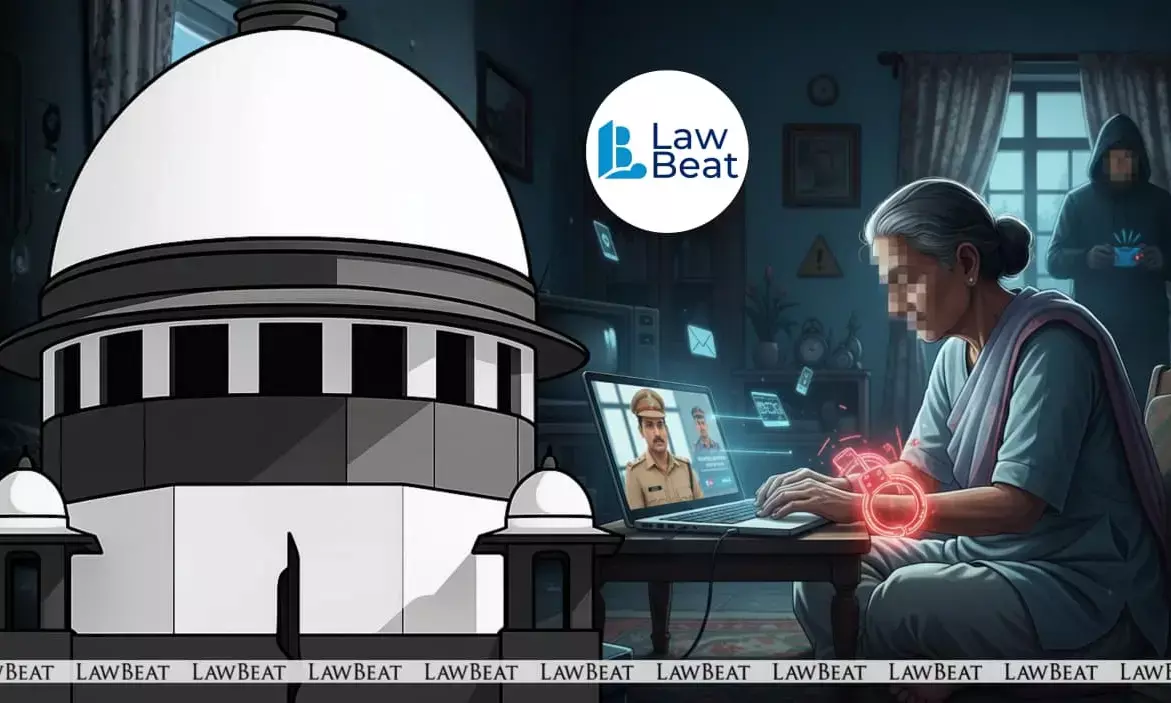
Supreme Court of India hearing on digital arrest scam cases with CJI Surya Kant and Justice Joymalya Bagchi, directing banks, RBI and government to strengthen anti-fraud measures.
X

SC flags urgent safeguards against digital arrest scams, asks banks, RBI and government to act on prevention and recovery mechanisms

Supreme Court emphasised immediate technological safeguards, victim recovery mechanisms and coordinated action by banks, RBI and government agencies while hearing digital arrest scam cases

The Supreme Court on Tuesday flagged the urgent need for coordinated institutional safeguards to curb the rising menace of “digital arrest” scams, stressing immediate preventive mechanisms and victim-centric recovery frameworks.

The Bench of Chief Justice of India Surya Kant and Justice Joymalya Bagchi objected to the growing number of intervention applications in the matter, cautioning against procedural clutter.

“Whoever wants to assist the court can do so. Don’t overburden the registry by filing IAs,” the CJI remarked.


The Court directed that suggestions from a senior citizen who fell victim to a digital arrest scam be routed through the amicus curiae instead of being placed independently on record.

Attorney General of India (AGI) R. Venkataramani informed the Bench that the CBI had already taken certain steps and proposed that an inter-departmental meeting be convened to consider the amicus’ recommendations.

Accepting the submission, the Court deferred the matter by four weeks.

Emphasising immediate safeguards, the CJI recalled that earlier directions included safety measures and noted that technological tools such as dedicated applications could provide instant protection to citizens against such scams.

Placing comparative material before the Court, the amicus curiae highlighted the UK’s PUSH scam model, under which nearly 90 per cent of defrauded amounts are recovered through prompt intervention by banking channels.

Reacting to this, the CJI observed that banks must have automatic alert and alarm systems to prevent fraudulent transfers at the earliest stage. The Attorney General assured the Court that existing RBI circulars and systems would be revisited and that all concerns raised would be addressed in a comprehensive response.

The Bench further noted that the amicus’ recommendations, including a proposed victim compensation scheme, would require consideration by the Department of Telecommunications, the Ministry of Telecom, the RBI and other intermediaries.

The Court recorded the AG’s statement that several proposals are already under active consideration to introduce a robust mechanism against digital arrest scams and expressed confidence that all stakeholders would act responsibly under the AG’s supervision.

When queried about the CBI’s role, the Attorney General stated that inputs had been furnished. The Court clarified that if the CBI requires further directions for effective and timely action, it may approach the Court accordingly.

Earlier, this month, the Court had issued interim directions to strengthen the hands of Central Bureau of Investigation (CBI) in investigation of digital arrest scams. "CBI shall have a free hand to investigate the role of bankers under the provisions of Prevention of Corruption Act wherever they are found involved in opening of mule accounts used in cyber crime cases", the Court had said.

Last month, the Bench had expressed grave concern over the scale of the nationwide “Digital Arrest Scam,” observing that nearly ₹3,000 crore has already been extorted from victims across India. Justice Kant hadremarked that the situation is “very shocking” and warned that if the menace is not tackled with “iron hands,” it will only “magnify.” He had noted, “₹3,000 crores has been collected from victims in our country alone. We don’t know what’s the suffering at the global level.” SG Mehta had agreed with the Bench’s observation, stating, “Yes, it is beyond our comprehension.”

Notably, on October 27, the Court had handed over two Haryana FIRs to CBI, sought nationwide data on fake SC order and “digital arrest” scams; flagged cross-border syndicates operating from Myanmar and Thailand. The Bench also issued notice to all States and Union Territories, directing them to submit details of similar cybercrime cases under investigation.

Earlier, on October 17, the Court had taken suo motu cognisance of the alarming surge in ‘digital arrest’ scams. While taking note of the complaint, the Court had observed that the case discloses a pattern of organised cybercrime targeting senior citizens. Between September 1 and 16, multiple victims were contacted through WhatsApp and video calls, shown forged Supreme Court orders, and threatened with arrest under fabricated proceedings. The victims, under duress, transferred about Rs.1.5 crore through multiple transactions.

Case Title: In Re: Victims of Digital Arrest Related to Forged Documents

Bench: CJI Surya Kant and Justice Joymalya Bagchi

Hearing Date: December 16, 2025

Tags

Next Story