
Supreme Court Refuses To Interfere In Pipavav Port Expansion Works
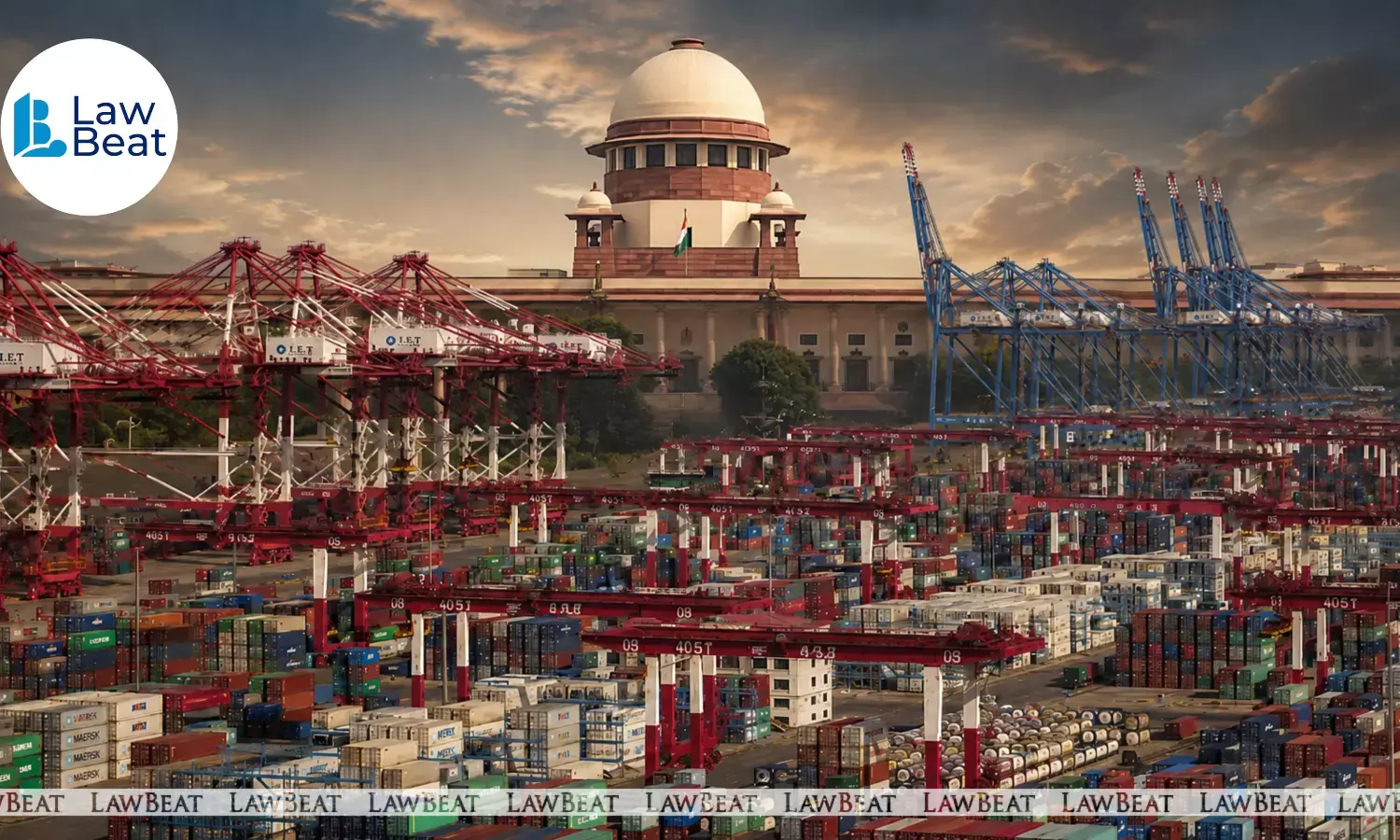
Supreme Court says it won't interfere in Pipavav Port Expansion
The Supreme Court has granted leave in a plea challenging the National Green Tribunal’s order upholding environmental and Coastal Regulation Zone clearances for the Pipavav Port expansion project, even as the Court made it clear that it was not inclined to interfere with the tribunal’s decision.
A bench comprising Chief Justice of India Surya Kant and Justice Joymalya Bagchi was hearing the challenge to the NGT’s November 26 order, by which the tribunal had rejected an appeal against the clearances granted for the port expansion at the admission stage.
During the hearing, the Chief Justice made strong observations on the need to balance environmental objections with developmental imperatives.
“Nowadays, everyone is an activist. Everything cannot be stalled. There has to be development also,” CJI Surya Kant observed.
The bench also questioned whether environmental activists ever welcomed development projects after statutory scrutiny.
“Show us one project in India where environmental activists say we welcome this project, the country is progressing well, we welcome this project,” the CJI remarked.
Supreme Court pointed out that infrastructure and port development projects where environmental appraisal authorities and expert bodies have already examined the relevant material and where no patent illegality is shown should not be stalled.
The appeal before the NGT had been filed by activist Chetan Kumar Navintray Vyas. He had challenged the July approval granted for the Pipavav Port expansion, arguing that the clearance was legally unsustainable as it allegedly relied on an earlier environmental clearance of 2012, which according to him had expired. The appellant had also raised ecological concerns relating to marine mammals, Olive Ridley turtles, avian species and mangroves.
The NGT, however, rejected the challenge after examining the project records. A bench of Justice Dinesh Kumar Singh and expert member Sujit Kumar Bajpayee held that there was “no sufficient ground” to interfere with the environmental and CRZ clearances.
The tribunal had noted that the Environmental Impact Assessment report for the project contained detailed studies on plant diversity, marine ecology, biodiversity and avian impact. It also referred to an Avian Diversity Impact Study, which recorded that the port area was a haven for bird diversity and did not show any significant adverse impact warranting interference at the admission stage.
On the legal challenge to the clearance itself, the NGT held that the mere expiry of an earlier clearance would not automatically invalidate a subsequent or fresh clearance unless such invalidation was expressly provided under law. The tribunal also rejected the contention that the public hearing was defective. It held that the sub-divisional magistrate was authorised to conduct the hearing since the project fell entirely within Rajula taluka.
The tribunal further found that the objections regarding the alleged incompleteness of the EIA process, impact on coastal biodiversity, and validity of the public consultation were not legally sustainable. It therefore upheld the environmental clearance and CRZ clearance for the Pipavav Port expansion.
Before the Supreme Court, although leave was granted for filing review before the NGT, the bench indicated that it was not persuaded to disturb the NGT’s order. The Court’s approach reflects a judicial position that environmental litigation cannot be used to stall every development project, particularly where the statutory environmental appraisal mechanism has already considered technical studies, biodiversity impact, coastal regulation compliance and public hearing objections.
The matter concerns the expansion of Pipavav Port, one of Gujarat’s key port infrastructure projects, and will now proceed before the Supreme Court after grant of leave. However, the bench’s oral observations strongly suggest that the Court is inclined to preserve the NGT’s decision upholding the clearances.
Case title: Chetan Kumar Navintray Vs Union of India