
"Give It Some Time, We Will Examine" Supreme Court On Challenge To BNS, BNSS Provisions
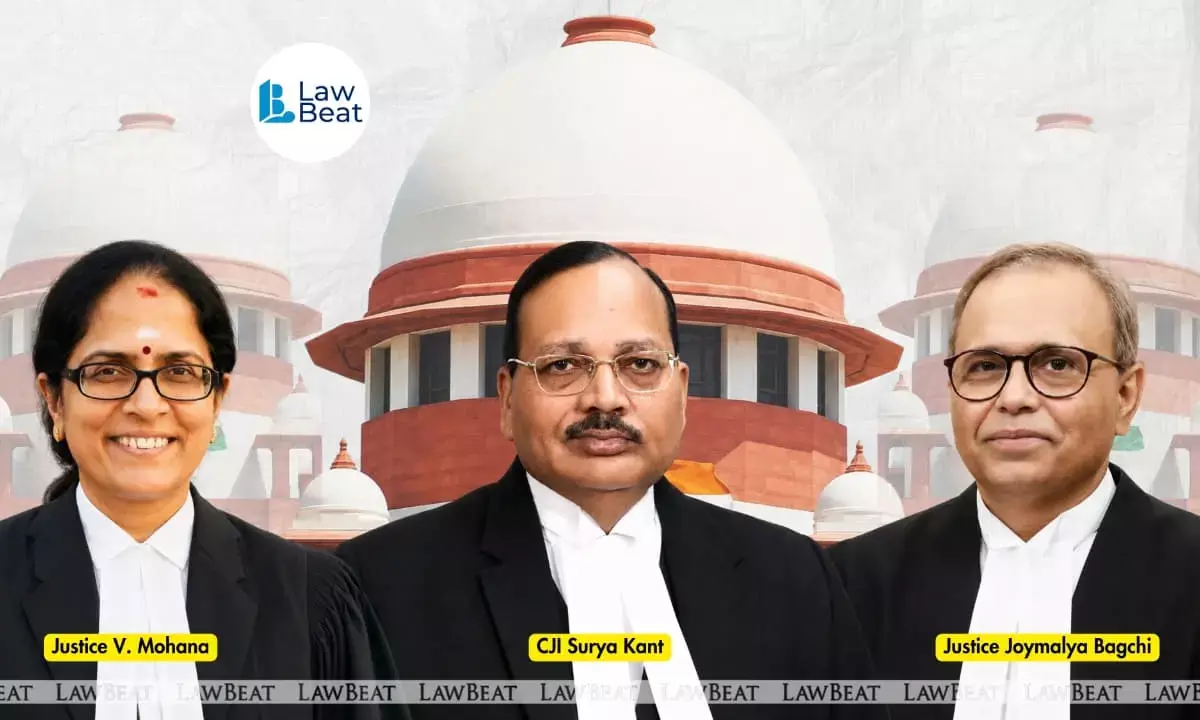
Supreme Court heard plea challenging provisions of Bharatiya Nyaya Sanhita, 2023 and Bharatiya Nagarik Suraksha Sanhita, 2023.
The Supreme Court on Friday heard a petition challenging various provisions of the Bharatiya Nyaya Sanhita, 2023 and the Bharatiya Nagarik Suraksha Sanhita, 2023.
A CJI Surya Kant led bench heard the plea challenging Section 152 (Act endangering sovereignty, unity and integrity of India) of the BNS which replaced the earlier provision on sedition i.e. Section 124A in the Indian Penal Code, contending that the new provision is broader and more vague.
The plea by one Azad Singh Kataria also challenges Section 173(3) of the BNSS which gives discretionary powers to the officer in charge of a police station to conduct preliminary enquiry in cases involving punishment from three years up to seven years and Section 187(3) of the BNSS which enables the police to seek custody of an arrestee for a period of 60 or 90 days, depending upon the nature of the offence.
As the petition was taken up yesterday by the bench, CJI Kant asked, "Are the Acts working well or creating problems?"
In response, Senior Advocate Meneka Guruswamy told the bench that some issues were being faced. To this the CJI said, "give it some time..we will examine".
While hearing the plea in 2024 the Supreme Court had remarked that whenever a new legislation is enacted, there are a lot of "imaginary apprehensions" and that the new enactments should be given a chance to be tested. “Initially when something new comes, we have a lot of apprehensions, fears, suspicions in mind. And many times we have imaginary apprehensions. At the ground level, it may not happen," Justice Surya Kant had observed.
Another constitutional challenge has also been filed before the Supreme Court of India against Section 152 of the Bharatiya Nyaya Sanhita, 2023, the provision that criminalises acts “endangering the sovereignty, unity and integrity of India”. The provision, the petitioner argues, is nothing short of a “repackaged sedition law”, bearing the same constitutional infirmities as the colonial-era Section 124A of the Indian Penal Code.
The writ petition, filed under Article 32 of the Constitution by Major General (Retd.) S.G. Vombatkere, through AoR Prasanna S. contends that Section 152 is violative of Articles 14, 19(1)(a), and 21 of the Constitution. Vombatkere was also the lead petitioner in the earlier challenge to Section 124A IPC, where the Supreme Court in 2022 had effectively suspended the application of the sedition law and directed the Centre to reconsider its validity.
According to the petitioner, Section 152 reintroduces vague, sweeping, and overly broad language criminalising various forms of expression, including speech, signs, and even financial transactions. Terms like “subversive activities”, “secession”, and “encouraging feelings of separatist activities”, the petition states, are legally indeterminate and provide a toolkit for arbitrary State action.
Section 152 prescribes punishment up to life imprisonment for anyone who “purposely or knowingly” uses any form of expression, spoken, written, electronic or financial, to excite or attempt to excite secession, armed rebellion or subversive activities. An explanation to the section exempts lawful criticism of government action intended to bring about change, but the petitioner argues that this exception is narrow and illusory.
Case Title: Azad Singh Kataria vs Union of India
Bench: CJI Kant, Justice Bagchi and Justice Mohana
Hearing Date: July 31, 2026