
Independent Judiciary Is Non-Negotiable, Says Justice K.V. Viswanathan At Book Launch Event
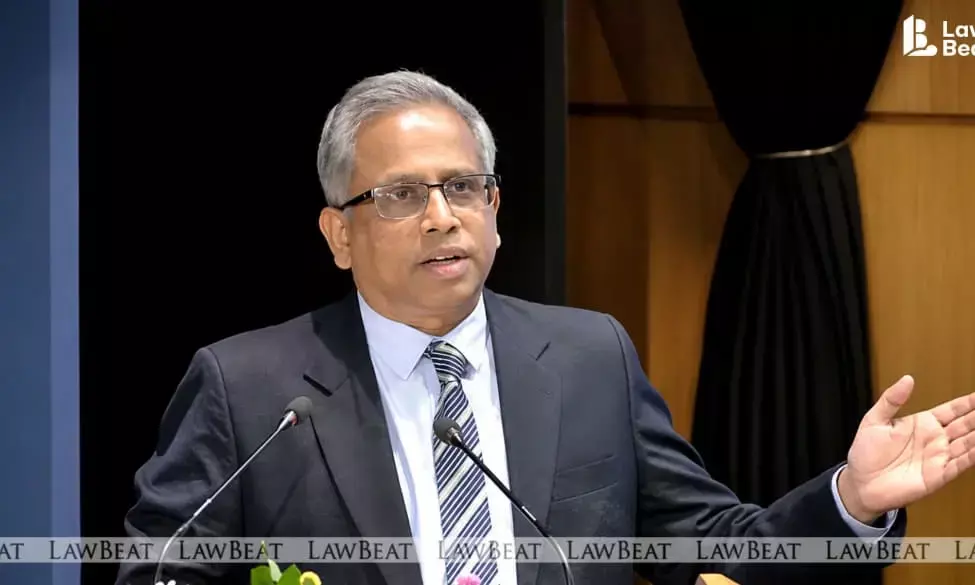
Independence and Freedom Came at Great Cost, Justice Viswanathan Reminds at Book Launch
“Independence of judiciary is absolutely non-negotiable,” Supreme Court Judge Justice K.V. Viswanathan said at the launch of “Freedom on Trial: Twelve Cases That Shaped India’s Struggle for Freedom,” a book by Akash Vajpai. “Absent an independent judiciary, there will be a serious threat to the rule of law,” he added.
Justice Viswanathan said the book is not just a record of twelve colonial-era trials, setting out the prosecution’s case, the defence and the verdict. In his view, “so many messages” lie embedded in it. The first, he said, is a tribute to judicial independence. The second is that tyrannical laws “would seriously boomerang” on those who administer them. The others are the importance of the rule of law and the sacrifice of the freedom fighters.
On sacrifice, he asked the audience to imagine lawyers such as Mahatma Gandhi giving up their profession and their comfortable incomes to join the freedom struggle. The message for today’s citizens, he said, is to value the independence and freedom they won. The book, he said, is “a timely reminder that independence and freedom have come for us at great cost.”
The Bench, the Bar and the Accused
Turning to the judge, Justice Viswanathan praised the author for being fair even to British judges. He recalled that Judge C.N. Broomfield, who tried Gandhi in 1922, told him he could be judged only as “a man subject to the law,” imposed six years, and said no one would be happier if the term were shortened. The judge then bowed to Gandhi, and Gandhi bowed back. Such conduct needed courage, he said, but it also “showed their helplessness.”
Sometimes, he observed, the problem lies in the procedure itself. In Bhagat Singh’s case, the tribunal was a creature of a vice-regal ordinance, with no right of appeal or revision, and could proceed in the absence of the accused. Judges of that time, he said, looked only at the “black and white letter of law,” and “the spirit and the interpretative process was lost.”
On the bar, he recalled Bhulabhai Desai arguing the INA trial for two full days after being carried up the stairs in a chair. Desai argued that subject people may take up arms for their liberation and that “law” in the Penal Code must include the law of nations. “Court did not accept it. The country did,” Justice Viswanathan said. Desai died within four months of the judgment.
He also spoke of the prosecution. Advocate General Naushirwan Engineer, he noted, told the court that the accused had acted from motives they sincerely considered patriotic, which could be weighed on punishment even though they were no defence in law. He said this reflects the book’s objectivity, adding that it is not a one-sided or “hagiographical” account, and that every law officer should recognise such conduct as a standard worth upholding.
The accused, he said, spoke beyond the limits that bound the bench and the bar, knowing their message would reach a far larger audience. Gandhi read his statement for fifteen minutes and sought no leniency. Bal Gangadhar Tilak spoke for six consecutive days, arguing that a Marathi article must be judged by its effect on Marathi readers and not through a distorted English translation. The INA trial at the Red Fort, meant to deter treason, instead fuelled nationwide protests and became a symbol of Hindu-Muslim-Sikh unity.
Justice Viswanathan also recalled that Bhagat Singh’s sentence was carried out on the evening of 23 March 1931, advanced by nearly twelve hours for fear of public outrage. “Although almost every trial highlighted in the book was lost, the cause was not,” he said.
Why do colonial trials matter today? Because, he said, they show what happens when procedure is bent to suit power. “Independent judges, a fair hearing, and the right to appeal are not technicalities,” he said. He described the book as “eminently readable” and a “must read.”