
India Can Become Global Hub For Mediation, ADR Must Be First Resort, Not Last: CJI Surya Kant
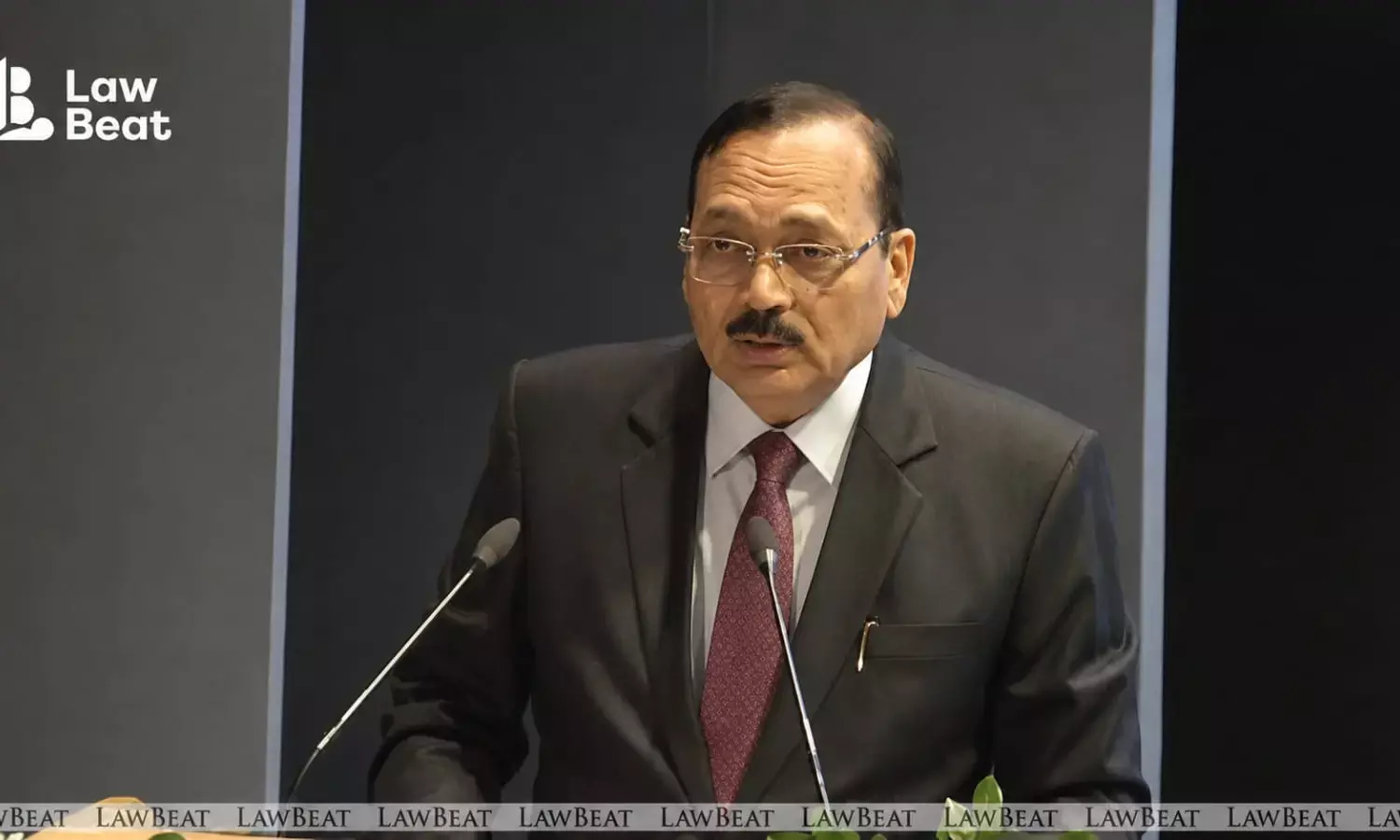
CJI Surya Kant said India has the potential to become a global mediation hub and stressed that ADR should be the first recourse for dispute resolution
Chief Justice of India (CJI) Surya Kant on Friday said India has the potential to emerge as a global hub for mediation, asserting that Alternative Dispute Resolution (ADR) must increasingly become the first recourse for resolving disputes rather than the last resort after prolonged litigation.
Delivering the keynote address at the International ADR Conference on the theme "ADR Pathways to Legal Harmony", the CJI said technological advancements, legislative reforms and judicial support have collectively transformed mediation into a modern, efficient and internationally credible dispute resolution mechanism.
Reflecting on his early years at the Bar, the CJI recounted an incident where two business partners, who had approached court as adversaries in a decade-long partnership dispute, resolved their differences through a simple conversation facilitated outside the courtroom.
"The business still runs because they themselves decided it together," he said, describing the experience as the true essence of mediation.
Highlighting why mediated settlements enjoy greater compliance than court judgments, CJI Surya Kant referred to decades of behavioural research showing that parties are far more likely to honour agreements they voluntarily negotiate.
"A party who has had a genuine hand in drafting the terms of a resolution rarely finds cause to abandon them later," he observed, noting that voluntary compliance with mediated settlements often exceeds 90 percent, significantly higher than compliance with adjudicated outcomes.
Drawing a distinction between litigation, arbitration and mediation, the CJI said litigation and arbitration primarily determine legal rights and liabilities, whereas mediation enables parties to arrive at solutions they can genuinely live with and build upon.
While describing arbitration as indispensable for complex commercial disputes involving engineering, valuation and cross-border contracts, the CJI observed that a binding arbitral award often marks only the beginning of further litigation during enforcement.
"Mediation, on the other hand, brings parties to a true accord," he said.
The CJI also noted that mediation in India has undergone a dramatic transformation over the past two decades. Modern mediation centres, he said, now operate with trained professionals, structured certification systems, encrypted digital records, case managers and online dispute resolution platforms capable of facilitating cross-border settlements within hours.
He also highlighted emerging hybrid models such as Med-Arb-Med, which combine mediation and arbitration to deliver both consensual settlements and binding resolutions where necessary.
Referring to the Mediation Act, 2023, the CJI said India now possesses a comprehensive statutory framework recognising party autonomy, granting enforceability to mediated settlements and prescribing timelines that balance urgency with fairness.
He also pointed to Section 12A of the Commercial Courts Act, which mandates pre-litigation mediation for several categories of commercial disputes, describing it as a clear legislative signal that mediation should become the first option before litigation.
"There is no reason why India cannot establish herself as a genuine centre of mediation for the global community," the CJI said.
According to him, India's rapidly expanding economy requires a world-class dispute resolution ecosystem capable of handling sophisticated domestic and cross-border commercial disputes.
The CJI further credited the Indian judiciary for creating institutional support through court-annexed mediation centres, judicial academies, mediation committees and a growing body of precedents encouraging parties to explore consensual resolution before entering prolonged litigation.
Concluding his address, CJI Surya Kant urged the legal fraternity to collectively strengthen India's ADR ecosystem and position the country among the world's leading mediation jurisdictions.
"Our endeavour should be to build an ADR framework that lasts and helps India take her place among the true frontrunners of this field worldwide," he said.