
“India Is Already A ‘Country of Holidays’”: Supreme Court Rejects Plea For National Holiday On Guru Gobind Singh Jayanti
Supreme Court declines to entertain PIL seeking a judicial commission to review wages of priests and temple staff in state-controlled temples
The Supreme Court on Tuesday dismissed a writ petition seeking declaration of Guru Gobind Singh Jayanti as a national public holiday, observing that India already has an abundance of holidays and does not require more.
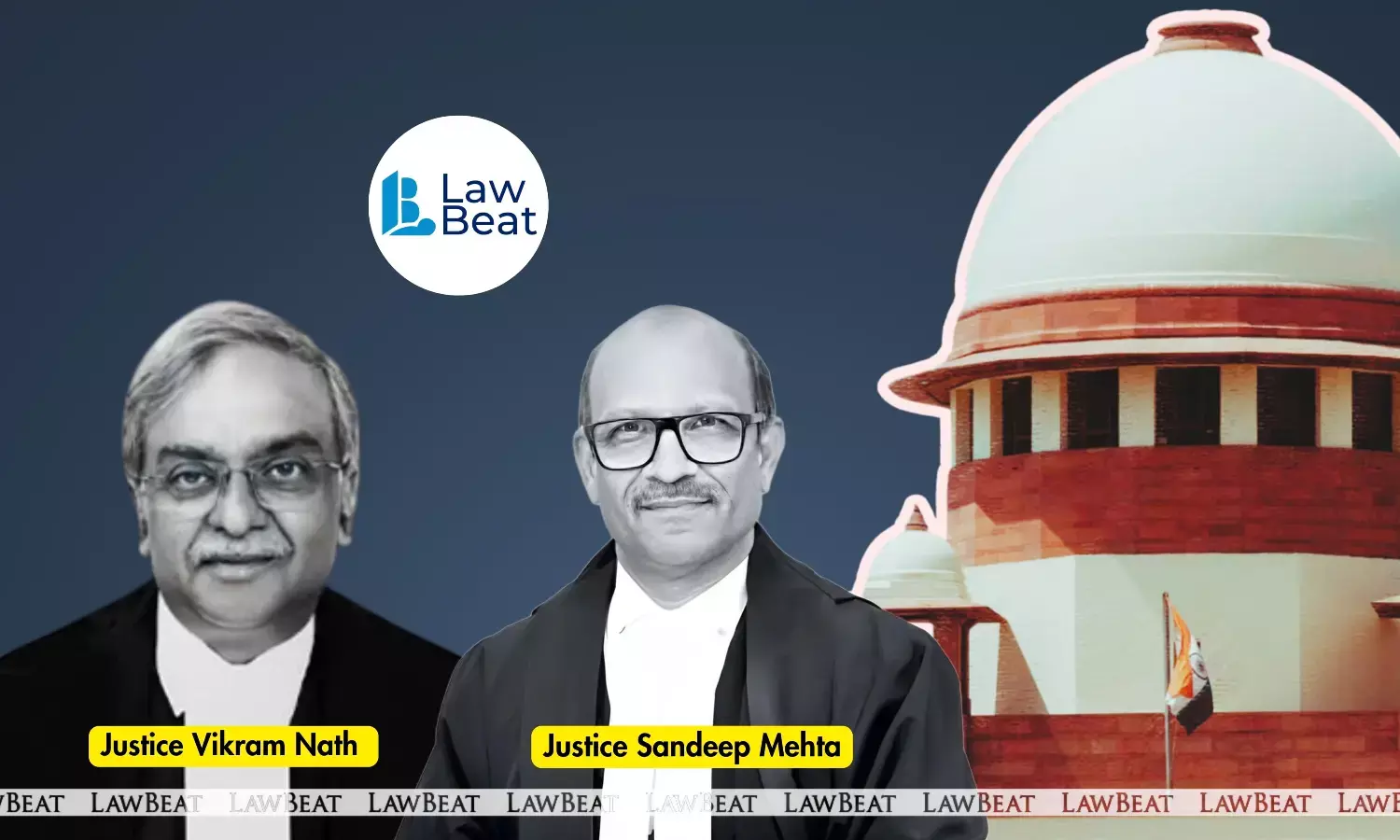
The bench of Justices Vikram Nath and Sandeep Mehta rejected the plea filed by the All India Shiromani Singh Sabha. The petition had sought a direction to the Union and State governments to declare the birth anniversary of Guru Gobind Singh as a gazetted public holiday across the country.
While dismissing the plea, Justice Mehta made a candid oral observation on the proliferation of holidays in India. “India is a holy country of holidays. Let us not add to that,” he remarked, recalling a phrase often used by his uncle, a senior lawyer from Rajasthan.
The Bench indicated that a detailed judgment would follow.
The petition, filed under Article 32 of the Constitution, had also sought the formulation of a uniform, non-arbitrary national policy governing the declaration of public and gazetted holidays. It argued that the absence of codified guidelines allows governments to declare holidays on a discretionary basis, potentially leading to arbitrariness and unequal treatment.
Appearing for the petitioner, Senior Advocate Vikas Singh contended that there is currently no clear policy framework regulating the declaration of holidays. He urged the Court to direct the Union government to formulate objective criteria.
“We are saying there is no policy. The Union has to respond. If they come up with a policy,” Singh submitted, referring to earlier notices issued in the matter.
However, the Court was not inclined to entertain the plea.
The petition filed through AoR Durga Dutt had emphasised the significance of Guru Gobind Singh as not only a central religious figure in Sikhism but also a national icon associated with values of sacrifice, courage and nation-building. It argued that declaring his birth anniversary as a national holiday would promote unity, fraternity and patriotism.
"That the venerable tenth Guru of Sikh religion, is not merely a religious figure but also a national icon, an embodiment of nationalism & patriotism who contributed in protection of the Dharma for purposes of which he organised the Sikh community (Khalsa Panth) which worked for the nation-building and safeguarding the country's frontiers. The tenth Guru Gobind Singh witnessed the supreme sacrifice of his father i.e. the Guru Teg bahadur, the ninth Sikh Guru and al his four sons. The Sikhism is the fifth-largest amongst the major world religions, and one of the youngest. Worldwide, there are 25.8 million Sikhs, which makes up 0.39% of the world's population. Though, Sikhs comprise only about 2% of the Indian population but their contribution in nation building, social upliftment of under privileged sections of society, welfare and charity, to the masses is immense and indisputable. The Sikhs are also popular for running the community kitchen (Langar) for the general public irrespective of the caste, creed, poor- rich dichotomy. Guru ka Langar is an exemplary institution of the moral economy. Langar is a practice based on the principle of inclusion and unity ii the religious sphere that helps everyone and anyone in times of hunger," the plea read.
The petitioner also pointed to what it described as inconsistencies in the declaration of holidays, citing instances such as the recognition of certain religious and national figures through gazetted holidays while others remain classified as restricted holidays. It argued that such decisions, taken without a clear statutory framework, may reflect subjective or politically influenced considerations.
Highlighting the legal vacuum, the plea noted that India lacks a comprehensive legislation governing public holidays, apart from limited provisions such as the Negotiable Instruments Act, 1881 and the Weekly Holidays Act, 1942. In contrast, countries like the United Kingdom and the United States have more structured legal frameworks for holidays.
The petition further relied on representations made to the government and responses received under the Right to Information Act, which indicated that holiday lists are largely determined administratively based on inputs such as festival dates provided by the India Meteorological Department’s astronomical division.
Case Title: All India Shiromani Singh Sabha v. Union of India
Bench: Justices Vikram Nath and Sandeep Mehta
Hearing Date: March 17, 2026