
Is prior approval under PC Act to probe public servants constitutionally valid? Supreme Court delivers split verdict
Section 17A of the Prevention of Corruption Act, 1988 was introduced by virtue of Section 12 of the Prevention of Corruption (Amendment) Act, 2018.
The Supreme Court has delivered a split verdict while deciding a writ petition challenging the constitutional validity of Section 17A of the Prevention of Corruption Act, 1988.
Under the said section, no police officer shall conduct any enquiry or inquiry or investigation into any offence alleged to have been committed by a public servant under the Act, where the alleged offence is relatable to any recommendation made or decision taken by such public servant in discharge of his official functions or duties, without the previous approval of the authority prescribed therein.
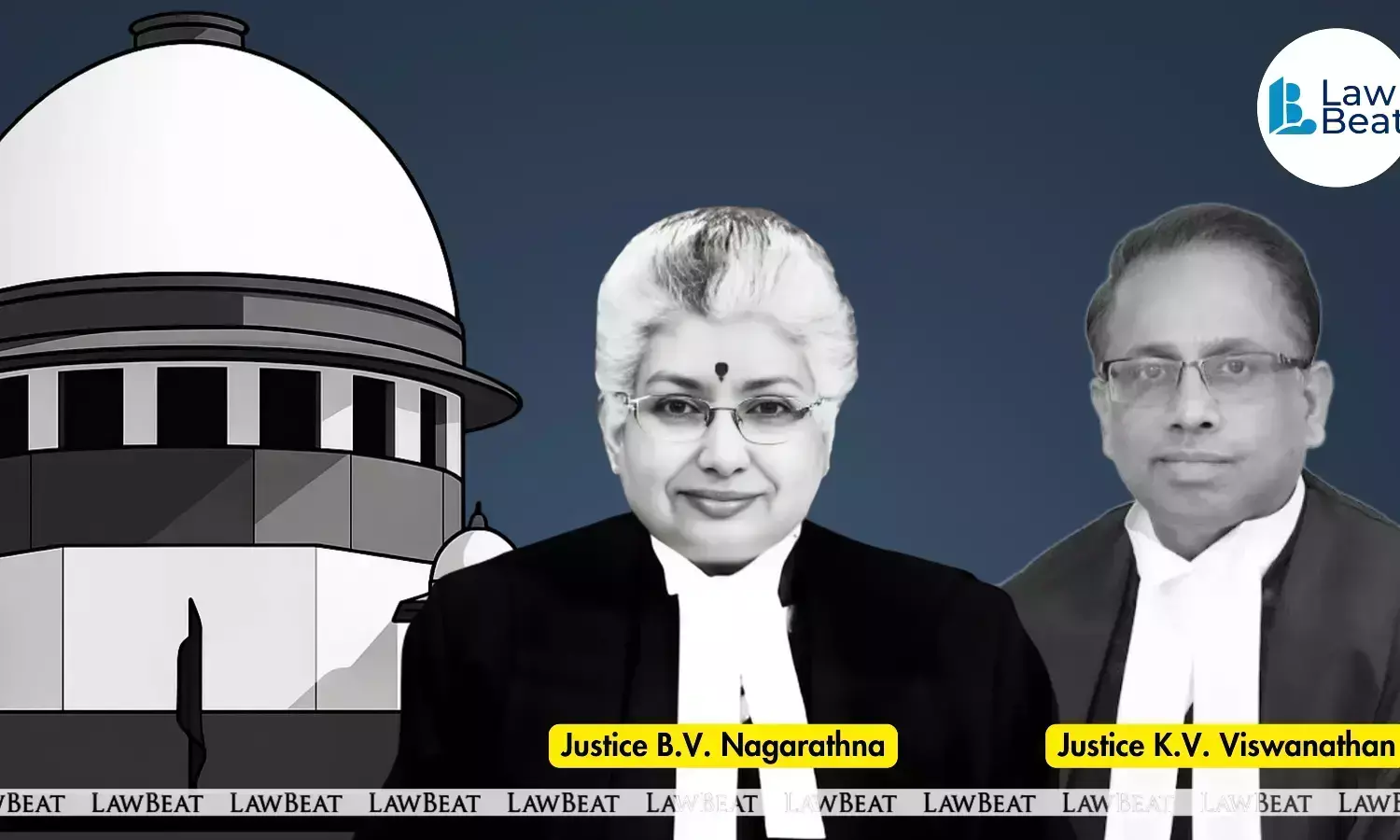
Justice KV Vishwanathan has held that Section 17A of the Prevention of Corruption Act, 1988 inserted by virtue of Section 12 of the Prevention of Corruption (Amendment) Act, 2018 is constitutionally valid, subject to the condition that grant or refusal of the approval by the competent authority mentioned therein will depend on the recommendation of the Lokpal/Lokayukta (in case of States) respectively in accordance with the reasoning set out in the body of the judgment.
The Supreme Court judge has further said that the object of incorporating Section 17A of the Act was certainly not to condone official acts done for improper purposes or for extraneous considerations, but to protect bona fide recommendations and decisions taken by officials and bureaucrats.
"With the extent of public gaze prevalent today, propelled by social media, arrest and the consequential parading in court, of a honest person itself causes incalculable harm to the fair name and goodwill of the individual and the family. Even a subsequent exoneration in the investigation cannot redeem the permanent damage done to the integrity and reputation of the individual. It is no answer to say that protection is available at the stage of Section 19 when the file seeking sanction for prosecution is processed, for by then irreversible and immeasurable harm would have ensued," the judgment adds.
Justice BV Nagarathna has held that Section 17A of the Act is struck down as it is in violation of Article 14 of the Constitution inasmuch as it seeks to protect only those public servants who have the responsibility of making a recommendation or taking a decision in the discharge of their official duties which are limited to the officers above a particular level whether in the Union or State Governments or any other Authority.
"Hence, it protects only a class of public servants inasmuch prior approval is mandated under the said provision for the aforesaid class of public servants, whereas for all other public servants, it does not do so. Thus, in substance, the classification based on the nature of duties is illegal and therefore violates Article 14 of the Constitution of India for reasons analogous to those in Subramanian Swamy and Vineet Narain," the judgment states.
It is Justice Nagarathna's view that Section 17A is invalidated by the arbitrariness in its manner of operation, by foreclosing the possibility of even a bare inquiry/enquiry/investigation without prior approval, under the garb of being prejudicial, leading to the likelihood of corrupt public servants of a particular level and higher being shielded, which is impermissible and contrary to the objects of the Act as well as rule of law.
"In my view, prior approval being required for the purpose of protecting honest officers is not a valid reason for saving the provision from being declared unconstitutional as a regime of prior approval at the stage of inquiry/enquiry/investigation is fundamentally opposed to the objects and purpose of the Act and hence has to be struck down on that ground also.... The expressions “Government” and “of the authority competent to remove him from his office” in Section 17A of the Act cannot be substituted, in light of no persisting ambiguity, absurdity or alternative meanings ascribable by any other expression as this would be an instance of judicial legislation", she adds.
Having regard to the divergent opinions expressed by the two judges, it has been directed that the Registry place this matter before the Chief Justice of India for constituting an appropriate Bench to consider the issues which arise in this matter afresh.
Case Title: CENTRE FOR PUBLIC INTEREST LITIGATION vs. UNION OF INDIA
Bench: Justices Nagarathna and Vishwanathan
Judgment Date: January 13, 2026