
Judicial Education Must Go Beyond Legal Technicalities, Embrace Technology, Social Context: Justice Sanjeev Sachdeva
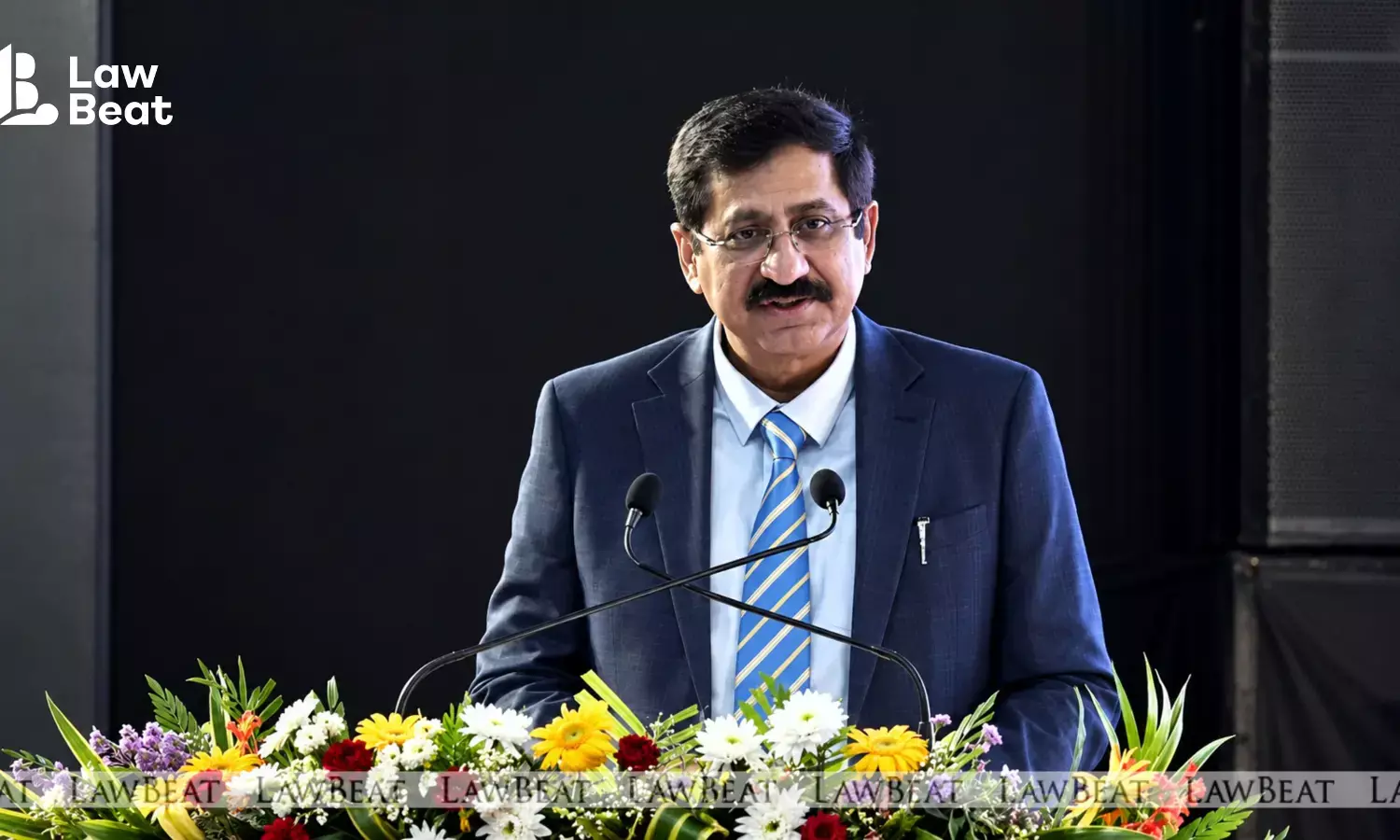
Justice Sanjeev Sachdeva Calls For Broader Judicial Education At Gwalior Conference
Judicial education must move beyond traditional legal technicalities and equip judges to deal with contemporary social, technological and ethical challenges, Justice Sanjeev Sachdeva said while addressing the inaugural session of the two-day West Zone Regional Conference on “Expanding Horizons of Judicial Education” in Gwalior.
The conference was organised by the National Judicial Academy in collaboration with the High Court of Madhya Pradesh and the Madhya Pradesh State Judicial Academy.
Speaking on the need to broaden the scope of judicial training, Justice Sachdeva emphasised judicial humility, awareness of diverse socio-economic realities, technological understanding and continuous professional development. “Judicial humility, when I talk about judicial humility, and growth requires recognizing that judges are also human beings, and institutions like the court are always capable of continuous self-correction, moving away from the premise that judges are infallible,” he said.
He said judicial officers must be trained to understand different social and economic realities to ensure impartiality, equity and empathy, particularly while dealing with marginalised communities.
Global peer learning
Justice Sachdeva also stressed the importance of international and inter-jurisdictional learning for judicial officers. Recalling his experience of organising international conferences, he said resource persons from jurisdictions including the United States, United Kingdom and Denmark had been invited to train judges and lawyers.
He also referred to the practice of inviting judges from other High Courts to deliver lectures and participate in conferences. “Globalized peer learning is a concept which is developing, and we must focus on that as well,” he said.
He added that judicial leadership must be equipped to deal with complex moral, digital and technological changes in a rapidly changing world order.
Beyond legal interpretation
Justice Sachdeva said judicial education should extend beyond statutory interpretation to areas such as ethics, logic and psychology. He said such training could help judges recognise cognitive biases, understand victim trauma and evaluate credibility.
“As judicial officers, it is not only your training in law, but your ability to dispense justice in its true sense is very necessary,” he said.
“We may be very learned in law, but if we don't have the temperament to sit on the dais and dispense justice, that knowledge in law will not be helpful,” he added.
Understanding forensic and DNA evidence
Justice Sachdeva highlighted the need for judges to understand technological and forensic evidence, particularly in criminal cases.
Referring to a bail matter he had handled in the Delhi High Court involving a rape allegation, he recalled how a district court had rejected bail after treating a DNA report as establishing a match.
Justice Sachdeva said that on examining the report, he found that the blood of the victim matched the blood found on her clothes, while the blood of the accused matched the blood found on his clothes. According to his account, there was no cross-matching between the victim and the accused, despite the report having been understood at the trial stage as establishing a match.
He said the example demonstrated why judges must receive adequate training to understand forensic reports rather than relying only on their conclusions. “DNA report, now they give you a very short three-page DNA report, otherwise there used to be a detailed DNA report, which most of the judges could not understand,” he said.
He similarly stressed the importance of understanding voice samples and other forms of forensic technology.
Technology and digital evidence
Justice Sachdeva said the increasing use of digital devices in criminal activity and investigation had made technological training essential for judicial officers.
He noted that people generate significant digital footprints through mobile phones, photographs, cloud storage and other digital services, making electronic evidence an increasingly important investigative tool. However, he cautioned that investigators themselves require training in the proper handling and extraction of electronic evidence.
Referring to a case, he said an investigating officer had switched on a seized mobile phone while attempting to extract data, despite protocols governing the handling of digital devices after seizure.
“Unless we know what are those tools, what are the guidelines, we will not be able to understand whether that electronic evidence is dependable or not,” he said.
Justice Sachdeva suggested that judicial officers should receive practical exposure to the criminal investigation process. He proposed that judicial academies consider attachments of judicial officers with police stations, jails and forensic laboratories so that they could understand how these institutions function and how evidence is generated, preserved and presented.
Immersive judicial education
He referred to Madhya Pradesh as having integrated the three new criminal laws on a digital platform, under which records from the registration of an FIR through medical examination, forensic processes and jail records are digitised and made available to judges.
He suggested that such systems should form part of judicial training. “We have to today look at an immersive and a 360-degree learning process,” Justice Sachdeva said.
He suggested that judicial officers could spend periods at police stations, correctional institutions and forensic laboratories as part of their training.
Mediation and ADR training
Justice Sachdeva also emphasised the importance of training judges in Alternative Dispute Resolution (ADR), particularly mediation. Recounting his own experience as a mediator before becoming a judge, he said mediation had influenced the way he approached disputes even while sitting on the Bench.
He recalled an instance involving two brothers from Karol Bagh who were engaged in a dispute. Drawing upon their shared connection to the locality, he asked them to visit a gurdwara together, listen to kirtan and have prasad without discussing their dispute.
According to Justice Sachdeva, the brothers returned after lunch and reconciled.
He said the experience demonstrated how mediation training could change the way judicial officers perceive disputes and identify possibilities for settlement.
Justice Sachdeva also referred to the Supreme Court’s requirement of mandatory training hours for judicial officers and suggested that judicial academies use the training period to provide broader exposure.
Training lawyers and aspiring judicial officers
Justice Sachdeva said judicial academies should also focus on training lawyers, who he described as an important part of the judicial process. He referred to training programmes organised in Madhya Pradesh for lawyers and a pre-examination training programme for candidates aspiring to become judicial officers.
He said the programme had been initiated after identifying sections of society that were facing difficulties in clearing judicial service examinations.
He also referred to community mediation programmes and the training of deaf and hard-of-hearing mediators.
According to Justice Sachdeva, such mediators had helped resolve disputes involving persons with hearing and speech disabilities, demonstrating the role of specialised training in improving access to justice.
Concluding his address, Justice Sachdeva referred to Robert Frost’s poem “Stopping by Woods on a Snowy Evening” and its closing lines, “The woods are lovely, dark and deep, / But I have promises to keep, / And miles to go before I sleep.” He urged participants to use the conference to broaden their understanding of judicial education and concluded by wishing them a productive conference.