
Justice Delayed is Justice Destroyed: CJI Surya Kant
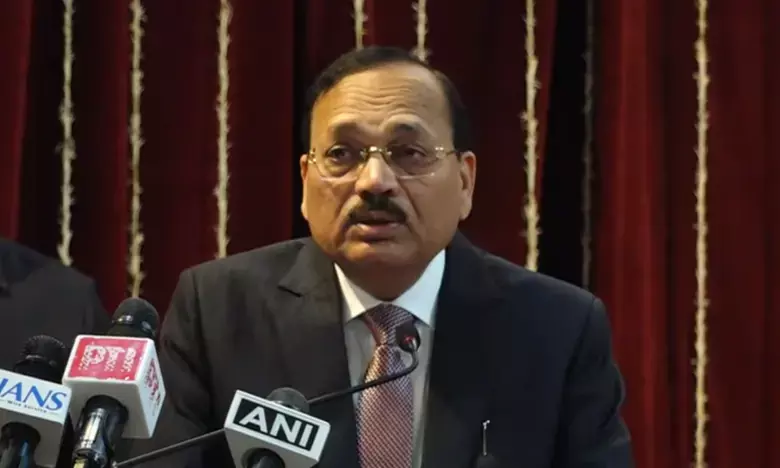
CJI Surya Kant delivered the Fali Nariman Memorial Lecture on January 24, 2026.
The Chief Justice of India recently observed that justice delayed is not just justice denied but also justice destroyed. CJI Surya Kant made this remark while delivering the Fali Nariman Memorial Lecture organised by the Bombay Bar Association.
"For a small farmer whose land is being seized or a student wrongly denied admission, justice delayed is not justice denied, it is justice destroyed. The high court's ability, therefore, to stay an executive action at the very first hearing is often the only real access the citizen ever experiences. It is the hallmark of the constitutional court's protective jurisdiction 226 to intervene at the threshold ensuring status quo is reserved so that justice is received...", CJI Kant said on Saturday.
CJI underlined that High Courts occupy a unique and critical position in India’s constitutional framework, acting as the first and most vital line of defence for citizens against illegal detention, administrative excess and violations of dignity. "The High Court's power to grant interim relief under article 226) is the hallmark of the Court's protective jurisdiction to intervene at the threshold, ensuring that the status quo is preserved so that justice is not defeated by the fait accompli of administrative haste," he said.
“While the Supreme Court may have the final word, the High Court often has the most vital one. The High Court is the primary sentinel guarding the doorsteps of the ordinary citizen, ensuring that the rule of law is not a distant Delhi-centric concept but a local, breathing reality,” Justice Kant said.
CJI Kant also noted that High courts ensure that the law is not a static monolith but a dynamic force that bends the digital divide. he also called for the courts to adapt to an era where a citizen's rights are likely to be infringed by an automated system or by burgeoning technology. "Thus, technology must instead be harnessed towards ensuring justice equality. The judicial equality is a guarantee which the high courts need to enforce. How does this manifest in day-to-day courtroom functioning? Surely it involves moving be it involves moving beyond viewing virtual hearing as an emergency measure and a accessibility reality. Secondly, we must address the right remedy gap and that should be done through procedural innovation....", CJI Kant added.
Speaking on Fali Nariman's career at law, CJI Kant said, "Landmark cases begin to shape the meaning of fundamental rights and Fali Ji was there absorbing and contributing to the evolving jurisprudence. He witnessed firsthand the Supreme Court's early assertions that the right of the individuals must stand firm against the power of the state principles he would champion throughout his career. As the decades unfolded, so did Faliji's influence. He understood that the constitution was not a static document bound by the ink of its framers, but a living charter, a moral compass that had to be defended, interpreted and at times corrugated with courage invoked against the current of the power."
Fali Nariman was more than a jurist., Justice Kant said, calling him the custodian of the constitutional spirit. "He had lived through its testing moments, defended its core principles and inspired generations of lawyers", CJI Kant added while recollecting a personal anecdote, "I vividly recollect when I used to be virtually on every day in the corridors of the Supreme Court from 2000 till I was elevated in the first week of January 2004. I used to see a roaring voice of Fali Nariman inside and outside in the corridors of the Supreme Court on a few occasion supporting us and on some occasions opposing also. I had also the distinction of being illuminately guided by the wisdom of FaliJi after my elevation in 2019, when the age was not on his side but his voice was equally roaring and he would argue with the same effectiveness as I saw somewhere in 2000 or 2003."
Supreme Court judges Justice Dipankar Datta, Justice PB Varale and Justice Chandurkar also attended the event.