
Justice Shouldn't Be A Luxury Shawl: CJI Surya Kant Says Supreme Court Was Once "A Court Of The Privileged"
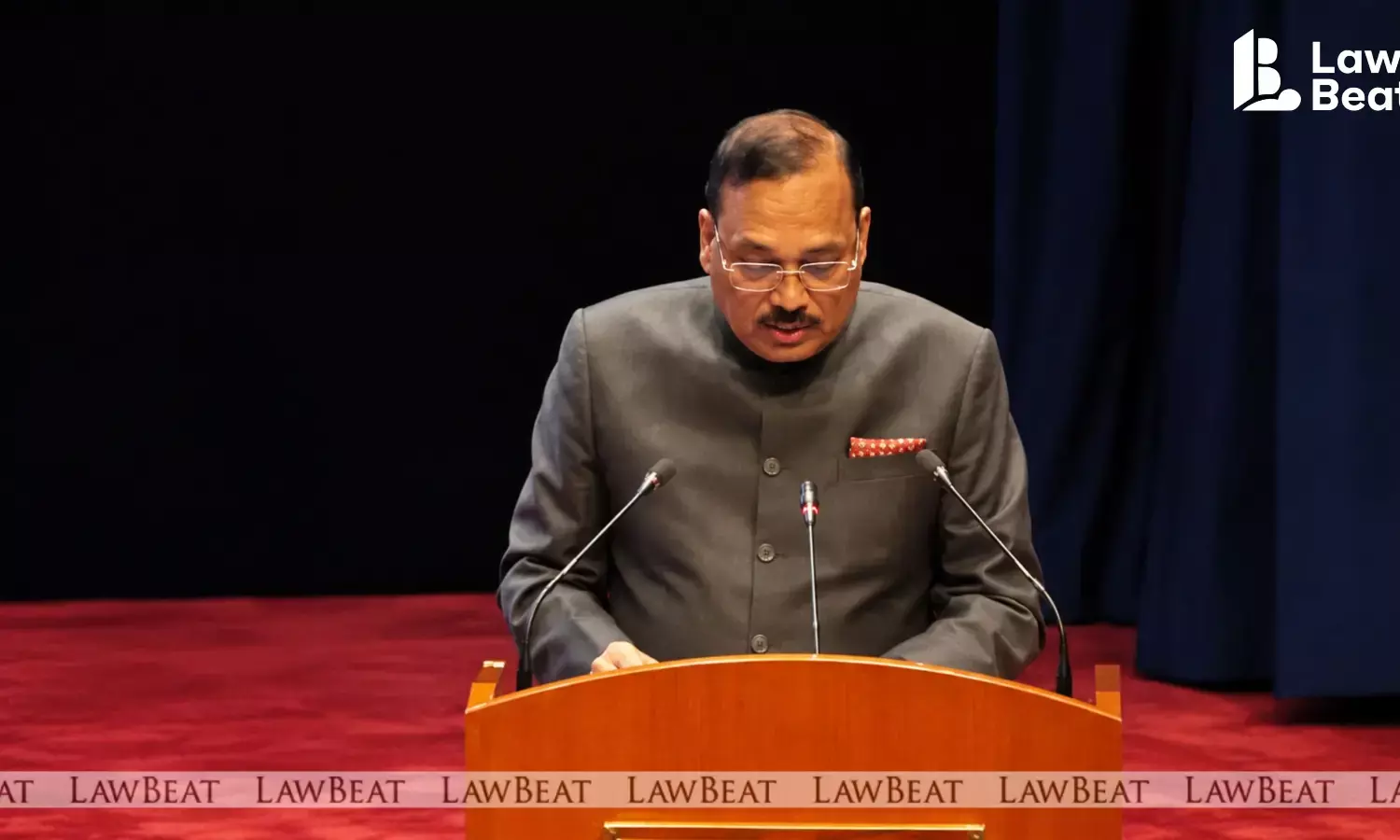
CJI Surya Kant wants the Constitution to be a pashmina shawl light enough for every shoulder, not only those who can afford it
The Supreme Court's jurisprudence is like "the finest of pashmina shawls", Chief Justice of India Surya Kant said on Thursday, delicate enough to pass through a finger ring and warm enough to shelter the Republic. But, he cautioned, "even the most precious of shawls, for all its fineness, can protect only those who could afford to wrap it around their shoulders." Acknowledging that the Court was once seen, "and not entirely without reason, as a court of the privileged", he declared that era "now over".
The CJI was delivering the Constitution Day address at the celebrations organised by the Supreme Court at the Auditorium of its Administrative Buildings Complex in New Delhi on 26 November 2026, in the presence of the President of India.
The CJI opened with the Preamble's words "give to ourselves", remarking that "in the very same act, a people became both the giver of a gift and its recipient."
He then recalled the speech of Smt. Hansa Mehta in the Constituent Assembly in December 1946, when she said the women of India had "never asked for privileges" but for "social justice, economic justice, and political justice". That distinction, he said, "lies at the very heart of our Constitution, which was conceived not as a charter of advantage for a fortunate few, but as a covenant of justice with every citizen."
Comparing the Court's body of judgments to "the finest of pashmina shawls", the CJI said such a shawl "may be drawn through a finger ring, and yet warm enough to carry a traveller through the bitterest of winters." No single decision could have sheltered the Republic, he said, but "thousands of them, laid patiently together, have done precisely that."
He then turned the image on the Court itself. "Yet even the most precious of shawls, for all its fineness, can protect only those who could afford to wrap it around their shoulders," he said, asking "whether justice, as dispensed here, has reached everyone it was meant for, or it has, at times, remained the privilege of those who already knew the way to our doors."
The CJI said it "would not be honest of me to pretend that the answer has always been a comfortable one."
"For those of ample means, the highest court in the land was at times less a court of last resort than one of first resort, approached at the earliest stages of a dispute. By contrast, for the vast majority of our people, many of them in the greatest need of justice, this Court was revered from afar, but seldom reached," he said.
He credited public interest litigation with beginning the change more than four decades ago, when the Court began treating letters and postcards as petitions. "A single letter written on behalf of bonded labourers in the stone quarries of Faridabad was once enough to secure their freedom," he said. Though that jurisdiction "has, at times, been abused and misused", he said it taught the institution "that its strength lies as much in the doors it keeps open as in the questions it decides."
"A door held open, however, counts for little if a privileged handful may still stride through it ahead of everyone else, and on this, I see no virtue in delicacy," the CJI said.
"That era is now over, for even the most eminent among them must appear on exactly the same footing as a lawyer from a small town, bound by the same queue, the same clock, and the same rules." This levelling, he said, "is what has made this Court, in the fullest sense, the people's court."
Setting out the reforms, the CJI said that fresh matters "are now listed automatically, without anyone having to rise in Court and plead for a date", while cases involving personal liberty or urgent interim relief "must reach a Bench within two working days."
Priority in listing is now given to persons with disabilities, acid attack survivors, senior citizens above eighty, families below the poverty line and litigants who come through legal aid. "Because every such priority rests on criteria announced in advance and applied alike to all, the listing of cases follows a transparent and uniform pattern, in which no one is shown undue favour," he said.
On technology, the CJI said video-conference hearings allow "an advocate in Kohima or in Kutch to argue before this Court without leaving their own town". Constitution Bench proceedings are streamed live and transcribed with the help of artificial intelligence, while SUVAS, the Court's AI-assisted translation software, "carries judgments into the languages of the people, for a judgment that a citizen cannot read can never truly belong to that citizen."
He also referred to the launch this year of the One Case, One Data initiative, which traces a case's record "all the way from the taluka court to the Supreme Court", and an AI-powered assistant that guides litigants through the Court's procedures.
"When access to a court is governed by system rather than by stature, privilege finds little room within it," he said.
The CJI said access to justice "begins long before a case reaches any Bench", and pointed to the National Legal Services Authority's paralegal volunteers, who are "often the first, and sometimes the only, face of the law that anyone in distress will ever see."
"It is, therefore, the bounden duty of every para-legal volunteer to speak to the justice-seeker in his or her own local language and dialect," he said, adding that in that same language they must understand what the person has endured, explain what the law provides and guide them "step by step, through every stage that follows."
Acknowledging that "much remains to be done before the humblest litigant can feel at ease in this Court as much as its most celebrated advocate", the CJI said that while all who hold office in the Court "do so only for a season, the Court itself belongs to every season yet to come, and to every citizen who will one day stand before it."
He closed by returning to the shawl, wishing that the Constitution "should remain, like a fine but most affordable pashmina shawl, light enough to rest upon every shoulder in the land, and warm enough to shelter its people through whatever winters may yet lie ahead."