
Lawyers Cannot Hand Over Their Credibility to AI, Says Former President Ram Nath Kovind
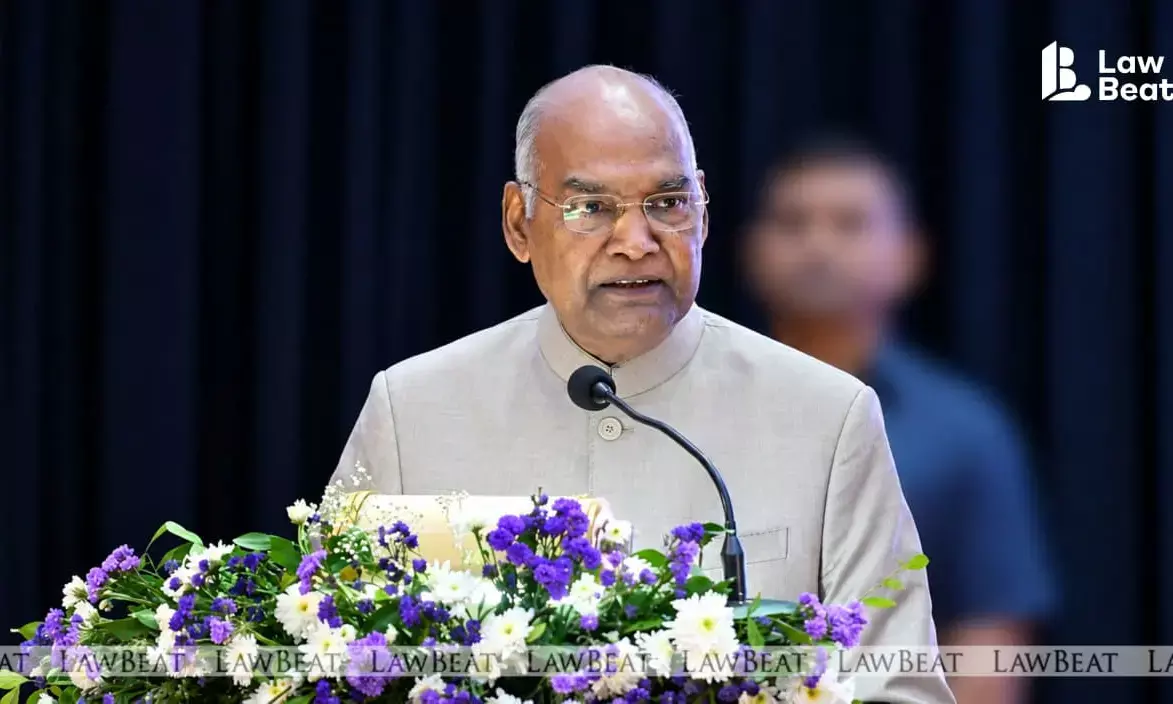
AI Can Speed Up Justice, but Human Oversight Is “Utterly Indispensable”: Ram Nath Kovind
Former President of India Sri Ram Nath Kovind has said that artificial intelligence can widen access to justice only if it is used with “vigilant human oversight”, warning that technology confined to well-funded city chambers “will merely reinforce old inequalities.”
Delivering the Justice K. Ramaswamy Endowment Lecture at Dr BR Ambedkar College of Law, Andhra University, Visakhapatnam, on November 14, 2026, the 14th President of India spoke on “The Legal Profession: Opportunities and Challenges in the Digital Age”. He recalled Justice Ramaswamy as a “humanist judge” who sat on the bench in S.R. Bommai v. Union of India and later served on the National Human Rights Commission, and praised the Justice’s son, Srinivas, for funding the endowment.
Mr Kovind called equitable access the first challenge of the digital age. The task, he said, is two-fold: the grassroots lawyer in a district court must have the same digital resources as the corporate advocate, and the ordinary citizen must be able to navigate online courts and portals. Initiatives such as Tele-Law and e-Sewa Kendras, run through Common Service Centres, show the way, he said, but citizens who reach these platforms often meet “an invisible barrier of language and user-interface.”
On language, he recalled urging then Chief Justice of India Ranjan Gogoi during his presidency to make Supreme Court judgments available in regional languages. Today, he noted, more than 83,000 translations are accessible in eighteen Indian languages, and High Courts have taken up the initiative as well.
AI, he said, now offers “unprecedented possibilities for speed and scale”. Early machine translation made humorous errors, and he cited a case titled Surya Prakash v. Union of India that could be rendered literally as “Sunlight versus Union of India”. Although AI has since matured, he said, a machine “cannot be trusted blindly” with the nuances and terminology of law, because “a misjudged word or an unintended emphasis can alter the rights of a litigant”. Human supervision at every layer, he said, remains “utterly indispensable”.
Verify from the original, not from the software
The sharpest part of the lecture dealt with fabricated case law. Generative AI, Mr Kovind said, can produce polished prose “while fabricating legal precedents and hallucinating cases with convincing fluency.” He said the hazard is already in courtrooms, pointing to the American case of Mata v. Avianca Inc., where lawyers were penalised for submitting software-generated citations that did not exist. Closer home, he said, the Supreme Court in Pooja Ramesh Singh v. Jammu and Kashmir Bank Ltd. set aside orders based on invented citations generated through AI.
The lesson, according to him, is that whoever places an assertion before a court must personally verify it from an authentic source. “Verifying does not mean asking the software to confirm its own draft; it means opening the original judgment, understanding its context, and ensuring that it has not been overruled,” he said, adding that lawyers “cannot transfer our professional credibility to a software provider.”
Turning to legal education, he said the “quiet struggle of research” is “the very forge in which a legal mind is shaped”. If technology automates such work, universities must deliberately teach critical thinking, assess students on the depth of their reasoning and their ability to defend a position orally, and include lessons on critically examining AI output.
He urged law schools to ground students in procedural law for the digital age, noting that the Bharatiya Sakshya Adhiniyam, 2023 gives electronic and digital records equal footing, while Section 530 of the Bharatiya Nagarik Suraksha Sanhita, 2023 enables electronic inquiries and trials. In an era of deepfakes, he said, future lawyers need the technical literacy to test the authenticity of every recording and file.
Responsibility, he added, cannot rest on educators alone. He described the Kerala High Court’s policy on the use of AI tools in the district judiciary as “a blueprint for the future”, noting that it sets guardrails on confidentiality and human oversight and expressly bars the use of AI to generate judicial findings or orders. Institutions must also give human reviewers enough time and assistance to form an independent opinion, he said, so that they do not become “mere rubber stamps for automated decisions.”
Addressing law students who are about to take their oaths, Mr Kovind said technology provides powerful tools “but it will never possess a conscience.” Software, he said, cannot feel righteous indignation at injustice or defend a citizen’s constitutional liberties against overbearing power. That duty, he said, “belongs exclusively to you.” He urged them to uphold constitutional values.
Event Name: Justice K. Ramaswamy Endowment Lecture
Event Date: November 14, 2026