
'Life Is Not So Cheap': Supreme Court Says Pedestrian's Death Cannot Be Valued At ₹10 Lakh
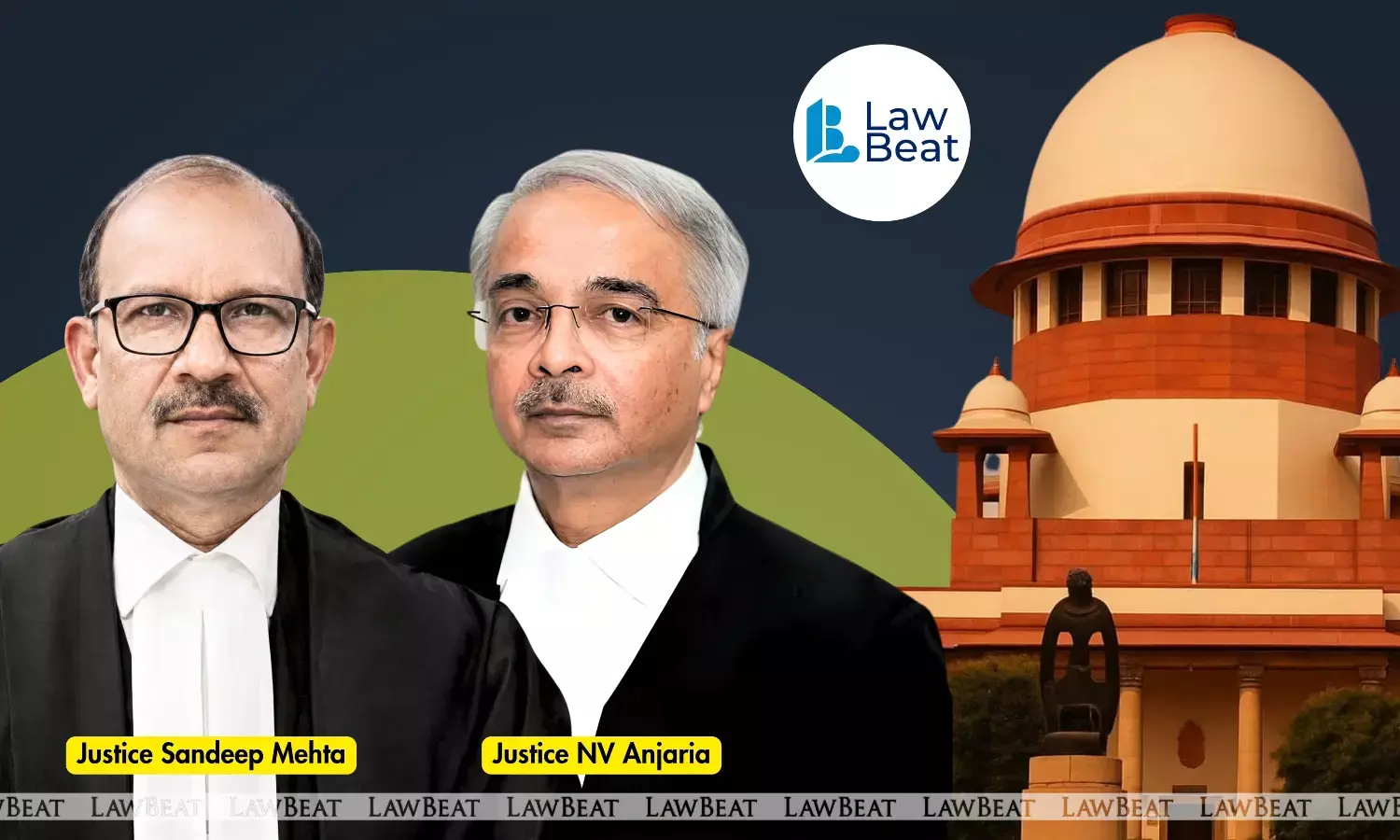
The Supreme Court observed that “life is not so cheap” and said even ₹10 lakh may not be sufficient compensation for the family of man who lost his life in a fatal road accident
A Karnataka-based auto-rickshaw driver has approached the Supreme Court challenging his conviction under Sections 279 and 304-A of the Indian Penal Code (IPC) in a fatal road accident case, while also seeking the benefit of probation as a first-time offender.
The Special Leave Petition (SLP) assails an April 2, 2026 judgment of the Karnataka High Court, which upheld his conviction for rash and negligent driving causing death but reduced his substantive sentence to six months' imprisonment.
During the hearing, however, the proceedings also turned to the issue of compensation for the victim's family.
The Bench of Justice Sandeep Mehta and Justice NV Anjaria noted that the deceased was an auto-rickshaw driver and underscored the gravity of the loss suffered by his family.
"A poor auto driver lost his life," Justice Mehta observed.
When Advocate Anantha Narayana M.G., appearing for the petitioner, suggested that his client could pay Rs 3.5 lakh as compensation, the Court remarked, "Life is not so cheap, Sir. Even Rs. 10 lakhs would not be sufficient."
Counsel then sought time to obtain instructions from his client, stating, "I will put it before my client." The Bench responded, "Render and come back."
On merits, the petitioner has contended that he was wrongly convicted on the basis of inconsistent and contradictory evidence. According to the prosecution, he was driving a Maruti Ritz car on October 24, 2014, when he allegedly hit one Anil Nazarath, who later succumbed to his injuries.
The petitioner has consistently maintained that the accident was not caused by his vehicle and that a lorry was responsible for the incident. He claims that he has been falsely implicated and points to material inconsistencies regarding the manner of the accident, the position of the deceased and the credibility of eyewitnesses.
The plea argues that the trial court convicted him primarily on the testimony of interested witnesses and improperly shifted the burden of proof by drawing adverse inferences against him. It also challenges the reliance placed on the doctrine of res ipsa loquitur, contending that the principle ordinarily applies to civil proceedings and cannot, by itself, sustain a criminal conviction.
Apart from challenging the conviction, the petitioner has urged the Court to consider extending the benefit of the Probation of Offenders Act, 1958. He states that he is a first-time offender with no criminal antecedents and is the sole breadwinner of his family, comprising two minor school-going children and an aged mother suffering from a severe kidney ailment.
Relying on the Supreme Court's decision in Elangovan v. State represented by Inspector of Police (2023), the petitioner argues that similarly placed offenders convicted under Section 304-A IPC have previously been granted probation.
The plea raises questions regarding the applicability of Section 106 of the Evidence Act, the permissibility of drawing adverse inferences against an accused, the use of res ipsa loquitur in criminal prosecutions and the extent to which probation should be considered in cases involving first-time offenders convicted of causing death by negligence.
Case Title: Sharath v. The State of Karnataka
Bench: Justices Sandeep Mehta and NV Anjaria
Hearing Date: June 23, 2026