
Mamta Banerjee Moves Supreme Court Against West Bengal SIR
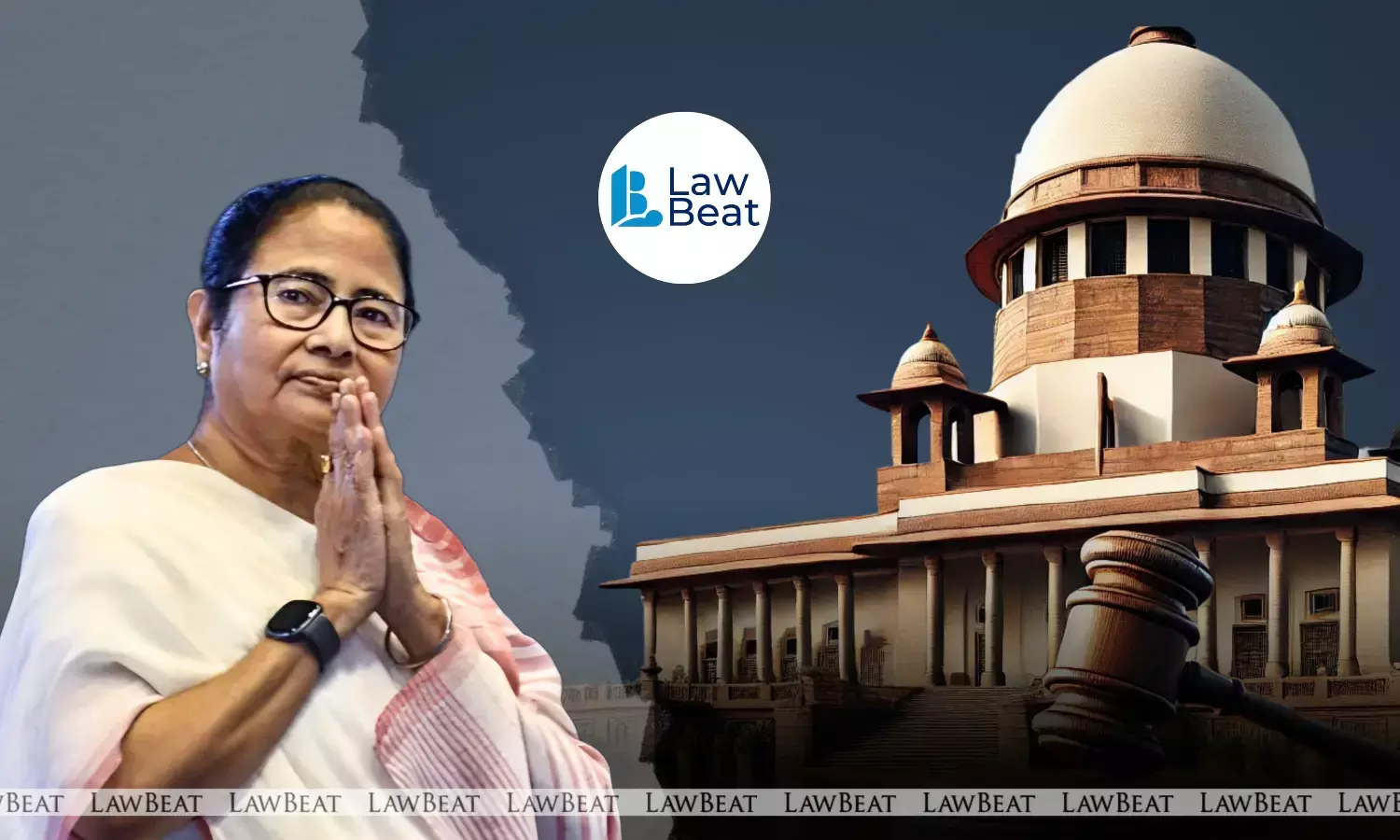
West Bengal Chief Minister Mamata Banerjee has accused the Election Commission of conducting an arbitrary and ill-prepared Special Intensive Revision of electoral rolls, warning that it could lead to mass disenfranchisement and undermine democratic processes
West Bengal Chief Minister Mamata Banerjee has approached the Supreme Court challenging the ongoing Special Intensive Revision (SIR) of electoral rolls in the state, intensifying her standoff with the Election Commission of India (ECI) ahead of the upcoming Assembly elections.
Banerjee filed the petition on January 28, making the Election Commission of India and the Chief Electoral Officer of West Bengal parties to the case.
The matter is yet to be listed for hearing before the apex court.
The challenge comes at a time when the Supreme Court is already seized of multiple petitions questioning the legality and conduct of the SIR exercise, which has triggered political controversy and allegations of large-scale voter exclusion in West Bengal.
Prior to moving the Supreme Court, Banerjee had written to the Chief Election Commissioner, Gyanesh Kumar, urging him to immediately halt what she described as an “arbitrary and flawed” revision of electoral rolls in the poll-bound state. In her letter, the Chief Minister warned that continuing the SIR in its present form could result in “mass disenfranchisement” of voters and “strike at the very foundations of democracy”.
Sharpening her attack on the constitutional authority, Banerjee accused the Election Commission of overseeing an exercise that was “unplanned, ill-prepared and ad hoc”, and alleged that the process was riddled with “serious irregularities, procedural violations, and administrative lapses”.
As per reports, in a strongly worded communication dated January 3, Banerjee claimed that the manner in which the SIR was being conducted raised grave concerns about fairness, transparency, and adherence to established electoral norms. She contended that the revision drive, instead of strengthening the integrity of electoral rolls, risked excluding genuine voters without adequate safeguards or due process.
The case is awaited to be listed for hearing.
Notably, in January, court had issued a set of directions aimed at ensuring transparency and fairness in the ongoing Special Intensive Revision (SIR) of electoral rolls in West Bengal, after hearing a batch of petitions alleging large-scale inconvenience and arbitrariness in the verification process.
The bench of Chief Justice of India Surya Kant, Justices Dipankar Datta and Joymalya Bagchi had heard detailed submissions from Senior Advocates Kapil Sibal and Shyam Divan for the petitioners, and Senior Advocate Rakesh Dwivedi for the Election Commission of India (ECI).
At the heart of the challenge was the ECI’s categorisation of voters under the SIR, particularly the category described as “logical discrepancy”, which, according to the petitioners, accounted for the largest number of voters flagged for verification.
CJI Surya Kant had noted that approximately 1.25 crore notices had been issued under the SIR. These were divided into three categories: “mapped” voters linked to the 2002 SIR, “unmapped” voters not linked to the earlier revision, and “logical discrepancy” voters, numbering about 1.36 crore. The court observed that logical discrepancies included mismatches in parental names, or age gaps between parents, grandparents and electors, which had triggered notices. After hearing the parties, the bench issued a series of directions. It ordered that the names of voters flagged under the “logical discrepancy” category be displayed at gram panchayat bhavans, block offices, taluka and subdivision offices, and ward offices in cities. The court permitted affected voters to submit documents and objections through authorised representatives, including BLAs, supported by an authority letter.
The court further directed that facilities for submission of documents and objections be set up at panchayat and block offices, and asked the West Bengal government to provide adequate manpower to the ECI to ensure smooth functioning. The Director General of Police was directed to ensure there was no law and order problem during the exercise.
Importantly, the bench directed that voters who had not yet submitted documents or objections be allowed to do so within an extended period. It also clarified that affected persons should be given an opportunity of hearing, and that officials receiving documents or conducting hearings must certify receipt. It had also briefly heard a related plea concerning alleged violence against BLOs during the SIR process and indicated that the matter would be listed again for further consideration.
Emphasising balance, the CJI had observed that while some correction exercise was necessary, it must be carried out in a manner that was transparent, non-arbitrary and did not cause undue stress to over a crore voters affected by the process.
Case Title: Mamata Banerjee v. Election Commission of India
Bench: Supreme Court of India (hearing expected)