
Medicine Prices: Supreme Court Asks Why 90% Of Drugs Fall Outside DPCO, Reserves Order
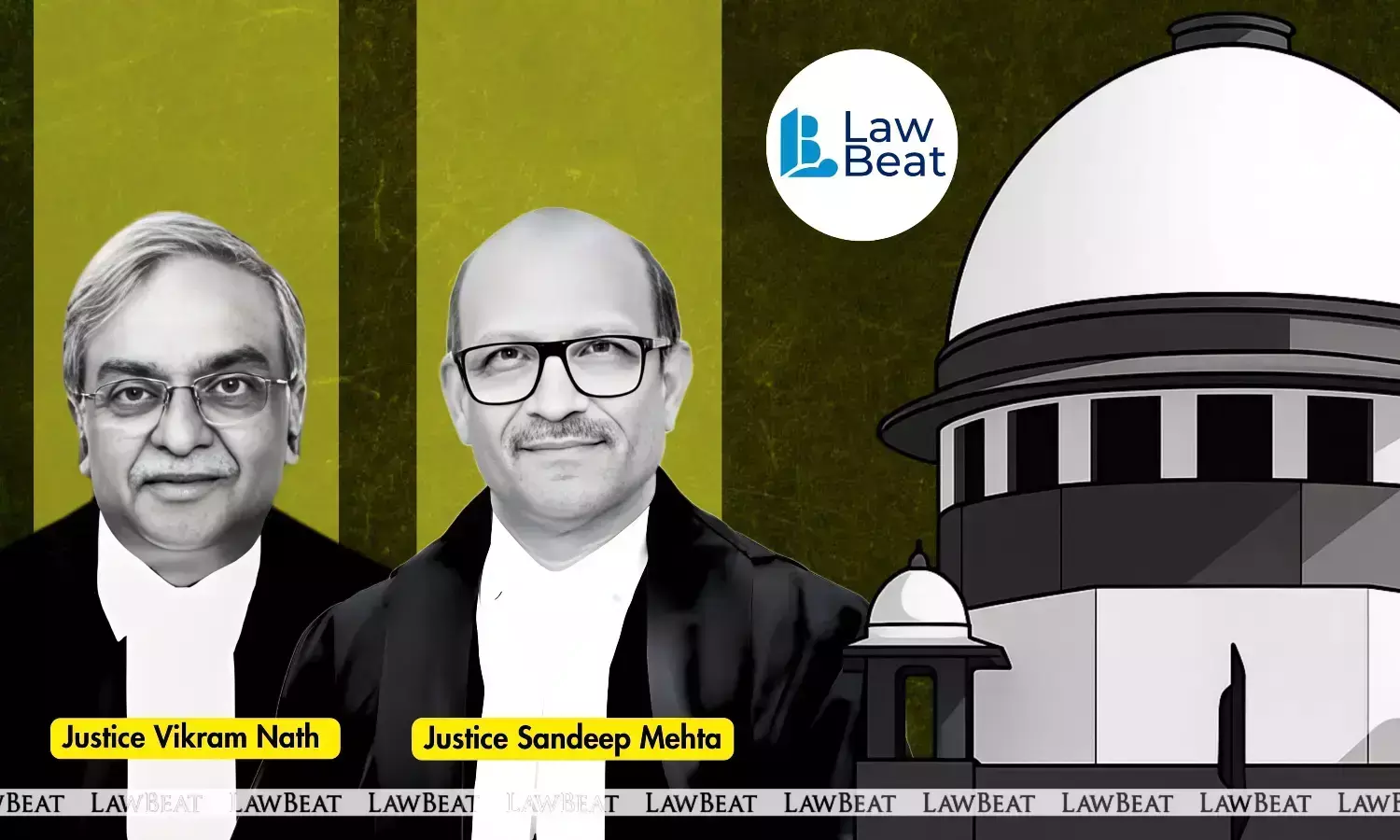
The Supreme Court questioned the Centre over the gap between the MRP of medicines and the price paid by retailers, and reserved its order on two petitions concerning drug pricing
The Supreme Court on Tuesday asked the Union Government to explain why medicines reach patients at prices far above what retailers pay for them, and why the country's drug-pricing framework appeared to work for pharmaceutical manufacturers rather than for the people who buy their products.
"Why is the entire system working to help these people (manufacturers)," a Bench of Justices Vikram Nath and Sandeep Mehta asked, as it examined the difference between the maximum retail price (MRP) of medicines and the price at which retailers buy them.
The Bench observed that the National Pharmaceutical Pricing Authority (NPPA), the statutory price regulator, seemed to be a "totally defunct" body.
The Court was hearing two petitions raising the issue of pricing of medicines in the country. After hearing the parties, it reserved its order.
Referring to the wide difference between the MRP and the price to the retailer, the Bench placed the responsibility squarely on the Government.
"The government is allowing this to happen. It is under the government's own eyes that it is happening," the Bench said, before asking, "Should it be allowed to run amok?"
Additional Solicitor General (ASG) Aishwarya Bhati, appearing for the Centre, told the Bench that medicine prices in India were among the lowest in the world. Responding to the Court's concerns, the Centre said that the Government's policy was that the entire ecosystem should not be brought under regulatory control.
The Court heard the husband of a cancer patient, who is himself a medical distributor. He told the Bench that an injection available to him at a dealer price of ₹11,000 was allegedly priced at ₹1.30 lakh by a reputed hospital, and that the hospital refused to administer the injection he had offered to bring.
"Why this difference? Where does the money go?" Justice Sandeep Mehta asked the Centre. He then asked, "Why is the Drugs (Prices Control) Order [DPCO] in place at all?"
Justice Mehta gave a second example from the supply chain: a drip line that costs ₹15 at the retailer level but is sold for ₹250. "The government is allowing this to happen," he remarked.
The Centre maintained that it was constantly calibrating drug prices. The Court was not persuaded. "Your calibration is too wayward," it told ASG Bhati.
Justice Mehta also said that the Centre could not leave the justification for such wide price differences to the pharmaceutical industry to answer. He drew attention to the position of the patient at the end of the supply chain. "The patients don't have any bargaining power," he observed, noting the helplessness of those who must buy essential medicines at whatever price is demanded.
The Centre responded that complete control over prices was not the answer.
The Court raised concerns over the limited reach of the DPCO, observing: "90% medicines are out of bounds for DPCO."
Referring to a news report, Justice Mehta also pointed to ₹8,000 crore that was reportedly pending recovery from pharmaceutical manufacturers on account of price differences.
Justice Mehta referred to the findings of three Parliamentary Committees that had examined exorbitant medical pricing. Their conclusions, he observed, were not convenient for those who wield influence. "The outcome is not very convenient to people who pull the strings," he said.
Responding to the Centre's reliance on innovation in the pharmaceutical sector, Justice Mehta put a direct question to the ASG. "You talk about innovation. Tell us, in the last 30 years, five new molecules developed by the Indian pharma industry. Name five," he said.
Justice Mehta also questioned the burden of out-of-pocket medical expenses in spite of Government healthcare schemes such as Ayushman Bharat. While the Government reimburses treatment costs, he observed, the reimbursement is capped at ₹5 lakh, and patients bear the expenses beyond that limit.
"Ultimately, it comes on the patient," he said.
The Bench has now reserved its order on the two petitions.
Background
Earlier, this month, the Court had informed of the “malpractice” of hospitals charging high MRPs for medicines and consumables from a patient who has a “very low bargaining position vis-a-vis the hospital, and the patient’s knowledge of drugs, their substitutes and their prices is also very limited”.
An affidavit had been filed in a case pending before supreme court on the issue of capping prices of all medicines and medical consumables. Filed by Ministry of Chemicals and Fertilizers, the response states, "The Indian drug market is fairly competitive, with a large number of pharmaceutical companies in every drug segment, resulting in one of the lowest prices in the world. Ordinarily, where there is substantial competition, there is no need to regulate prices. However, by their very nature, health treatment and pharmaceutical products involve information and bargaining asymmetries between patients on the one hand, and retail pharmacies, hospital pharmacies, hospitals providing treatment and doctors on the other".
Recently, the Union Government informed court that it had decided to regulate trade margins on anti-cancer medicines and will cap them at 30 per cent. The Centre said the measure is intended to prevent excessive markups on cancer drugs while ensuring that reasonable margins remain available in the supply chain.
The Solicitor General told the Bench that the Centre would notify a list of cancer drugs to be covered by the 30 per cent trade margin cap. The list, he said, would not be static. It would be updated periodically to include additional medicines on the basis of market developments and public health needs. Inexpensive drugs, the Solicitor General told the Court, would be kept out of the list.
Court had asked the Government why price-control measures were being restricted to anti-cancer medicines, and why similar measures were not being considered for other drugs. The Court also asked how patients would benefit if pharmaceutical manufacturers were allowed to fix drug prices, and questioned the justification for higher medicine prices. It further called for broader scrutiny of drug pricing. The bench stressed that the exercise should not end with anti-cancer medicines and should extend to the pharmaceutical market as a whole.
It is to be noted that the Drug prices in India are regulated under the Drugs (Prices Control) Order, 2013, issued under the Essential Commodities Act, 1955. Ceiling prices fixed under the Order apply to scheduled formulations, that is, medicines listed in its First Schedule. For non-scheduled formulations, the manufacturer sets the launch price, and the Order restricts only the annual increase in the maximum retail price.
Notably, on September 22, the Bench had flagged massive price disparity in essential cancer medicines, where a drug sold to retailers for ₹2,700 carries an MRP of ₹27,000. Justice Mehta had said, “How can a patient be cheated?”, questioning authorities’ silence over the pricing disparity. “It’s Ultimately Taxpayers’ Money”, he had said. The bench had also noted that hospitals purchase medicines at these prices and seek government reimbursement for patients treated under the AYUSH scheme. “It’s ultimately tax payer’s money. There is a clear cut case of fraud," the bench had remarked.
Case Title: Kishan Chand Jain v. Ethics and Medical Registration Board (EMRB)
Bench: Justices Vikram Nath and Sandeep Mehta
Hearing Date: October 27, 2026