
Menstrual Health Is Part of Right to Life: Supreme Court Considers Pan-India Standards for Schoolgirls’ Hygiene Access
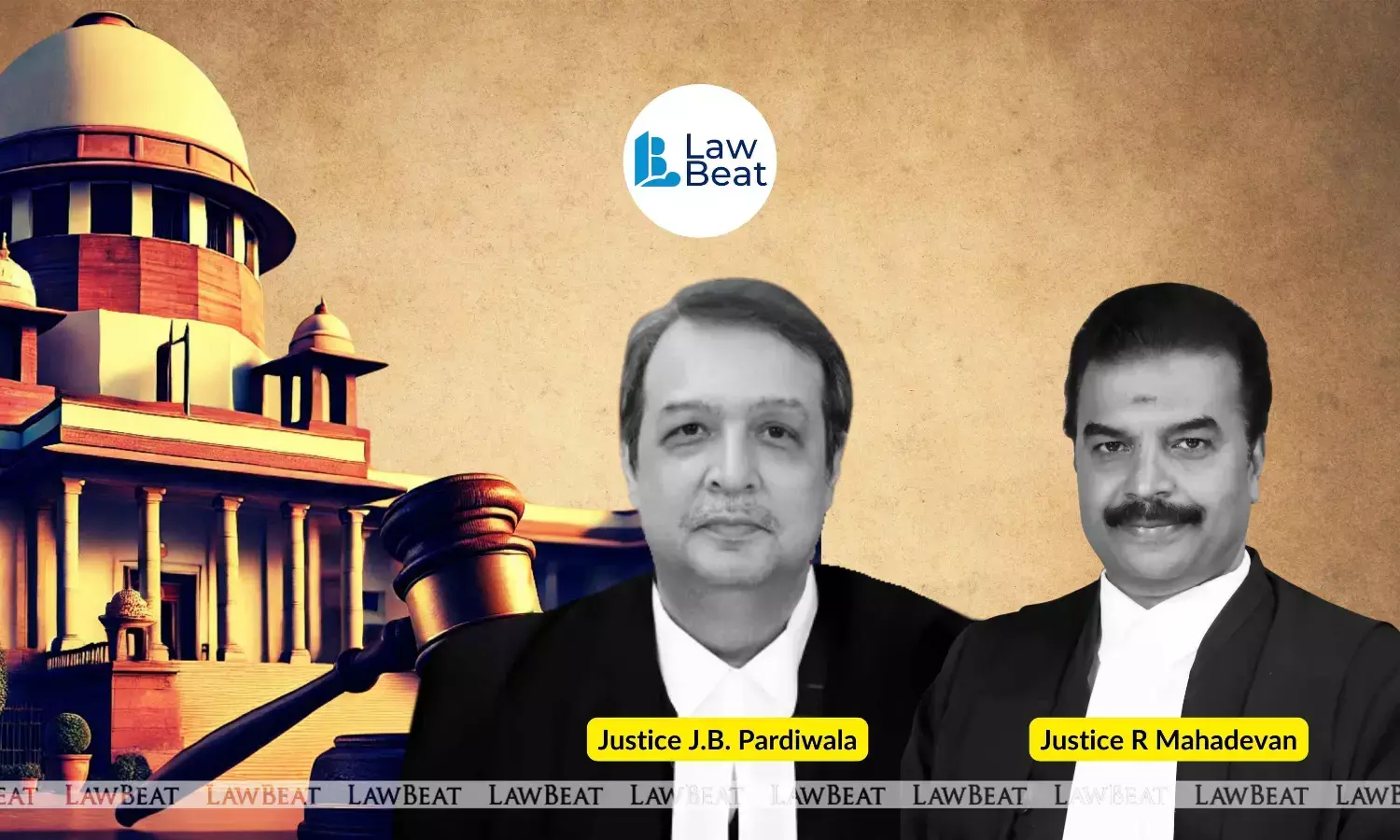
Supreme Court directed strict compliance with its order on providing free sanitary napkins and functional gender-segregated toilets in schools across India
The Supreme Court delivers its judgment on the pan-India implementation of the Centre’s Menstrual Hygiene Policy for school-going girls in government and government-aided schools, with the Bench of Justices J.B. Pardiwala and R. Mahadevan indicating that menstrual health lies at the intersection of dignity, privacy, equality and the right to education.
During the pronouncement, Justice Pardiwala framed the core constitutional question: whether the absence of gender-segregated toilets and non-access to menstrual absorbents could amount to a violation of the right to education under Article 21A and statutory guarantees under the Right of Children to Free and Compulsory Education Act, 2009.
The Bench emphasised that constitutional rights cannot remain abstract guarantees and must translate into lived realities. It noted that barriers to menstrual hygiene management operate at multiple levels, including institutional, systemic and socio-cultural, and that the State carries an affirmative obligation to address structural disadvantages that prevent girls from fully accessing education.
The Court also placed menstrual hygiene within the dignity framework under Article 21, observing that dignity manifests in conditions that allow individuals to live without humiliation, exclusion or avoidable suffering.
The Bench linked menstrual hygiene infrastructure directly with privacy, holding that the right to privacy is not merely a negative obligation on the State to avoid interference but also imposes a positive duty to create enabling conditions.
In a significant observation, the Court indicated that the right to life includes the right to menstrual health, recognising access to safe, effective and affordable menstrual hygiene management measures as essential for achieving the highest attainable standard of sexual and reproductive health. The Bench also connected menstrual health access with access to information and education about reproductive and sexual health.
On equality, the Court observed that true equality requires equal participation and equal opportunity, which in turn requires ensuring that girls have the infrastructure and support necessary to remain in school without interruption.
The Court ordered:
1. All States and UTs shall ensure that every government and private school is equipped with functional, gender-segregated toilets and adequate water facilities. All newly established schools must additionally ensure privacy, including infrastructure that caters to the rights and needs of persons with disabilities.
2. All States and UTs shall ensure that biodegradable sanitary napkins are made available within the toilet premises of every school.
3. All States and UTs shall establish effective menstrual hygiene management systems in schools, including the provision of spare uniforms and other essential materials to address menstrual emergencies.
The Bench made it clear that the judgment is intended to extend beyond legal stakeholders. Justice Pardiwala observed that the judgment speaks to classrooms where girls hesitate to seek help, teachers constrained by resource shortages, and families that may underestimate the impact of silence around menstrual health. It stressed that societal progress must be measured by the protection extended to vulnerable populations, particularly girl children forced into absenteeism due to lack of menstrual hygiene support.
Notably, on December 10, 2025, the Bench had reserved its judgment on the implementation of the Union Government’s national Menstrual Hygiene Policy for School-going Girls, which aims to ensure access to menstrual hygiene facilities and products for adolescent girls studying in Classes 6 to 12 in government and government-aided schools across India. The Bench had reserved the matter after hearing submissions from the Union Government on the proposed implementation framework and monitoring mechanisms.
The case arises from a public interest litigation seeking uniform access to menstrual hygiene facilities, including free sanitary napkins and proper sanitation infrastructure in schools nationwide.
The litigation traces its origin to earlier directions issued by the Supreme Court in 2022 and 2023. In November 2022, the court had issued notice to the Union Government, States and Union Territories on a plea seeking free sanitary napkins and adequate sanitation infrastructure for school-going girls. Subsequently, in April 2023, the court directed the Union to formulate a uniform national policy addressing menstrual hygiene for school students.
The Union Government had previously informed the Court that multiple ministries, including the Ministry of Health and Family Welfare, Ministry of Jal Shakti and Ministry of Education, are collectively responsible for implementing various aspects of menstrual hygiene infrastructure and awareness programmes.
Case Title: Dr. Jaya Thakur v. Government of India & Ors.
Bench: Justices J.B. Pardiwala and R. Mahadevan
Pronouncement Date: January 30, 2026