
“Nobody Should Believe Anybody Before Marriage”: SC While Hearing Bail Plea in False Promise to Marry Rape Case
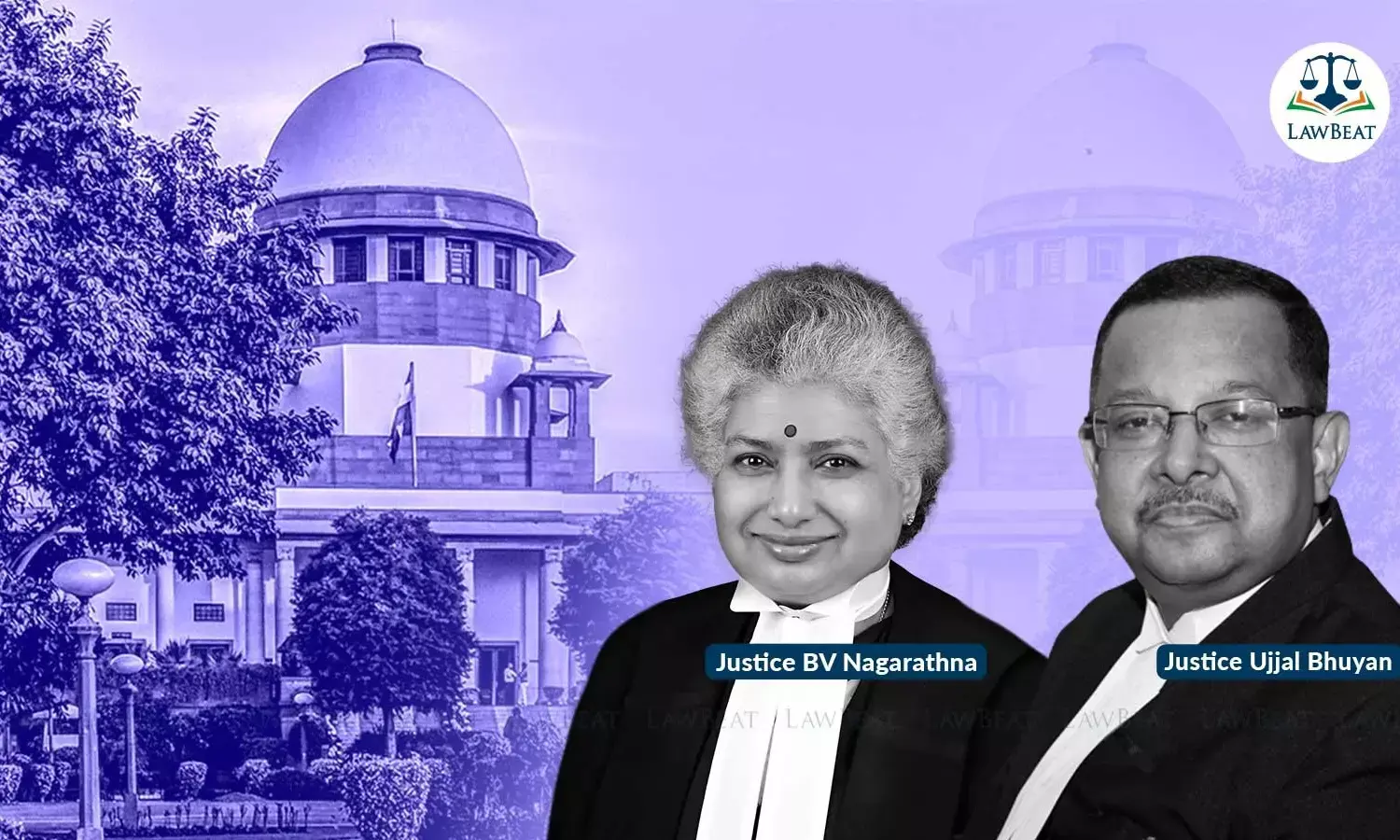
“Be Careful Before Marriage”: Supreme Court Urges Caution While Hearing Bail in False Promise Case
The Supreme Court on Monday orally observed that individuals must exercise caution before entering into physical relationships prior to marriage, while hearing a bail plea in a case involving allegations of rape on the pretext of a promise to marry.
The Court indicated that where a relationship appears to be consensual and arises out of a matrimonial alliance between adults, the criminal process must be carefully evaluated to determine whether the ingredients of the offence are prima facie made out.
A Bench of Justice B.V. Nagarathna and Justice Ujjal Bhuyan was hearing the plea of a man accused of establishing a sexual relationship with a woman after allegedly assuring her of marriage.
The Court did not pass a final order on bail but suggested that the dispute may be amenable to mediation, orally observing that such cases, where a consensual relationship is evident, may not necessarily warrant a full criminal trial. The matter has been posted for further hearing on Wednesday.
During the course of the hearing, Justice Nagarathna remarked that parties who meet prior to marriage are initially strangers and must act with circumspection. “Maybe we are old-fashioned but, before marriage, a boy and a girl are strangers. Whatever may be the thick and thin of their relationship, we fail to understand how they can be in a physical relationship before marriage… You must be very careful. Nobody should believe anybody before marriage,” she said.
The Court was informed that the parties met in 2022 through a matrimonial website and were in a relationship thereafter.
According to the prosecution, the accused assured the complainant that he would marry her, and on that basis she consented to a physical relationship, including meetings in Dubai.
It was further alleged that intimate videos of the parties were recorded without the woman’s consent and that she was subsequently threatened with their circulation.
The prosecution claimed that the complainant later discovered that the accused was already married and had contracted a second marriage in Punjab in January, 2024.
During the hearing, Court questioned the complainant’s decision to travel abroad with the accused prior to marriage.
When the State’s counsel submitted that the parties had met through a matrimonial platform and were planning to marry, the Court observed that if marriage was a pre-condition for intimacy, the complainant ought not to have travelled before the marriage was solemnised.
The Bench orally remarked that such cases required a careful assessment of whether the relationship was consensual and whether the promise to marry was false from the inception. It observed that where a consensual relationship between adults is evident, the matter may not necessarily fall within the category of cases requiring trial and conviction.
The Top Court has consistently held that a consensual relationship between adults does not amount to rape merely because the relationship does not culminate in marriage. For consent to be vitiated on the ground of “misconception of fact” under Section 375 of the IPC, it must be shown that the promise to marry was false from the very beginning and that the accused never intended to fulfil it.
At the same time, the Court has also clarified in a catena of decisions that where a promise to marry is made in bad faith solely to obtain sexual consent, the offence of rape would be attracted.
In the present case, the Bench appeared to examine whether the factual matrix disclosed a long-standing consensual relationship between two adults who had met with the intention of exploring marriage through a matrimonial platform, or whether there was a deliberate and fraudulent inducement.
The suggestion for mediation also reflects a judicial approach increasingly adopted in cases arising out of intimate relationships, where the Court first assesses whether the continuation of criminal proceedings would serve the ends of justice, particularly at the stage of bail.
Since the matter is at the stage of consideration of bail, the Court is required to examine only whether a prima facie case exists, the period of custody undergone, the nature of the allegations, and the likelihood of the accused influencing the investigation or trial.
The case will now be taken up for further consideration on Wednesday.
Bench: Justice B.V. Nagarathna and Justice Ujjal Bhuyan
Hearing Date: 16.02.2026