
Noida Protest Violence Case: Supreme Court Declines Bail To DU Student
The Supreme Court upheld the Sikkim High Court's decision increasing a gang rape sentence from 12 years to the mandatory minimum of 20 years prescribed under law
The Supreme Court on Friday refused to grant bail to a Delhi University student accused of inciting violence during an industrial workers’ protest in Noida last month, asking her to approach the Allahabad High Court instead.
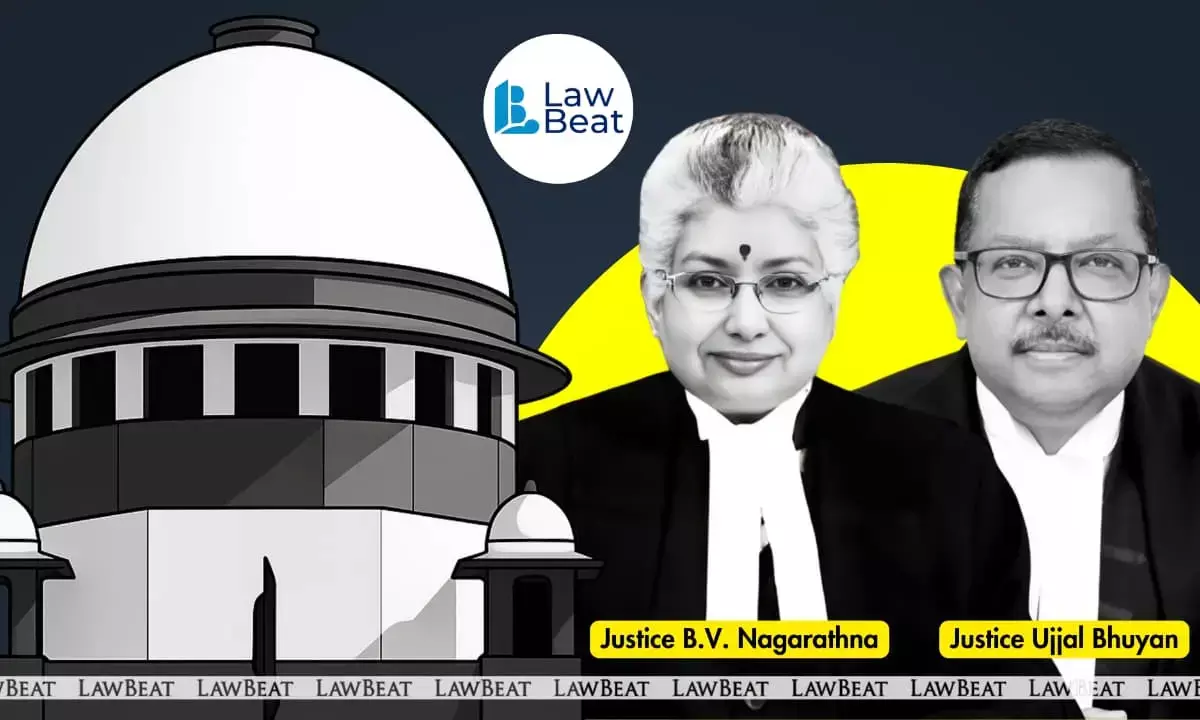
A bench of Justice B. V. Nagarathna and Justice Ujjal Bhuyan was hearing a petition filed by Aakriti Chaudhary, one of the accused in the April 13 violence that erupted during demonstrations by factory workers demanding a wage hike.
During the hearing, the bench questioned the maintainability of directly approaching the apex court for bail under Article 32 of the Constitution. “Why don't you go to high court? Everybody comes here by filing petition under Article 32 of the Constitution. There are 93,000 cases pending in the Supreme Court,” the bench orally observed.
Chaudhary’s counsel argued that the police had failed to furnish the grounds of arrest to the accused and sought interim relief from the Court. It was also submitted that Chaudhary is a postgraduate student from Daulat Ram College, Delhi University.
The Court, however, declined to entertain the bail plea and indicated that the petitioner should first avail remedies before the jurisdictional High Court.
At the same time, the bench issued notice to Uttar Pradesh police officials on a separate petition filed by one Keshaw Anand alleging custodial torture by police authorities in connection with the same case.
The matter arises out of large-scale protests by industrial workers in Noida on April 13 over long-pending demands for wage revision and better working conditions. According to officials, workers from several industrial units had gathered to demonstrate and raise slogans demanding salary hikes.
The protest allegedly turned violent after some participants vandalised public and private property, pelted stones and set a vehicle on fire. Police subsequently registered criminal cases and arrested multiple persons allegedly involved in the violence.
Earlier, a Noida court had granted conditional police remand of three women accused in the case — Aakriti Chaudhary, Manisha Chauhan and Srishti Gupta. The trial court had also directed that lawyers representing the accused would be permitted to remain present during investigation proceedings.
Police, while seeking custodial interrogation, had argued before the trial court that there was a “full possibility of getting important evidence from the place of residence of the accused.”
Chaudhary and Gupta, both in their 20s, are residents of Delhi. Chaudhary reportedly holds a master’s degree in history from Daulat Ram College. Co-accused Manisha Chauhan is stated to be employed with an industrial unit in Noida.
The case has triggered debate over the police response to labour protests and the invocation of serious criminal charges against student activists and workers allegedly linked to the demonstration.
The Supreme Court’s refusal to directly entertain the bail plea also comes amid increasing concern within the judiciary over the mounting pendency of cases before the apex court. By directing the petitioner to first approach the Allahabad High Court, the bench underscored the principle that constitutional remedies before the Supreme Court should not bypass ordinary judicial forums unless exceptional circumstances exist.
Case Title: Akriti Choudhary v. State of Uttar Pradesh
Bench: Justices BV Nagarathna and Ujjal Bhuyan
Hearing Date: May 8, 2026