
"Not A Person Who Only Makes Statements," CJI Surya Kant Assures Of Women Representation In Legal Profession
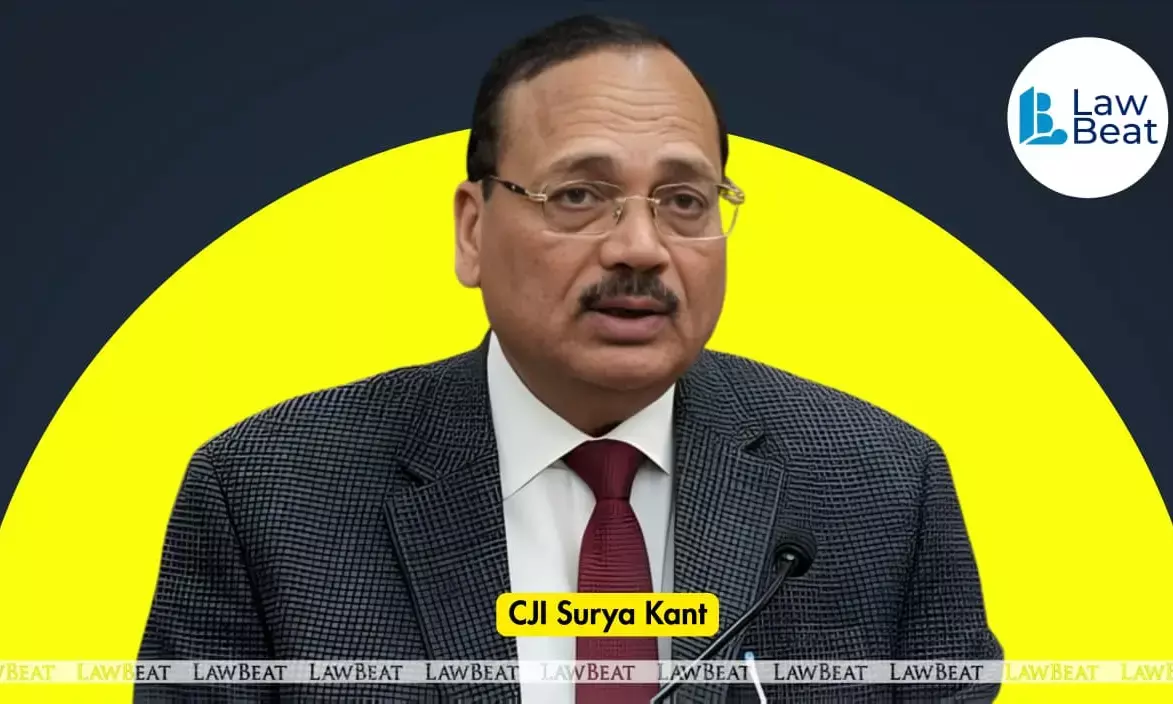
CJI Surya Kant on Saturday delivered an address at the Oxford Union organized by the Oxford Law Society
The Chief Justice of India Surya Kant recently disclosed that he has been working on a robust mechanism to encourage women representation in the legal profession.
CJI Surya Kant delivered an address at the Oxford Union organized by the Oxford Law Society and the Oxford Union alongwith Tanvi Dubey Advocate on Record at the Oxford University.
During an interactive session, the CJI was asked about his firm stance on gender representation, championing 50% reservation for women on government panels and warning Bar bodies of suspension for defying women's quotas. The attendee asked CJI Kant that while his stance signals a genuine commitment, representation at entry level and retention through a career are two different problems as a significant number of women are now entering law in India, indicating that a strong pipeline exists. CJI was asked what needs to change structurally to ensure women are not lost somewhere between graduation and seniority.
In his response, CJI Kant said that while he had seen development in women’s career as far as district and high courts are concerned and also cited the recent appointment of a women judge to the Supreme Court, he agreed with the attendee that many women are not able to sustain in the legal profession. "In one of the conferences, I made a suggestion that 50 percent of appointment as law officers should be of women and I am not a person who only make statements – We are working on a robust mechanism for longer perspective is being worked upon. In this backdrop, I have already reserved 30 percent seats for women seats in state bar election bodies, district bar associations and the Bar Council," the CJI added.
The CJI also was asked on how he would use his powers as master of roster to make the assignment process more transparent or even more distributed. "This concept of master of roster has been misinterpreted. Fundamentally all constitutional responsibilities are upon the CJI. Allocation of work is only one leg of that responsibility. Substantive matters are listed through automotive system, to ensure transparency and to ensure that roster is disclosed. Only personal expert in one area is given work in that area. Optimum utilization is the key focus while matters are allocated," the CJI answered.
Over a 20-minute address, on the topic “Constitutional Promise to Digital Reality: Safeguarding Justice in the Age of AI and technological advancement", the CJI emphasized that while technology serves as a powerful tool to democratize justice, its deployment must remain firmly anchored to the human heart of constitutional values.
The CJI said the Constitution is an organic, living institution that must continuously adapt to historical shifts. Invoking Justice Oliver Wendell Holmes Jr., the CJI observed that the founding principles of liberty, equality, and justice remain enduring, but the tools to realize them have fundamentally changed. Warning against digital exclusion, the CJI highlighted that fundamental rights would be rendered "otiose" (redundant) if they were not realigned with the digital era.
CJI posited that AI is driving the legal community toward an interconnected, globalized frontier. While respecting unique constitutional identities, courts across jurisdictions can now seamlessly learn from shared experiences and foreign precedents at the click of a button. Emphasizing India's approach, the CJI clarified that platforms like SUPACE (for legal research) and SUVAS are designed purely as aids to judicial functioning, preserving human intellect rather than replacing it. Reflecting on the post-pandemic era, the CJI noted that changes originally spurred by COVID-19 have now been permanently institutionalized into a seamless, digital-first judicial ecosystem.