
Open Letter to CJI Over Rohingya Remarks: Former Judges, Senior Lawyers Decry “Dehumanisation”
The former judges have supported a Court-monitored SIT into the illegal procurement of Indian identity and welfare documents by foreign nationals who have entered Bharat in violation of law.
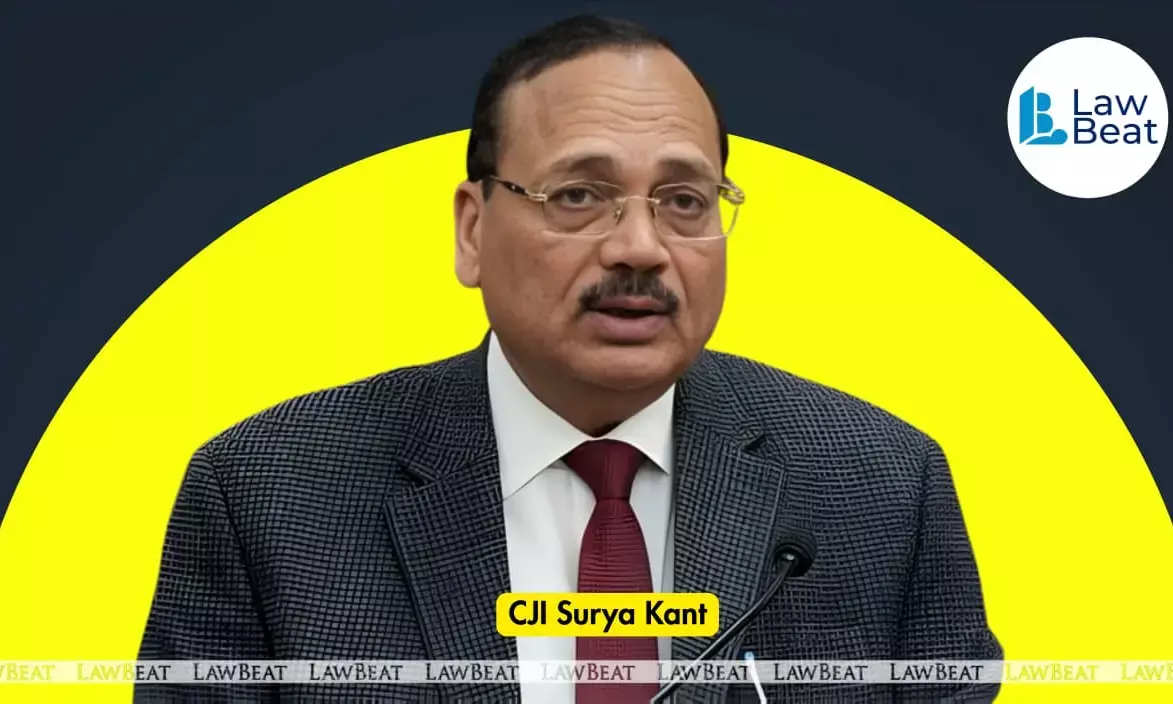
A group of more than thirty former judges, Senior Advocates and members of the Campaign for Judicial Accountability and Reforms (CJAR) have written an open letter to the Chief Justice of India (CJI) Surya Kant expressing “deep concern” over remarks made by a Supreme Court Bench on December 2 while hearing a plea on the alleged custodial disappearance of Rohingya refugees.
The CJI during the hearing had asked if the Government of India has declared Rohingyas as 'refugees'. A CJI Surya Kant led Bench posed this query while responding to a petition filed against disappearance of Rohingyas. The Court was told by the petitioner that 5 Rohingyas were picked up by the Delhi police in May and there was no information about their whereabouts. Hearing this, the CJI had asked, "Where is the order of the Government of India declaring them as refugees? Refugee is a well defined legal term and there is a prescribed authority by the Government to declare them. If there is no legal status of a refugee, and somebody is an intruder, and he enters illegally, do we have an obligation to keep them here?"
The petition in question was filed by Dr. Rita Manchanda, a well-known scholar and human rights advocate who works extensively on conflict and displacement in South Asia.
During the December 2 hearing, the signatories say the Bench made remarks questioning the legal status of Rohingya refugees, equating them with “intruders,” invoking imagery of people “digging tunnels” to enter India, and suggesting that such entrants may not be entitled to food, shelter or education. The Bench also reportedly stated that such persons should merely be spared “third-degree measures.”
According to the signatories, these remarks “dehumanise” a persecuted community and run contrary to constitutional guarantees. The Rohingya, the letter emphasises, are internationally recognised as among the “most persecuted minorities in the world,” a stateless Muslim ethnic group from Myanmar subjected to decades of discrimination, violence and what the International Court of Justice has characterised as genocide. Many flee to India seeking safety, as generations of refugees have done before them.
The letter stresses that Article 21 protections extend to “every person,” citizen or otherwise, citing the Supreme Court’s own ruling in NHRC v State of Arunachal Pradesh (1996), where the Court held that the State is duty-bound to protect the life and liberty of all human beings within the territory. Reducing these constitutional guarantees to mere protection from custodial torture, the signatories argue, is legally untenable and morally troubling.
The letter also points to India’s longstanding humanitarian practice toward refugees, including Tibetans, Sri Lankan Tamils and those who crossed over during the 1971 Bangladesh crisis. India’s Standard Operating Procedure for Foreign Nationals Claiming to be Refugees (2011, updated 2019) recognises persecution-based refugee status in line with customary international law. Refugees, the signatories note, have a “qualitatively different status” from undocumented migrants, and refugee status determination is declaratory, not discretionary. Any deportation or detention without individual assessment violates the principle of non-refoulement, which Indian courts have read into Article 21.
The signatories caution that remarks from the highest court have “cascading effects” on lower courts, tribunals and administrative authorities. Equating refugees; including thousands of women and children, with illegal intruders, they say, undermines public faith in the judiciary’s role as a “refuge for the vulnerable.”
The letter is signed by several eminent figures including former Delhi High Court Chief Justice AP Shah; former judges K Chandru and Anjana Prakash; academics such as Prof Mohan Gopal; Senior Advocates Rajeev Dhavan, Colin Gonsalves, C Uday Singh and Mihir Desai; Advocates Kamini Jaiswal, Gautam Bhatia and Shahrukh Alam; and members of the Campaign for Judicial Accountability and Reforms (CJAR), including Prashant Bhushan and Anjali Bhardwaj.
Calling on the Chief Justice to reaffirm the judiciary’s duty to uphold human dignity “regardless of origin,” the signatories conclude that the “majesty” of the Supreme Court is measured not only by verdicts but by “the humanity with which those verdicts are delivered.”
Letter Dated: December 5, 2025