
Rajya Sabha Passes Bill to Increase Supreme Court Judge Strength from 34 to 38
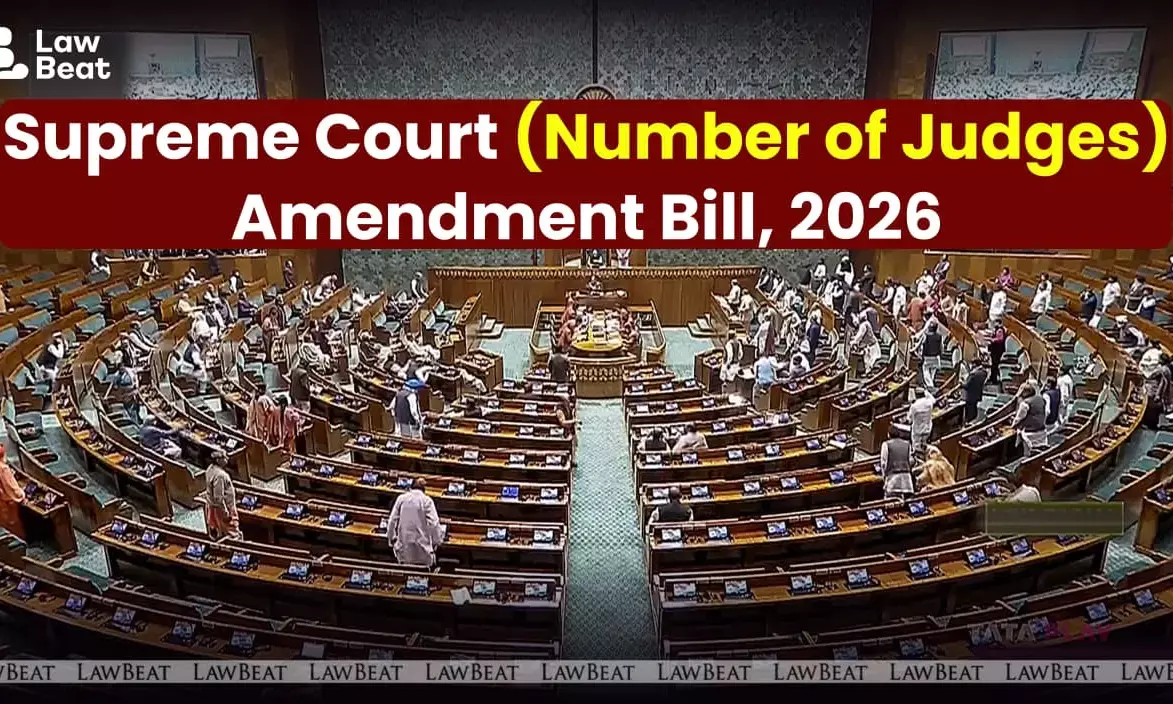
Rajya Sabha clears Bill increasing Supreme Court judges to 38.
The Rajya Sabha on Wednesday passed the Supreme Court (Number of Judges) Amendment Bill, 2026, paving the way for an increase in the sanctioned strength of the Supreme Court from 34 to 38 judges, including the Chief Justice of India.
The legislation is aimed at strengthening the apex court's capacity to deal with the mounting pendency of cases and the growing complexity of litigation.
Replying to the debate in the Upper House, Union Law and Justice Minister Arjun Ram Meghwal said the expansion was "the need of the hour" as the Supreme Court continues to face a rising caseload. He said the move was intended to improve the efficiency of the judicial system by enabling the court to dispose of cases more expeditiously.
The amendment increases the court's sanctioned strength by four judges. With the passage of the Bill in the Rajya Sabha, Parliament has completed its approval of the legislation after the Lok Sabha cleared it earlier this week. The Bill will now be sent for the President's assent before becoming law.
During the discussion, Meghwal informed the House that the proposal followed a request from Chief Justice of India Surya Kant, who had written to the Prime Minister seeking an increase in the court's sanctioned strength in view of the expanding workload.
The government has maintained that augmenting the Supreme Court's judge strength is part of broader efforts to improve access to justice and reduce delays in the disposal of cases, while also addressing the increasingly specialised nature of disputes reaching the apex court.
In May, the Chief Justice of India had wholeheartedly welcomed the Union government’s decision to increase the strength of the Supreme Court of India from 33 to 37 judges. “The total volume of pending cases and the rate at which new matters are being filed have increased significantly,” the CJI had said appreciating the move.
The last time the strength of the court was increased was in 2019, when an amendment raised it from 30 to 33, excluding the CJI. Originally, the Act had provided for a maximum of 10 judges, excluding the CJI, which was increased to 13 in 1960 and then 17 in 1977.
Notably, the Constitution of India does not prescribe a fixed number of judges in the Supreme Court. Under Article 124(1), it provides for a Chief Justice of India and leaves it to Parliament to determine the strength of the court through legislation, allowing periodic revisions in response to rising caseloads.