
Rampur CRPF Attack: Supreme Court Issues Notice on UP Government’s Plea Against Acquittal
Supreme Court declines to entertain PIL seeking a judicial commission to review wages of priests and temple staff in state-controlled temples
The Supreme Court on Wednesday agreed to examine the Uttar Pradesh government’s challenge to an Allahabad High Court judgment that set aside the death sentence awarded to four men and life imprisonment to another in the 2007 terror attack on a Central Reserve Police Force (CRPF) camp in Rampur.
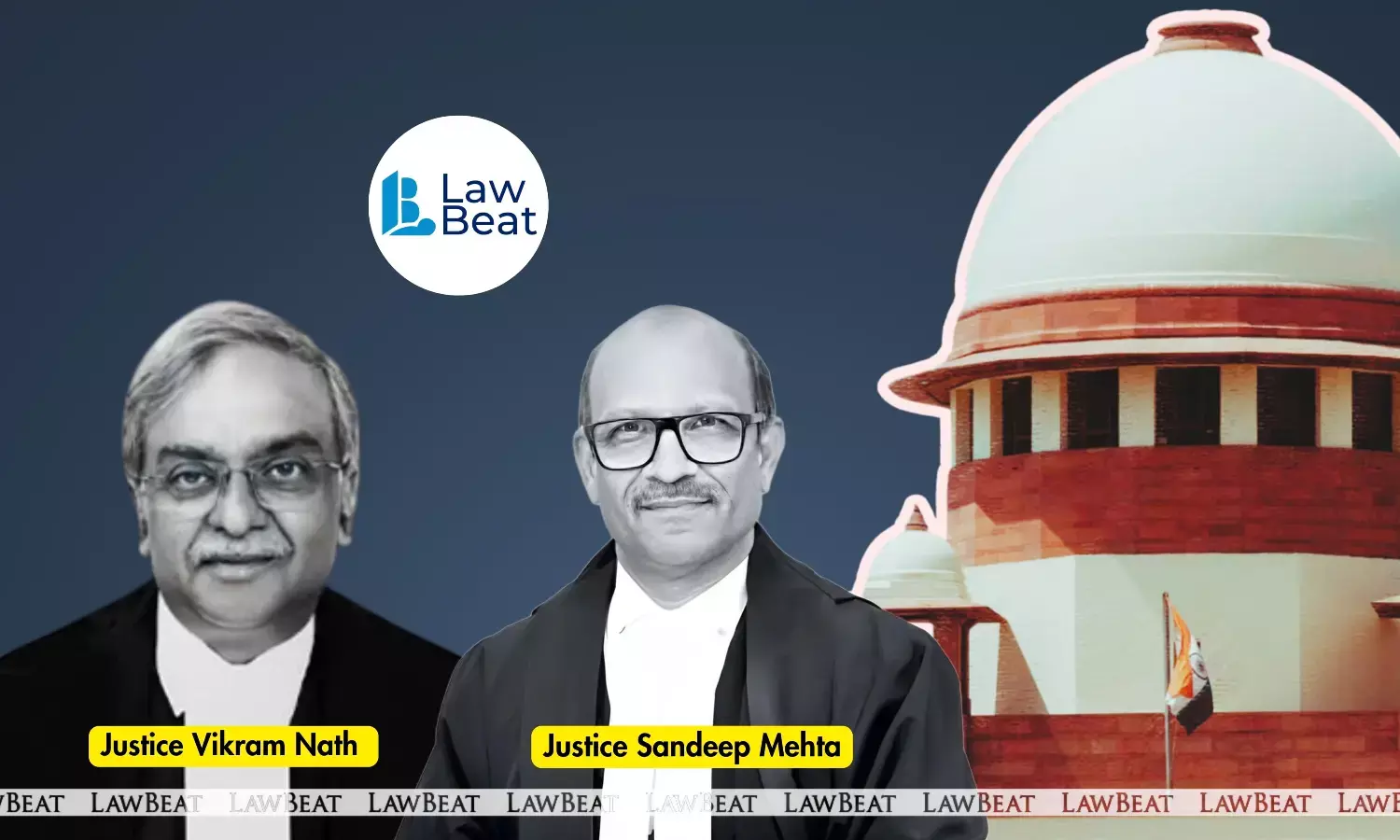
The bench of Justices Vikram Nath and Sandeep Mehta issued notice to the five accused on the plea filed by the State and directed that the matter be listed for hearing after four weeks.
Advocate M S Khan appeared on behalf of the accused.
The appeal assails the Allahabad High Court’s verdict dated October 29 last year, which overturned the trial court’s judgment awarding capital punishment to four accused and life imprisonment to the fifth for their alleged role in the deadly attack.
The case relates to the terrorist strike on the CRPF camp in Rampur on the night of December 31, 2007, in which eight CRPF personnel were killed and five others sustained injuries.
In its impugned judgment, the High Court acquitted Mohd Sharif, Sabauddin, Imran Shahjad, Mohd Farooq and Jang Bahadur Khan of charges of murder and other serious offences, holding that the prosecution had “miserably failed to prove the case against the accused for the principal offence beyond reasonable doubt.”
"This case would have met a different result had the investigation and the prosecution been conducted by a more trained police...The defect in investigation went to the root of the case and ultimately culminated in the acquittal of the accused persons. We are deeply concerned with the magnitude and enormity of the offence and at the same time we are constrained to observe that the prosecution miserably failed to prove the case against the accused for the principal offence beyond reasonable doubt which is a golden rule that runs through the web of criminal jurisprudence", the high court order had stated.
The high court had observed thus while allowing two capital cases, and a criminal appeal. The pleas arose from multiple connected trials before the Rampur Sessions Court concerning the pre-dawn attack of January 1, 2008, in which seven CRPF personnel and one civilian were killed.
The primary appellants namely Mohd. Sharif @ Suhail @ Sazid @ Anwar @ Ali, Sabauddin, Imran Shahjad, and Mohd. Farooq had been sentenced to death by the trial court in 2019 under Section 302 read with 149 of the Indian Penal Code and Section 27(3) of the Arms Act. A fifth accused, Jang Bahadur Khan, had been sentenced to life imprisonment. All were also convicted under the Unlawful Activities (Prevention) Act, the Explosive Substances Act, and the Prevention of Damage to Public Property Act.
Reassessing the entire record, the high court had found multiple procedural and evidentiary deficiencies in the investigation. It noted that none of the witnesses had previously known the accused, yet the police failed to conduct a Test Identification Parade (TIP) or ensure that the accused were kept “baparda” (unexposed to public view) before identification. The Bench said such omission “strikes at the root of the prosecution,” especially since the FIR and witness statements under Section 161 CrPC were silent on how the accused were recognised.
The court had also found serious lapses in the handling of physical evidence, observing that firearms, cartridges, and grenades allegedly recovered from the scene were not securely preserved or properly traced through the chain of custody. Key witnesses who should have verified storage and transfer of evidence were not examined. Further, the sanction granted under the Explosive Substances Act by the District Magistrate on November 1, 2008, was held to be defective and contrary to procedure.
Aggrieved by the High Court’s decision to set aside the death penalty and acquit the accused of terrorism and murder charges, the Uttar Pradesh government has approached the Supreme Court seeking restoration of the trial court’s verdict.
Case Title: State of Uttar Pradesh v. Mohd. Sharif@ Suhail@ Sazid@ Anwar@ Ali
Bench: Justices Vikram Nath and Sandeep Mehta
Hearing Date: February 11, 2026