
Sambhal Jama Masjid Case: Muslim Side Tells SC Survey Order Violated Law; Says Mosque Character Cannot Be Altered
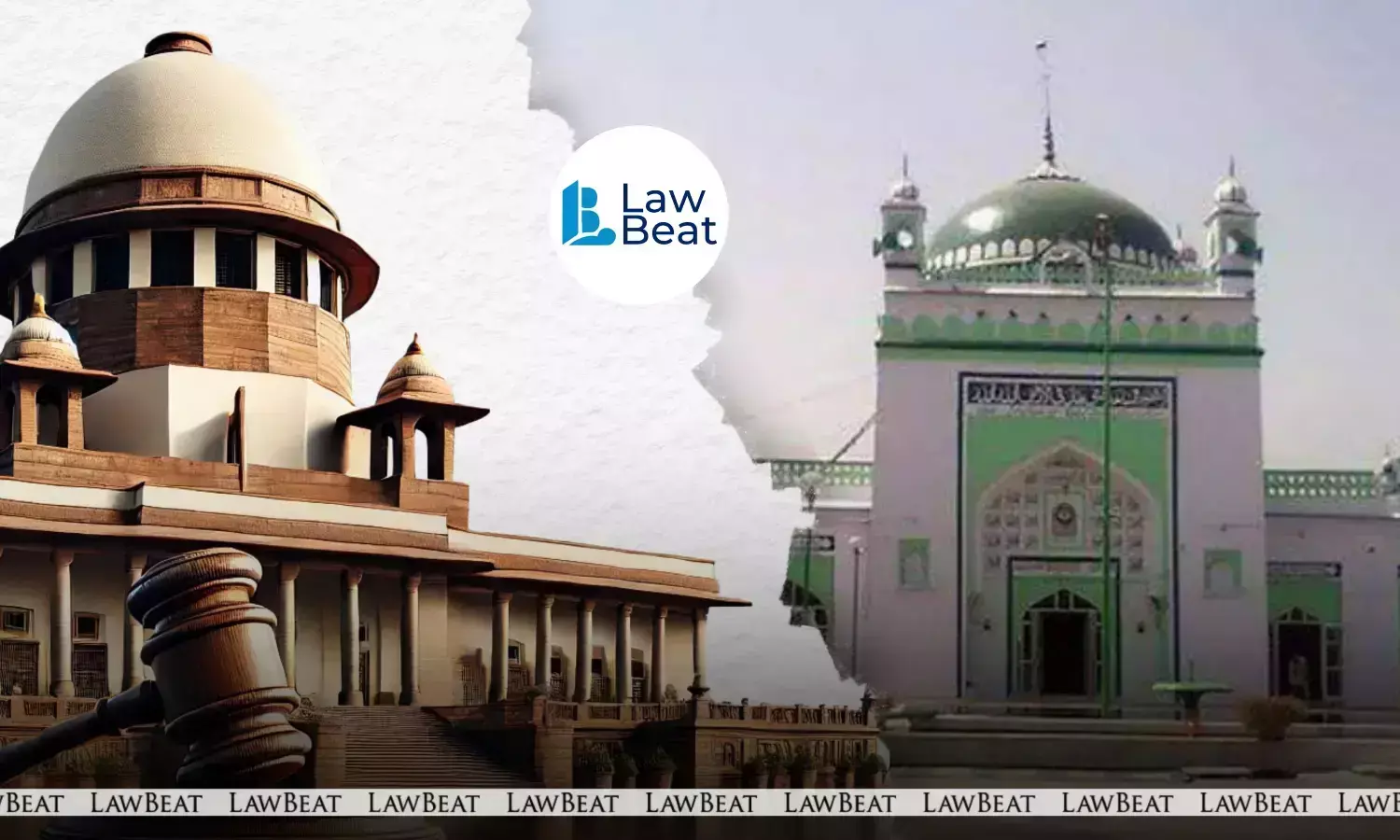
Supreme Court heard arguments challenging the Sambhal Jama Masjid survey order, with the Muslim side arguing that the mosque’s religious character must be preserved
The Supreme Court on Tuesday heard extensive arguments from the Muslim side in the Sambhal Jama Masjid dispute, with Senior Advocate Huzefa Ahmadi challenging the legality of the trial court’s order appointing a local commissioner to survey the mosque and contending that the religious character of a place of worship protected as an ancient monument cannot be altered.
The matter concerns the challenge by the Shahi Jama Masjid Committee, Sambhal, to a local court order directing a survey of the mosque. The Supreme Court had stayed the operation of the order in December last year.
The Bench of Justices PS Narasimha and Alok Aradhe were hearing the matter.
Appearing for the mosque committee, Ahmadi argued that the Allahabad High Court had erroneously interpreted provisions of the Places of Worship (Special Provisions) Act, 1991, and the Ancient Monuments and Archaeological Sites and Remains Act, 1958.
He submitted that Section 4(3) of the 1991 Act had been wrongly applied and stressed that the law prohibits any alteration in the religious character of a place of worship.
According to Ahmadi, preservation under the 1958 Act necessarily includes preservation of the monument’s intrinsic religious character.
“If a monument is a temple, it cannot be converted into a church, and if it is a mosque, it cannot be converted into a temple,” he argued.
The senior counsel further contended that the plaintiffs relied upon Section 18 of the 1958 Act, which grants access to protected monuments, while overlooking Section 16, which safeguards monuments from pollution and desecration.
He argued that where a protected monument also possesses a religious character, such character must remain intact. Therefore, a plea seeking access to perform religious practices inconsistent with the existing character of the monument would be legally untenable.
Ahmadi also challenged the High Court’s interpretation of agreements concerning the monument, submitting that a mutawalli acts merely as a custodian and that ownership vests in the Almighty.
On the issue of the local commissioner’s appointment, Ahmadi argued that the trial court had failed to satisfy the mandatory requirements under Order XXVI Rule 9 of the Code of Civil Procedure.
He submitted that the application seeking survey, photography and videography was allowed ex parte without notice to the mosque committee, despite the mosque being in continuous use since Independence.
The senior counsel argued that the trial court neither recorded reasons showing why a local investigation was necessary nor specified the exact points the commissioner was required to examine.
Given the sensitive nature of the dispute, Ahmadi contended, the appointment of a commissioner without hearing the mosque committee was unjustified.
He also referred to the violence that followed the commissioner’s visit to the mosque premises, in which six persons lost their lives.
“A commissioner is meant to assist the court and not to enable a party to collect evidence,” Ahmadi submitted, arguing that the High Court’s reasoning permitting a commission to gather evidence was contrary to the CPC.
Ahmadi further urged that the present proceedings be heard together with other pending Special Leave Petitions involving similar legal issues, particularly in view of the Supreme Court’s December 12 order directing that such proceedings should not continue.
During the hearing, Justice PS Narasimha remarked that society must display tolerance.
With this, the Muslim side concluded its submissions. The Hindu side is set to commence arguments on the next date of hearing.
Previous Hearings
In May, the Court had expressed concern over multiple Special Leave Petitions (SLPs) filed by the Sambhal Mosque Committee against the same order of the Allahabad High Court, calling the situation “unfortunate” and urging the parties to resolve internal disputes. The bench was hearing a plea challenging the High Court’s order affirming a trial court direction to appoint an advocate commissioner to survey a mosque, in a suit alleging that it was constructed after demolishing a temple. At the outset, the Bench noted that two separate SLPs had been filed through different Advocates-on-Record on behalf of the mosque committee. “This is the first time we are finding a situation where an SLP is filed against the same order by two different advocates,” Justice Narasimha remarked.
Notably, on August 22, 2025 the Court had asked whether the matter ought to be tagged with pending petitions concerning the validity of the Places of Worship (Special Provisions) Act, 1991. The Bench had extended the status quo order stating that it would examine the previous order to avoid passing inconsistent directions.
Earlier, in January 2025, the Court had issued notice on the plea and ordered status quo with regard to a well located near the entrance of the mosque. The Court had ordered status quo with regard to a well located near the entrance of the mosque.
In the main petition filed by the Masjid Committee, Chief Justice of India Sanjiv Khanna led bench had asked the Sambhal Shahi Jama Masjid Committee to approach the Allahabad High Court with its petition against the ASI survey ordered by a civil court.
The Masjid Committee moved the Supreme Court seeking a stay on a civil court’s November 19 order directing a survey, to be conducted by the Archeological Survey of India (ASI), of the 16th-century mosque in Uttar Pradesh. A bench led by Chief Justice of India Sanjiv Khanna and Justice Sanjay Kumar is scheduled to hear the plea on November 29, 2024.
Case Title: Committee of Management, Jami Masjid Sambhal v. Hari Shankar Jain
Bench: Justices P.S. Narasimha and Alok Aradhe
Hearing Date: September 8, 2026