
SC Orders 30% Women’s Representation in State Bar Councils, Mandates Immediate Implementation
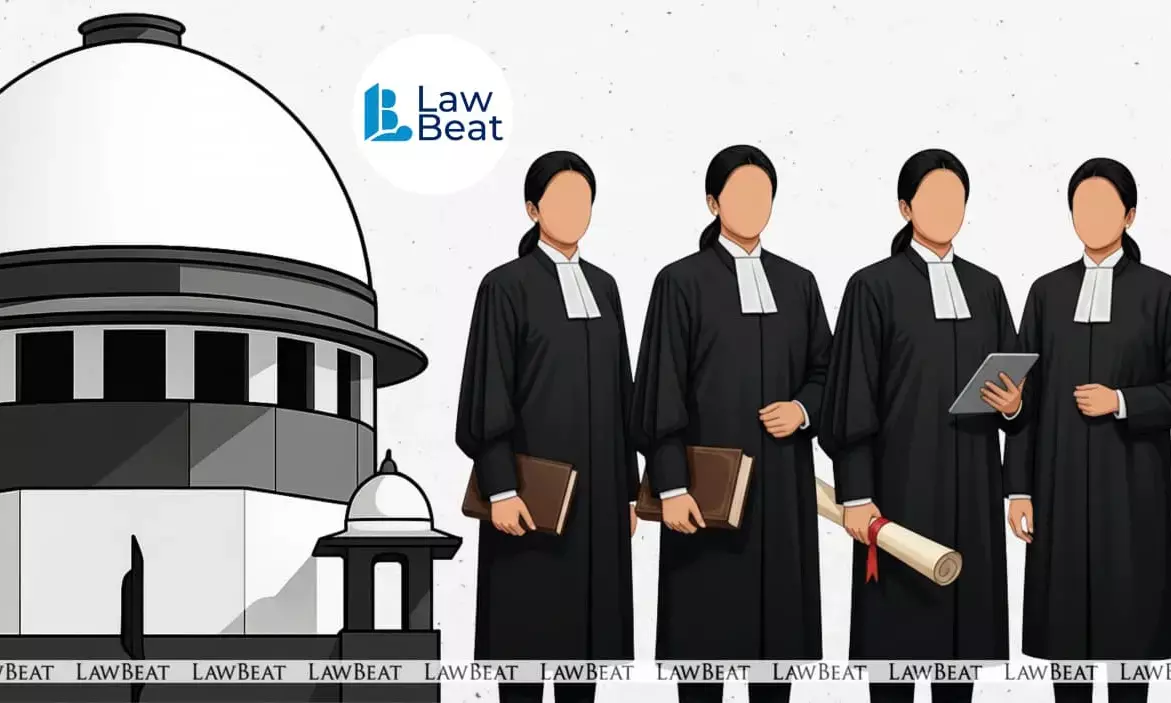
Image of the Supreme Court of India which mandated a 30 percent women’s reservation in State Bar Councils and issued guidelines for its implementation.
X

SC directed 30 percent women’s quota in State Bar Councils, setting mandatory rules for elected and co-opted representation across states

Supreme Court mandated 30 percent women’s representation in State Bar Councils and said the measure was essential to ensure meaningful participation of women in bar governance bodies

In a landmark move to boost gender representation in the legal profession, the Supreme Court on Monday directed that 30 percent of all seats in State Bar Councils, where elections are yet to be notified, must be reserved for women Advocates.

The Bench of Chief Justice of India Surya Kant and Justice Joymalya Bagchi said the measure was essential to ensure meaningful participation of women in bar governance bodies.


For the current election cycle, the Court ordered that 20 percent of the seats be filled through elections of women candidates, while the remaining 10 percent must be filled through co-option.

The Bench also asked for a concrete proposal on co-option for Bar Councils where the number of eligible women candidates may be insufficient.

The Court clarified that the six Bar Councils where elections have already been notified; Andhra Pradesh, Punjab and Haryana, Uttar Pradesh, Telangana, Bihar and Chhattisgarh, would be exempt from mandatory reservation at this stage. However, it urged both voters and women candidates in these states to ensure “adequate representation” through the ballot.

“For the remaining Bar Councils, 30 percent seats shall be represented by women advocates. If women are reluctant to contest for the 20 percent elected seats, co-option shall be used to ensure full representation,” the Bench directed.

The order came during the hearing of petitions filed by Advocates Yogamaya M.G. and Shehla Chaudhary seeking mandatory women’s reservation in State Bar Councils.

Bar Council of India Chairman, Senior Advocate Manan Kumar Mishra submitted that the BCI supported at least 30 percent representation for women, but suggested that vacancies this year be filled entirely by co-option.

The Bench, however, capped co-option at 10 percent.

Senior Advocates Meenakshi Arora, Shobha Gupta, and Sriram Parakkat supported the need for structural representation while flagging practical challenges in states with very few practising women lawyers.

Advocate Dr. Charu Mathur appeared for petitioner Shehla Chaudhary.

The Court also heard supporting intervention applications, including one from the Tamil Nadu Bar Council, which argued that entrenched leadership patterns must change to make way for equitable representation.

The matter will be taken up next after the Bar Council of India files its proposal for co-option across states.

On the last hearing, the CJI had said the case would continue to operate as a “continuous mandamus,” assuring that the Court would address issues as they arise. He directed the BCI to “come out with a notification on December 8.

Notably, on November 26, the Court had issued notice in a public interest litigation seeking directions to ensure proportional representation of women, queer persons, persons with disabilities, and lawyers from marginalized communities in the Bar Council of India (BCI) and State Bar Councils. The petitioner, Advocate Yogamaya MG has contended in the PIL that despite the Advocates Act, 1961 being in force for over six decades, there has been no legislative or policy intervention to address the “gross underrepresentation” of women and other marginalized groups in these statutory bodies.

The Supreme Court had fixed a revised, five-phase timetable for State Bar Council elections across 16 States and Union Territories, directing that the long-pending polls be completed between January 31 and April 30, 2026. Court had also set up High Powered Election Monitoring Committees (HPEMCs) at regional levels and a pan-India High Powered Supervisory Committee headed by a former Supreme Court judge.

The Bar Council of India and all State Bar Councils participating in Phases I–V are also sought to be directed to incorporate the above gender-equity measures into their election notifications, rules, and procedures for the 2026 election cycle.

The continued 0% representation of women in the BCI is stated to constitute a violation of substantive equality, frustrate the constitutional promise of equal access to public institutions, and defeat the mandate to ensure representation in bodies exercising public functions.

The Supreme Court has issued notice on a similar public interest litigation (PIL) seeking reservation for women advocates in State Bar Councils across India, citing their gross under-representation in bar leadership despite rising participation in the legal profession. The petition, filed by Advocate Shehla Chaudhary, was drawn by Advocates Md. Anas Chaudhary and Alia Zaid, and filed through Advocate-on-Record Ansar Ahmad Chaudhary.

Case Title: Yogamaya MG v. Union of India & Ors. and connected matters

Hearing Date: December 8, 2025

Bench: CJI Surya Kant and Justice Joymalya Bagchi

Tags

Next Story