
State Bar Elections: Supreme Court Cuts Contest Fee from ₹1.25 Lakh to ₹15,000 for Specially Abled Advocates
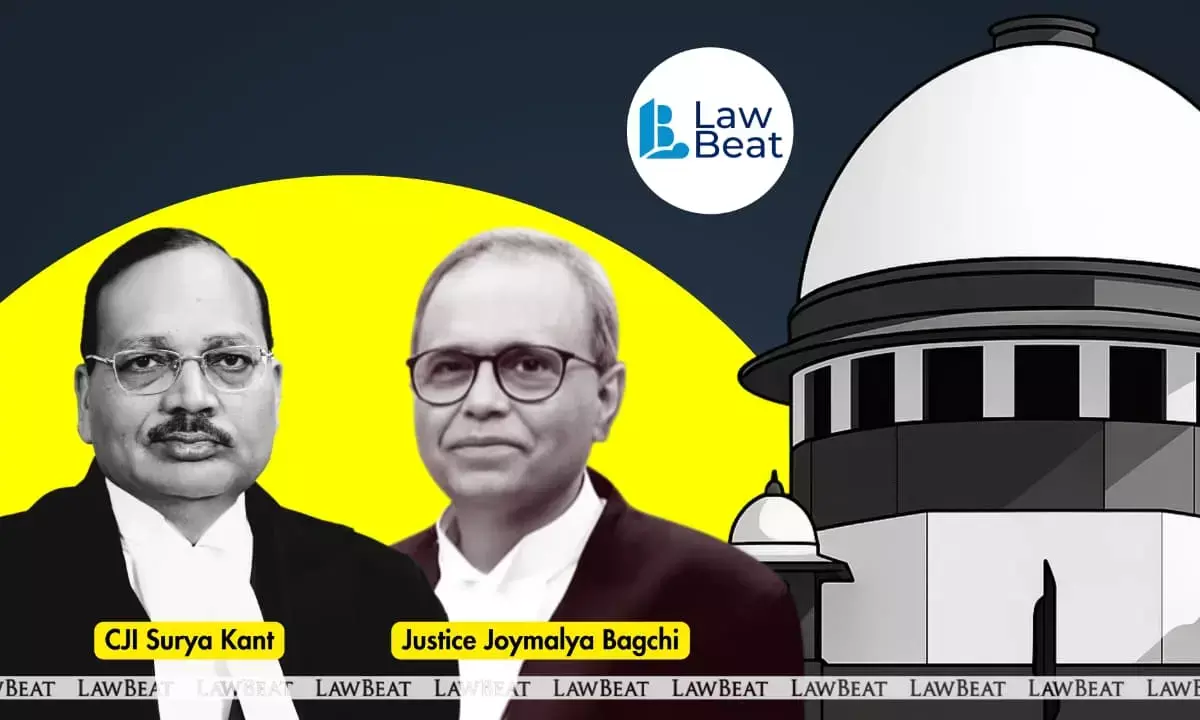
The Supreme Court on Monday took a significant step toward inclusivity in the legal profession, directing that advocates with disabilities who wish to contest State Bar Council elections will pay only a nominal fee of ₹15,000, instead of the earlier ₹1.25 lakh.
The direction came during a hearing on a plea seeking reservation and fee concessions for PwD advocates in Bar Council elections across the country.
The bench of Chief Justice of India Surya Kant and Justice Joymalya Bagchi hearing the matter, observed that the legal profession must reflect accessibility and equal opportunity, both in practice and representation.
Senior Advocate Indira Jaisingh, appearing for the petitioners, argued that the current financial barrier effectively excluded differently abled advocates from contesting elections to State Bar Councils and the Bar Council of India (BCI).
“We had asked for reservation and for doing away with the payment of ₹1.25 lakh required to contest elections,” Jaisingh submitted, emphasizing that most PwD advocates struggle to earn a steady income and should not be denied representation due to financial constraints.
BCI Chairman, Senior Advocate Manan Kumar Mishra, who appeared before the Court, initially expressed logistical challenges in accommodating PwD members in the main council but suggested they could be included in disciplinary committees and other sub-panels.
“This year, accommodation in the main council will be difficult, but we can accommodate them in other disciplinary committees,” Mishra said.
The Chief Justice then proposed a reduced fee of ₹25,000 as a fair compromise, asking whether the BCI could offer such a concession. “Will it be fine if instead of ₹1.25 lakh, they pay ₹25,000 instead?” CJI Surya Kant asked.
However, Jaisingh pressed for further relief, noting that ₹25,000 would still be burdensome for most PwD lawyers. “₹25,000 is also on the higher side. Let them start earning something through the notary or other means before imposing such costs,” she argued.
After brief deliberation, Mishra agreed to a nominal fee of ₹15,000, which the Court accepted.
“Specially abled persons who want to contest elections shall pay ₹15,000 as the nominal fee,” the CJI said, clarifying that the concession would apply only to the specially abled category and not extend to others.
The Bench noted that since the election process had already begun in most states, it would not be feasible to mandate reservation immediately. However, the BCI assured the Court that adequate representation for PwD advocates would be ensured through co-option to various committees and sub-bodies.
“Since election processes have started, adequate representation will be made to advocates from the PwD category through co-option in different committees,” the CJI recorded.
Expressing hope for institutional reform, the Court urged the BCI to amend its rules to provide for meaningful representation of persons with disabilities in future elections.
“We are hopeful that the Bar Council of India shall take up the cause of effective representation for the specially abled persons, for which an amendment in the statute is required,” the CJI said.
The Court also observed that Bar Councils may approach the Union Government to create a mechanism for revising enrollment and contest fees to ensure equitable participation in the legal profession.
Some counsel appearing for the petitioners expressed concern that co-option lacks transparency. “Co-option will be in their hands. Nobody knows who will be co-opted,” one lawyer submitted, requesting the Court to continue monitoring the matter next week.
Citing the Yogmaya case, where similar parity measures were ordered, they sought a uniform framework ensuring that PwD lawyers are not left out of decision-making positions.
Case Title: Pankaj Sinha v. Bar Council of India
Bench: Chief Justice Surya Kant and Justice Joymalya Bagchi
Hearing Date: January 5, 2026