
Supreme Court Acquits Man Sentenced To 15 Years For Rape, Says Medical Evidence And Witness Contradicted Victim
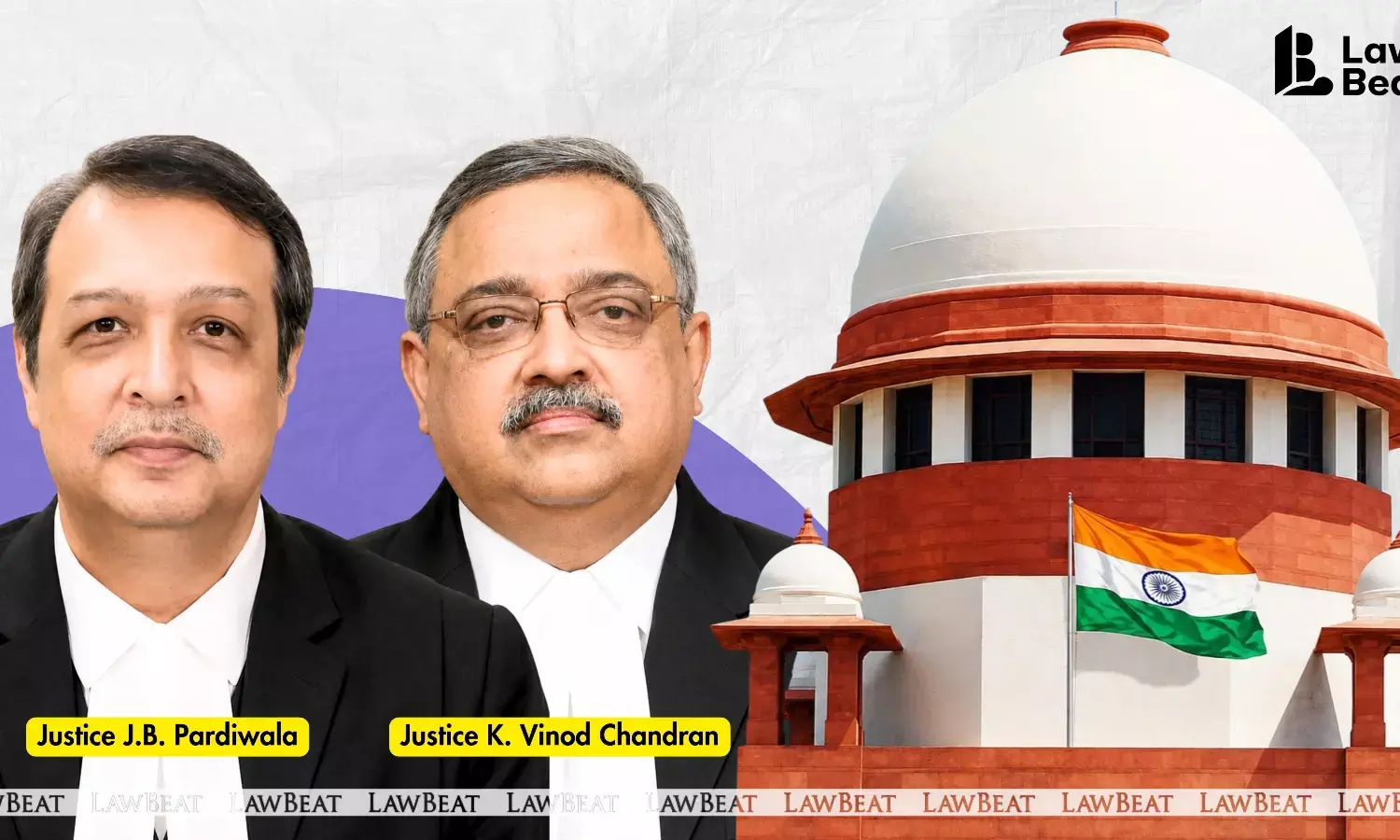
Supreme Court sets aside a 15-year rape sentence, saying the victim's lone testimony did not meet the "sterling" standard
A conviction for rape resting on the victim's word alone needs that testimony to be of "sterling character", the Supreme Court has reiterated, acquitting an Assam man who had been sentenced to 15 years of rigorous imprisonment. The Court found that the medical evidence showed no injuries or signs of intercourse, that a witness who had been with the victim on an earlier occasion gave a different account, and that nothing else in the record pointed to the accused.
The Bench of Justice JB Pardiwala and Justice K Vinod Chandran allowed the appeal by an order dated 20 November 2026. "We are unable to sustain the conviction of the accused, who hence stands acquitted. He shall be released forthwith, if not required in any other case," the Court directed.
The appeal was against a judgment of the Gauhati High Court dated 13 November 2025 in Criminal Appeal No. 124 of 2023. The High Court had found the charges under the Protection of Children from Sexual Offences Act, 2012 "to be not sustainable for reason of the age of the prosecutrix not having been proved", but had still upheld the conviction under Section 376(1) of the Indian Penal Code and the sentence imposed by the Trial Court of 15 years' rigorous imprisonment and a fine of Rs. 50,000, with one year's simple imprisonment in default.
In keeping with Section 228A IPC and Section 72 BNS, LawBeat has withheld the name of the victim and details that may identify her.
The prosecution's case was that the accused, whom the victim knew, offered her a lift in his car in August 2019, gave her a soft drink and snacks after which she felt dizzy, and sexually assaulted her repeatedly at two places. She was later found unconscious on the roadside and taken to hospital by her brother.
Of the twenty witnesses examined, the Court noted, "The prosecution case was entirely founded on her testimony, and we will look at the corroboration attempted by the prosecution before the Trial Court."
The Court began by setting aside the confession that the prosecution had tried to prove through witnesses to a crime scene reconstruction, a police photographer and an Assistant Commissioner who had accompanied the investigating officer.
"Obviously, the confession was made when the accused was in police custody and cannot be relied upon under Section 26 of the Indian Evidence Act, 1872," the Bench said, adding that one of the reconstruction witnesses "also turned hostile". It further noted that the reconstruction covered a second site, "having not been spoken of by PW1 herself".
The witness produced to show that the victim had been found abandoned on the road was an auto driver whom the Court described as "a chance witness". The victim's brother did not name the friend who had called him, nor the others who went with him, "none of whom were examined before Court". The evidence of abandonment was therefore "insufficient; especially since none from the crowd gathered, informed the police of the abandoned girl, who was also lying unconscious."
The testimony of a person who visited the victim in hospital and to whom she repeated the allegations was held "irrelevant". A shopkeeper who said the accused had bought a soft drink and chips from him "does not remember the day or the time when such purchase was made".
The Court found a material inconsistency in the account of the victim's cousin, who had been with her when the accused first gave them a lift a few days before the incident. The victim said they were dropped home as promised. The cousin said the accused instead drove them around town and dropped them only "after repeated requests".
"The version of PW16 differs considerably from that of PW1, the victim. The conduct of the accused, on the previous occasion, as spoken of by PW16, if true, should have cautioned the victim on the next occasion," the Bench observed.
Since the victim had deposed that she was beaten inside the car and forcibly raped several times, the Court said "the medical evidence, hence, assumes significance". The doctor who examined her two days after the incident found "no minor or major injuries on any part of the body of the victim nor was there any sign of sexual intercourse present", no spermatozoa on the vaginal swab and no violation mark.
"The allegations of forceful sexual assault on more than three occasions and the allegation of beating up inside the car are not supported by the medical evidence. Despite the fact that the witness was examined two days after the incident, the complete absence of any signs of assault and forceful intercourse raises a reasonable doubt," the Court held.
It also noted that "there was nothing produced to indicate the history of the crime recorded at the time of admission to the hospital", and did not accept the brother's explanation for the delay in reporting, "especially since the hospital, on admission would have immediately intimated the police."
On the vehicle in which the assault was said to have taken place, the Court pointed out that "the IO did not speak of the seizure of the car nor was any examination carried out inside the car to find any telltale signs of assault complained of and the sexual intercourse carried out inside the car as alleged."
Drawing the strands together, the Bench said it was "unable to find the accused guilty of the offence alleged, especially noticing the discrepancies in the deposition of the victim, which does not align with that of the other witness, PW16 and the medical report. But for the deposition of the victim, there is nothing incriminating found against the accused."
"PW1's testimony is not of the sterling character required for conviction on that sole basis," it concluded.
The appeal was allowed, and the accused was ordered to be released forthwith unless required in any other case. If he is on bail, his bail bonds stand cancelled.
Advocate-on-Record Shekhar Prit Jha appeared for the appellant. Advocate-on-Record Ankit Roy appeared for the State of Assam.
Case Title: Md. Akter Khan @ Bapon Khan v. The State of Assam & Ors.
Bench: Justices JB Pardiwala and K Vinod K
Order Date: November 20, 2026