
Supreme Court Allows 18-Year-Old to Terminate 30-Week Pregnancy, Balances Woman’s Autonomy With Foetal Viability
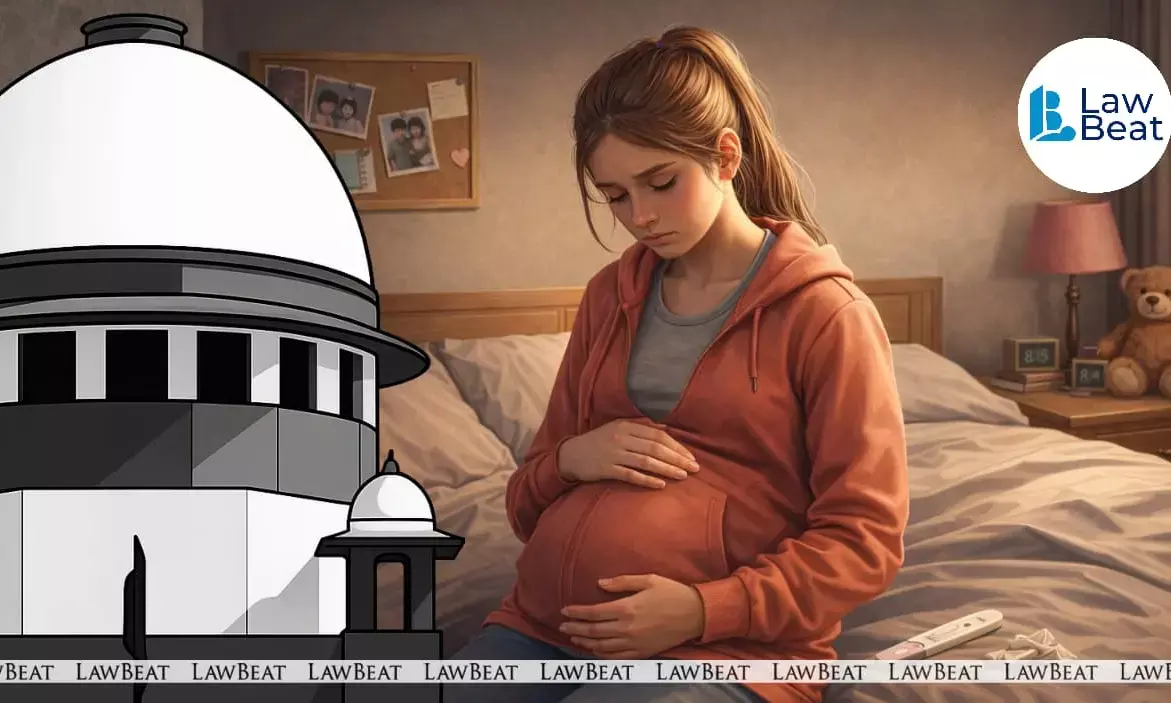
Supreme Court of India permits medical termination of a 30-week pregnancy of an 18-year-old, overturning Bombay High Court ruling
The Supreme Court of India on Friday permitted the medical termination of a 30-week pregnancy of an 18-year-old girl, holding that her decisional autonomy, bodily integrity, and future prospects warranted judicial intervention despite the advanced stage of pregnancy.
The pregnancy arose out of a consensual relationship in August 2025, when the girl was 17 years and 10 months old. While the relationship was consensual in fact, such consent was not legally valid due to her age at the time. An FIR had been lodged against the boy in accordance with law. The girl sought termination on the ground that continuation of the pregnancy would seriously affect her education, career, and overall future.
A Bench comprising Justice BV Nagarathna and Justice Ujjal Bhuyan allowed the appeal filed by the girl’s mother, setting aside a January 27, 2026 order of the Bombay High Court which had refused permission for termination on the ground that it would amount to foeticide.
The Supreme Court directed that the procedure be carried out at Sir J.J. Group of Hospitals, Mumbai, with strict adherence to all medical safeguards. The Court also required the mother of the girl to submit a written undertaking consenting to the medical termination of pregnancy of her daughter.
The case raised complex questions under the Medical Termination of Pregnancy Act, 1971. Under the statutory framework, termination is ordinarily permitted up to 20 weeks of gestation on the opinion of one registered medical practitioner. Following the Medical Termination of Pregnancy (Amendment) Act, 2021, termination between 20 and 24 weeks is allowed only for specified categories of women, including minors, rape survivors, and women with disabilities, subject to the opinion of two registered medical practitioners. The law does not expressly provide for termination beyond 24 weeks except in cases involving substantial foetal abnormalities.
While declining relief, the Bombay High Court had relied on a report of a Medical Board constituted at Sir J.J. Group of Hospitals, signed by six senior specialists. The Medical Board had opined that termination at 30 weeks carried a high probability of the foetus being born alive with a beating heart and requiring intensive neonatal care. It noted that the risks and complications associated with termination at this stage were similar to those of a pregnancy carried close to full term.
Treating foetal viability as a significant factor, the High Court held that a foetus beyond 24 weeks would likely be born alive. It further observed that if the pregnancy were carried to term, a healthy child could be born and subsequently given up for adoption. The High Court suggested that the girl could deliver the child and, after the normal feeding period, hand over the baby to an orphanage for adoption, with assistance from the Child Welfare Committee. It also directed that medical care and psychological counselling be provided to her.
The Supreme Court, however, took a different view. While conscious of the advanced gestational age of the foetus and the medical assessment regarding foetal viability, the Court held that the exceptional facts of the case required a careful balancing of competing interests. It concluded that compelling the young woman to continue with the pregnancy would have irreversible consequences on her physical health, mental well-being, and future life choices.
By allowing termination under strict medical supervision, the Court underscored that reproductive choice and decisional autonomy form an integral part of personal liberty, and that such autonomy cannot be negated solely on the basis of foetal viability, particularly where continuation of pregnancy would disproportionately burden a young woman at the threshold of adulthood.
Case Title: A (Mother of X) vs State of Maharashtra and Others
Bench: Justice BV Nagarathna and Justice Ujjal Bhuyan
Date of Judgment: 6th February 2026