
Supreme Court Allows Guruvayur Temple's Udayasthamana Pooja On Vrishchikam Ekadasi
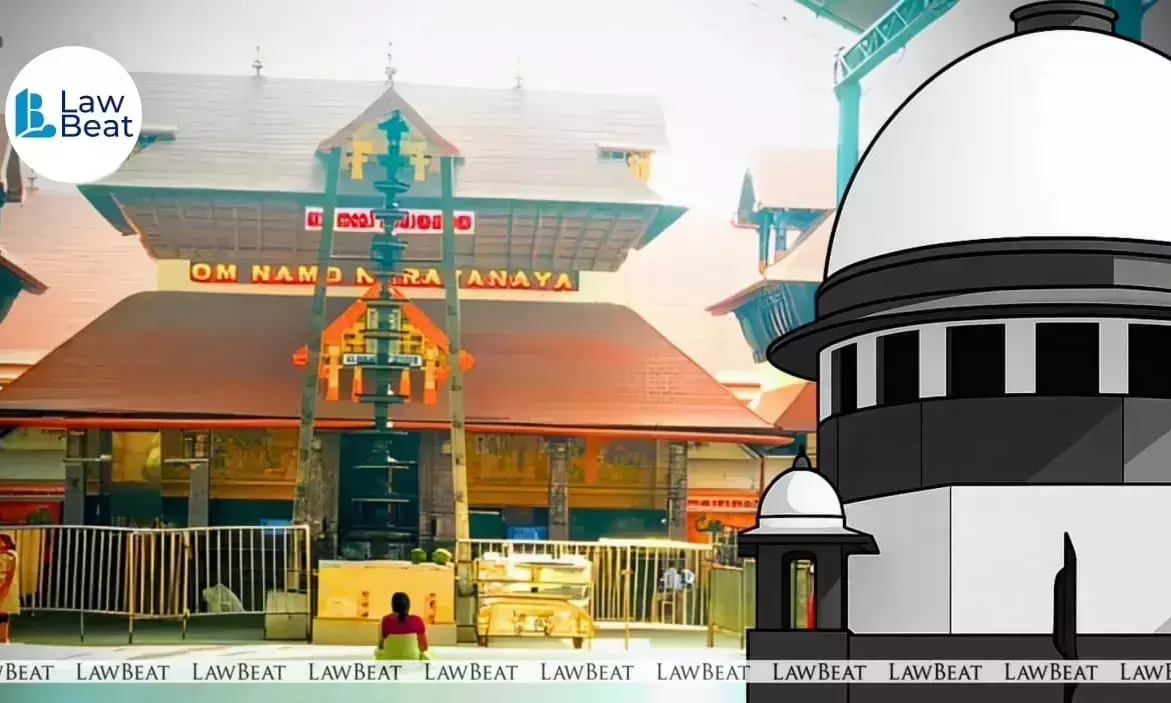
Supreme Court has directed, by way of interim relief, that the Udayasthamana Pooja at the Guruvayur Sree Krishna Temple be performed on Vrishchikam Ekadasi, November 21, 2026, as per the temple's tradition
Supreme Court followed its October 2025 order, gave liberty to perform the ritual on Thulam Ekadasi as well, and listed the appeal against the Kerala High Court's December 2024 verdict for hearing in the first week of December
The Supreme Court on Thursday directed, by way of interim relief, that the Udayasthamana Pooja at the Guruvayur Sree Krishna Temple in Kerala be performed on Vrishchikam Ekadasi, which falls on November 21, 2026, in the manner in which it has traditionally been conducted at the temple.
The direction will operate subject to the final outcome of an appeal pending before the Court against a December 2024 judgment of the Kerala High Court.
The bench of Justice Aravind Kumar and Justice Vipul M Pancholi passed the order on an application seeking a direction to conduct and perform the pooja on Vrishchikam Ekadasi.
The Udayasthamana Pooja is a day-long ritual performed from sunrise to sunset on Guruvayur Ekadasi, comprising a series of 18 poojas, homam and abhishekam.
During the hearing Senior Advocates C S Vaidyanathan, Guru Krishna Kumar and K Parameshwar, with Advocate A Karthik, appeared for P C Hari and the other devotees. Senior Advocate Aryama Sundaram and Advocate M L Jishnu appeared for the Guruvayur Devaswom Board. Senior Advocate V Giri appeared for the temple Tantri.
The challenge to the change in the ritual's schedule was brought by P C Hari of the Puzhakkara Chennas Mana and other devotees. The Guruvayur Devaswom Board had earlier resolved to shift the ritual to the Malayalam month of Thulam, citing the heavy rush of pilgrims during Vrishchikam, a decision reported to have been supported by the temple Tantri.
Justice Kumar today recorded that the prayer before it was similar to the prayer made in an application filed in 2025, which the Court had disposed of on October 30, 2025 by granting relief. Proceeding on that basis, the Bench directed, "In the light of the aforesaid order passed and subject to the final outcome of the appeal that is pending, by way of interim relief, we direct that the 'Udayasthamana pooja' shall be continued in the manner as it was being performed as per the tradition of the temple on 'Vrishchikam Ekadasi' falling on November 21, 2026."
It further granted liberty to the Devaswom Board and the Tantri to perform the Udayasthamana Pooja on October 22 as well, the date corresponding to Thulam Ekadasi, to which the Board had sought to shift the ritual.
During the hearing, a Senior Advocate submitted that the sanctum sanctorum has to be closed while the pooja is performed, and that on days of extraordinary rush it has to be closed and reopened, causing inconvenience to pilgrims. It was also pointed out that the High Court had held that the pooja is not an essential religious practice. Justice Kumar responded orally, "Wait for our judgment."
On behalf of the applicant, it was submitted that the Udayasthamana Pooja is an offering, that all rituals, including weekly mandatory rituals, have to be performed, and that in earlier years the pooja was not conducted on Saturdays or holidays. It was further submitted that a devotee wishing to have the pooja performed at the temple may have to wait nearly ten years for a booking.
Referring to the temple administration's own figures, the applicant's side stated that footfall was around 15,000 devotees on normal days and rose to between 25,000 and 30,000 on Saturdays and holidays, with some pilgrims also arriving from Sabarimala.
Justice Kumar remarked orally, "I know. I have stood there for seven hours. Suppose on Janmashtami, the Udayasthamana falls on the same day, would you postpone Krishna Janmashtami?"
In reply, it was submitted that the Udayasthamana Pooja is not a regular ritual for the deity, and the Court's attention was drawn to the counter-affidavit filed in the main appeal. It was also submitted that the priest belongs to the Tantri family, the Tantri being traditionally regarded as the father of the deity following the Prana Pratishtha, and that, as per the priest's affidavit, the Udayasthamana Pooja does not have to be conducted every day.
When Justice Kumar asked, "How long do you close the temple?", it was stated that around 15 poojas are conducted during the day and that, on days when the Udayasthamana Pooja is not conducted, devotees ordinarily have an opportunity for darshan.
While disposing of the application, the Bench expedited the hearing of the appeal and listed it in the first week of December. The appeal arises from a December 2024 judgment of the Kerala High Court on a plea concerning the Udayasthamana Pooja at the temple.
Notably, in October 2025, the Court had ordered for the 'Udayasthamana Pooja' in the Guruvayur Sri Krishna temple in Kerala on the occasion of 'ekadashi' to be conducted on December 1, 2025 as per tradition. A bench of Justices JK Maheshwari and Vijay Bishnoi had noted that the day-long ritual was being conducted since 1972.
In 2024, the Supreme Court had slammed the Devaswom Board of Guruvayur Sri Krishna temple for deciding not to conduct the age-old Udayasthamana Pooja on Guruvayur Ekadasi citing crowd management and wondered how it could have decided so. The bench had noted that the Udayasthamana Pooja is one of the most important pooja performed on Vrishchikam Ekadasi. "The performance of the said pooja on Vrishchikam Ekadasi was altered/discontinued with the consent of Thantri in consultation with Committee after ascertaining Devahitham, on the ground of public inconvenience caused due to high inflow of devotees on the said auspicious day", the bench had further noted.
".... any ritual which is being performed at any place or site of worship as part of long-standing tradition, and has assumed religious significance, ought not be unsettled on the apprehension that there would be potential public inconvenience. The faith of the worshippers at large ought not to be put aside on the anvil of managerial and administrative concerns and must be given precedence and respect as far as possible. The Guruvayur temple has a rich religious historical background and a large number of devotees depose their faith in the deity. The temple has long run customs, practices and rituals, which if affected, might run scramble through the sentiments of the devotees/people", court further noted.
It had found that the performance of the pooja by Acharyas is conducted for enhancing the divinity of deity. On special occasions such as Vrishchikam Ekadasi, inconvenience to public cannot be a ground to discontinue/alter the rituals/pooja to be performed on the said day for deity, it said, noting that the purposes of interim relief, it was not convinced by the reasons stated.
"In this view of the matter, subject to final outcome of the appeal, by way of interim measure, we direct that Udayasthamana Pooja shall be continued in the manner as it was being performed as per the tradition of the temple on Vrishchikam Ekadasi without any change. In case the Thantri is of the view that Udayasthamana Pooja has also to be performed on 02.11.2025 as stated in the counter affidavit, he may do so", the court ordered.
The Kerala High Court had while declining interference in 2024, held that under the Guruvayur Devaswom Act, 1978, the Tantri has the final authority in matters of religious and ceremonial practices, unless such decisions contravene any law.
Case Title: P.C. Hary and Ors. v. Guruvayoor Devaswom Managing Committee & Ors.
Bench: Justices Aravind Kumar and Vipul M. Pancholi
Hearing Date: October 8, 2026
Next Story