
Supreme Court Bar Association Seeks Guidelines On Courtroom Videos After Supreme Court Outburst
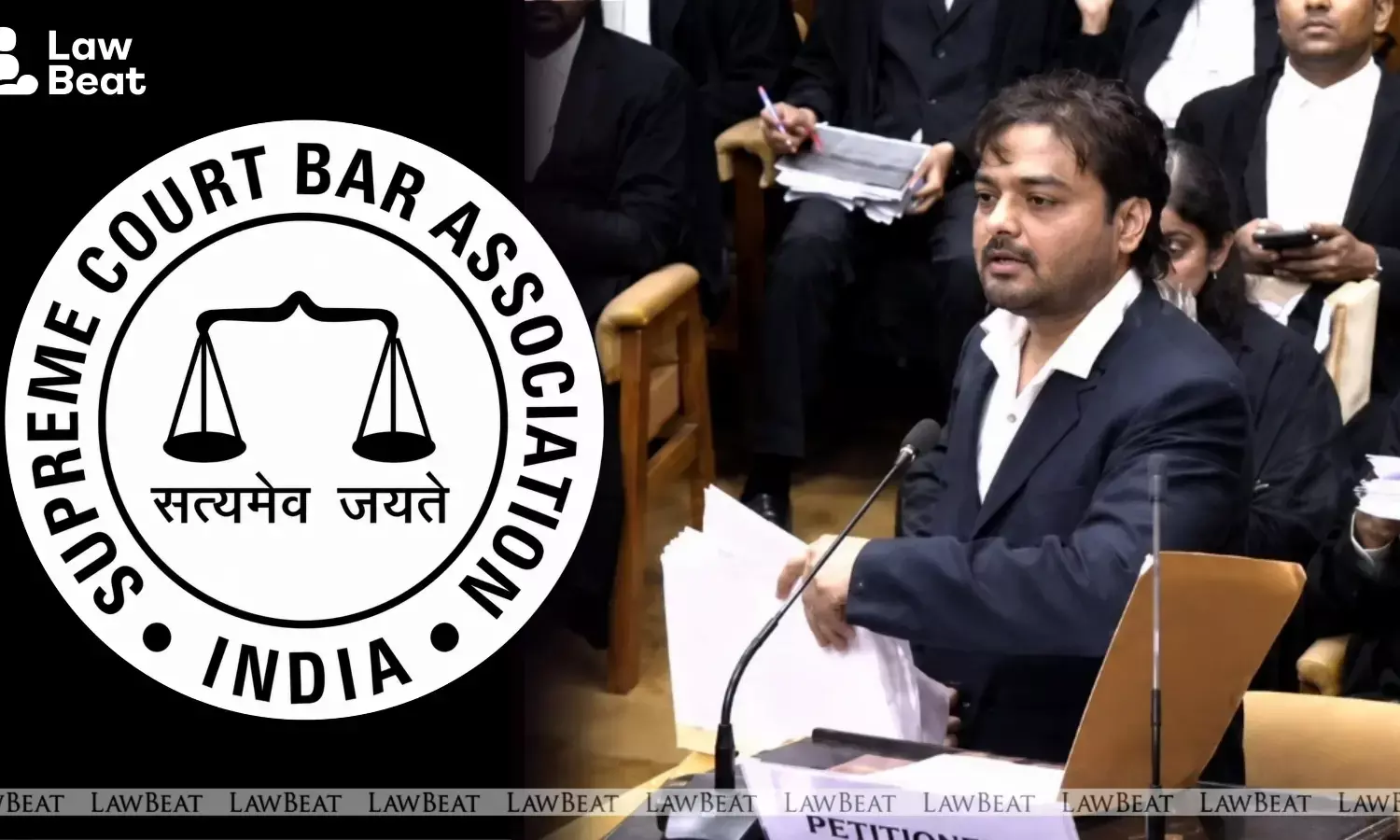
The Supreme Court Bar Association condemned the courtroom misconduct before Justices K.V. Viswanathan and Alok Aradhe and called for guidelines regulating the recording and circulation of courtroom videos
A day after a litigant created a ruckus before a Bench of the Supreme Court by hurling papers and using abusive language during proceedings, the Supreme Court Bar Association (SCBA) on Friday strongly condemned the incident and urged the Union government to frame guidelines regulating the recording, editing and circulation of courtroom proceedings and videos.
In a statement issued on July 10, the SCBA described the litigant's conduct before the Bench of Justices K.V. Viswanathan and Alok Aradhe as abusive and disrespectful, asserting that any attempt to abuse, threaten or disrupt judicial proceedings strikes at the very foundation of the administration of justice.
"The dignity and majesty of the Court must be respected at all times. Any attempt to abuse, threaten or disrupt judicial proceedings is wholly unacceptable and strikes at the very foundation of the administration of justice," the statement said.
The Bar body emphasised that the sanctity of court proceedings must be preserved and called for appropriate guidelines governing the recording, clipping, editing and circulation of courtroom proceedings and videos to prevent misuse and safeguard the dignity of the judiciary.
The SCBA also requested the Union government to consider appropriate executive and legal measures to curb the circulation of videos or edited clips that undermine the dignity of courts or erode public confidence in the justice delivery system.
Separately, the Supreme Court Arguing Counsel Association (SCACA) also addressed a representation to the Chief Justice of India, condemning the incident and seeking stringent action against all those directly or indirectly involved in what it described as a conspiracy to undermine the judiciary. The Association alleged that selective circulation of courtroom clips and defamatory commentary on social media had become a recurring trend that threatened public confidence in the judicial institution.
What does Contempt of Court mean?
Contempt of court is defined under Section 2 of the Contempt of Courts Act. There are two types of contempt civil or criminal.
“Civil contempt” means wilful disobedience to any judgment, decree, direction, order, writ or other process of a court or wilful breach of an undertaking given to a court. "Criminal contempt” means the publication (whether by words, spoken or written, or by signs, or by visible representations, or otherwise) of any matter or the doing of any other act whatsoever which—
(i) scandalises or tends to scandalise, or lowers or tends to lower the authority of, any court; or
(ii) prejudices, or interferes or tends to interfere with, the due course of any judicial proceeding; or
(iii) interferes or tends to interfere with, or obstructs or tends to obstruct, the administration of justice in any other manner;
Background of the case
The Bench was hearing a petition filed by Prabal Pratap, who was challenging an Allahabad High Court order refusing to interfere with a trial court's decision to treat his application under Section 173(4) of the Bharatiya Nagarik Suraksha Sanhita (BNSS) as a private complaint.
At the outset, the petitioner identified himself before the Bench and, instead of making legal submissions, declared, "Mr. Judicial Servant, I order you to order the registration of FIR against ACP Vikas Nagar, Lucknow, and Duplex Technology... because I am the sovereign."
The Bench immediately questioned the petitioner, asking, "You are ordering?" and "You are ordering us?"
The petitioner continued his submissions before suddenly throwing a bundle of papers towards the Bench, scattering documents across the courtroom. Security personnel immediately intervened and restrained him as he shouted an abusive remark directed at the Chief Justice of India.
Despite the incident, the Bench declined to initiate any coercive or contempt proceedings. Pronouncing the order, Justice K.V. Viswanathan observed: "We do not propose to take any action against him. As far as the merits of the case are concerned, we have perused the records. We find no good grounds to interfere with the impugned order. The Special Leave Petition is dismissed."