
Supreme Court directs States to evolve appropriate policy for Media Briefing by Police
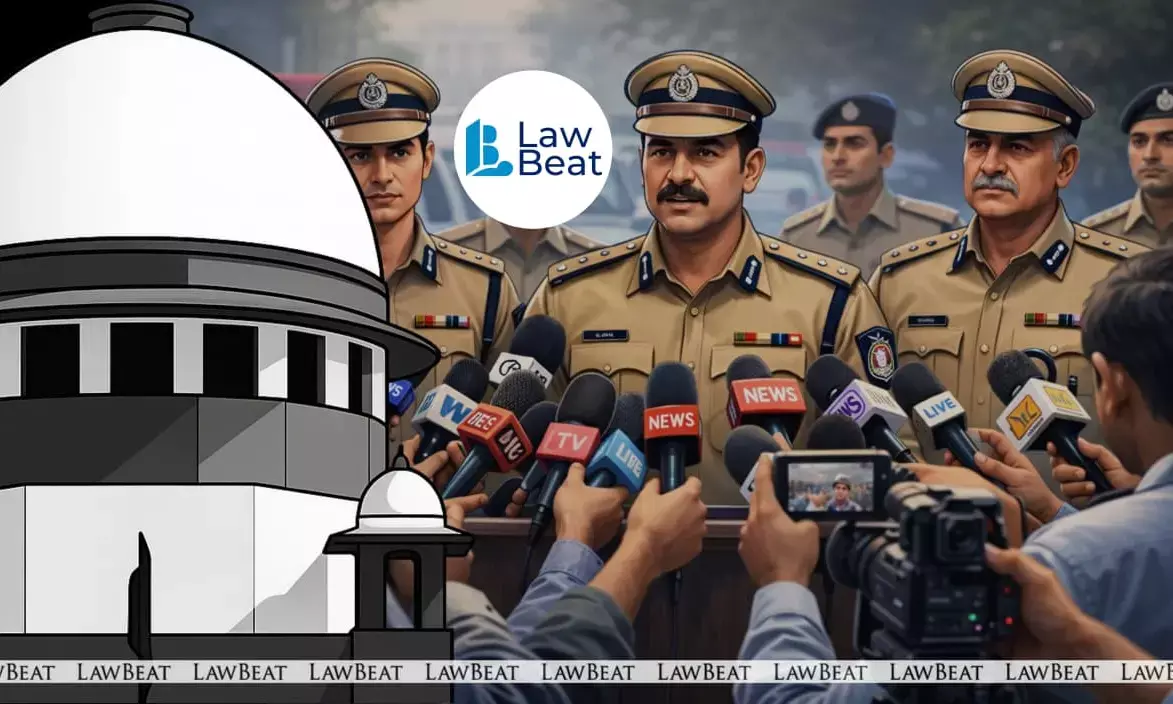
Supreme Court has directed its Registry to upload the Police Manual for media Briefing prepared by the Amicus on the Supreme Court Website.
The Supreme Court recently directed the States to evolve an appropriate policy for Media Briefing by taking into consideration the Police Manual for Media Briefing furnished by the Amicus Curiae before it.
A bench of Justices MM Sundresh and NK Singh has directed that the needful will have to be done within a period of three months from the date of receipt of a copy of the order.
Court took on record the laborious exercise undertaken by Senior counsel Gopal Sankaranarayanan, who had been appointed as the Amicus Curiae to assist the Court.
"The Police Manual for Media Briefing has been prepared by the learned Amicus, considering the views of the Union of India and the practices prevalent at the international level. Notwithstanding the time granted by this Court on earlier occasions, the States have not shown adequate interest in taking note of the Manual and doing the needful", the bench noted.
The bench went on to direct the Registry to upload the Police Manual for media Briefing on the Supreme Court Website within a period of two weeks.
The directions came in a public interest litigation filed by the Peoples Union for Civil Liberties (PUCL) in 1999, which flagged the absence of clear guidelines governing police encounters and media briefings by law enforcement agencies.
Draft Manual prepared by Senior Advocate Sankaranarayanan establishes a principled, rights-compatible, and investigation-safe framework for communications between the police and the public, as well as with the media. It aligns with the public’s legitimate interest in timely, accurate information with the dignity, privacy, and fair-trial rights of victims, witnesses, and suspects; and the integrity of police operations and criminal investigations.
The manual states that it is extremely vital in the current social media age that the Police communicate only correct, verified, and necessary information to the public to prevent the spread of incorrect information, which has the propensity to disrupt law and order. It covers all external communications: press notes, briefings, interviews, social-media posts, SMS alerts, public notices, posters, and audio-visual content.
Sankaranarayanan's manual demonstrates how communications shall not create or contribute to “trial by media" and every disclosure should balance openness with fairness, privacy, and the presumption of innocence. Police officers have been urged to restrict all briefings to verifiable procedural milestones (e.g., FIR registered, suspects arrested, investigation continuing) and avoid evidentiary details or speculative narratives.
It calls for Police spokespersons to be guided by: Press Council of India Norms of Journalistic Conduct (2022), and News Broadcasting and Digital Standards Authority (NBDSA) Guidelines, both of which prohibit sensationalism, speculative reporting, and publication of survivor or juvenile identities.
The manual also places strong emphasis on victim-and survivor-centric communication, requiring strict identity protection, trauma-informed and non-judgmental language, and avoidance of stigmatising references to caste, religion or other personal attributes