
Supreme Court Expresses Unwillingness To Interfere With 5-Year Law Degree Model
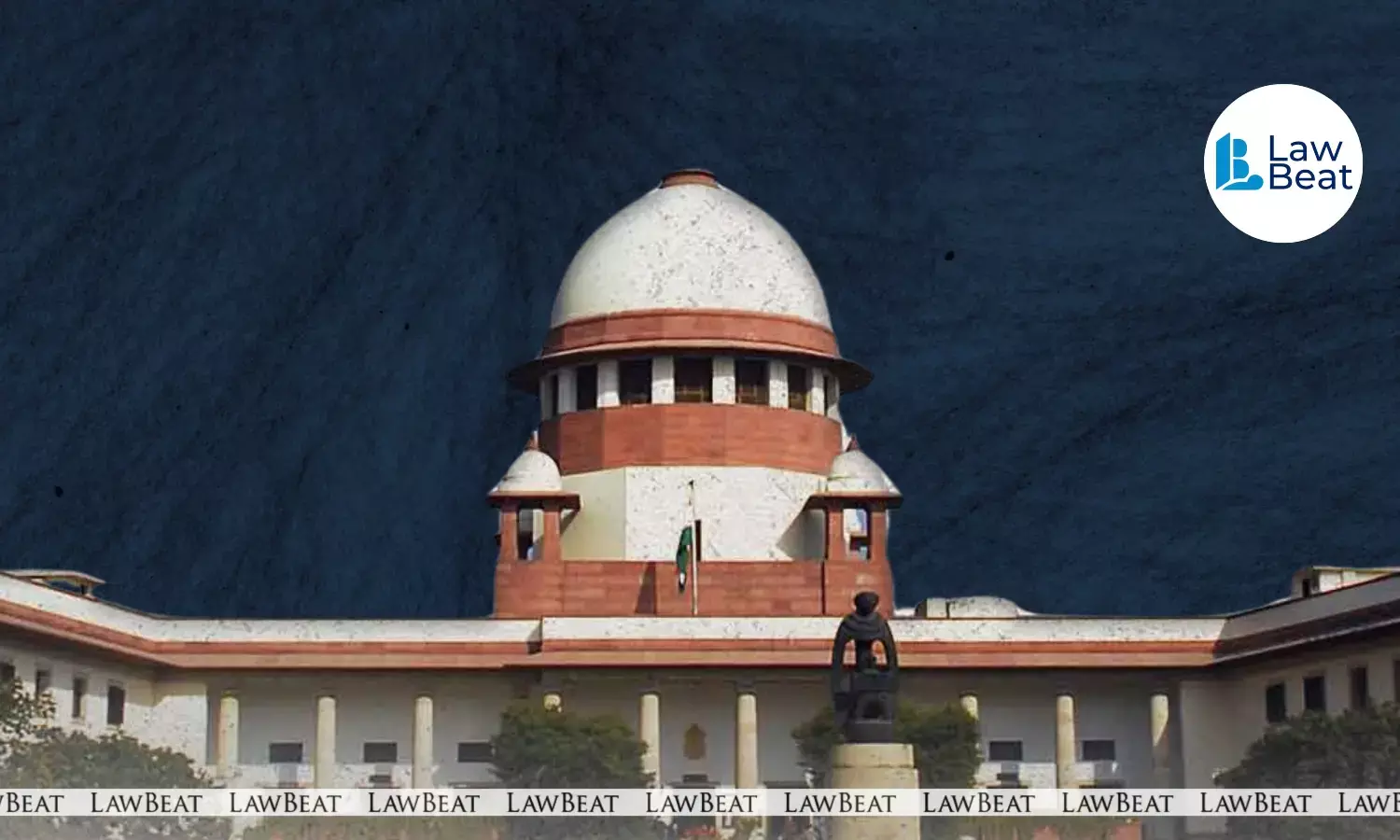
Supreme Court was hearing a PIL which calls for an overhaul of the LLB and LLM syllabus, curriculum, and duration in accordance with global standards and the National Education Policy.
While stressing on the importance of strengthening the quality of legal education in the country, the Supreme Court expressed its unwillingness to interfere with the duration of the five-year integrated LLB course, saying such policy matters cannot be decided by courts.
A bench comprising Chief Justice of India Surya Kant and Justice Joymalya Bagchi observed that while legal education is a critical issue, decisions on the structure and length of professional programmes require wider consultation among academic institutions, regulators, and other stakeholders.
These observations were made by the bench as Advocate Ashwini Upadhyay mentioned his petition for expedited listing and told the court, “This is a PIL to form a Legal Education Commission consisting of eminent jurists to frame the syllabus. All professional courses like CA and BTech are for four years, and law is five. It is failing to attract the best talent.”
"On the issue of legal education, the judiciary is just one stakeholder. There are many others who also have a say in it. Academicians, jurists, the Bar, social and policy researchers are there. There should be deliberation with them...We cannot thrust our views,” CJI Kant responded.
On Upadhyay's submission that several universities were not in favour of the five-year course, the bench asked, “then why can’t they reduce the term? Why is a court order needed?” Court was told that any change in the duration of law programmes would require a decision from the BCI. Accordingly, court directed that the matter be listed for further consideration in April or May 2026.
Last year, a Public Interest Litigation (PIL) was filed by Advocate Ashwini Upadhyay seeking the constitution of a Legal Education Commission or an expert body to review and restructure the current legal education framework in India. The plea urges a direction to the Central Government to undertake reforms in legal education in light of the National Education Policy (NEP) 2020, aiming to make legal studies more inclusive, rational, and aligned with modern educational principles.
The petitioner contends that the current five-year integrated law programmes such as BA-LLB and BBA-LLB are excessively long, financially burdensome, and academically inefficient. It is argues that the extended course duration, coupled with non-law subjects like Sociology, Political Science, History, and English, unnecessarily prolongs students’ educational journey without contributing significantly to their legal proficiency.
Quoting recent policy statements by the University Grants Commission (UGC), the PIL points out that students with four-year undergraduate degrees are now eligible to directly pursue PhD programmes and appear for the National Eligibility Test (NET), irrespective of their undergraduate stream. This development, the petitioner argues, highlights the flexibility promoted by the NEP 2020—a flexibility missing in legal education.
It raises concerns about the disproportionate financial burden imposed on students from lower and middle-income backgrounds, arguing that a five-year law programme effectively bars talented but economically disadvantaged students from entering the legal profession. In contrast, the petitioner notes, engineering degrees from premier institutions such as the IITs are completed within four years, with a more focused and streamlined curriculum.
The PIL also argues that subjects unrelated to law; such as Economics, Sociology, and History, are compulsorily taught during the first two years of integrated law programmes. At institutions like NLU Nagpur, only 32 out of 50 exams conducted over five years are related to law, while the remaining 18 pertain to non-law disciplines. This, the petitioner claims, not only dilutes the quality of legal education but also causes unnecessary stress to students, especially those from science backgrounds who have no prior exposure to humanities.
The petitioner also draws historical comparisons, noting that eminent legal figures such as the late Ram Jethmalani and Fali S. Nariman began practicing law at the ages of 17 and 21, respectively, under the previous three-year LLB structure. The new integrated model, in contrast, delays the entry of law graduates into the profession, causing unnecessary loss of productive years. "Today, the total lifespan has decreased from 100 years to 80 years, and the voting age has been reduced from 21 years to 18 years. People are maturing earlier with respect to their age. A 04-year law course will be better equipped for the young generation," the plea reads.
Case Title: Case Title: Ashwini Kumar Upadhyay v. Union of India & Ors.
Bench: CJI Kant and Justice Bagchi
Mentioning Date: March 16, 2026