
Supreme Court Gives Centre Two Weeks To File Report On CSAM, Seeks Details Of Steps Against Social Media Intermediaries
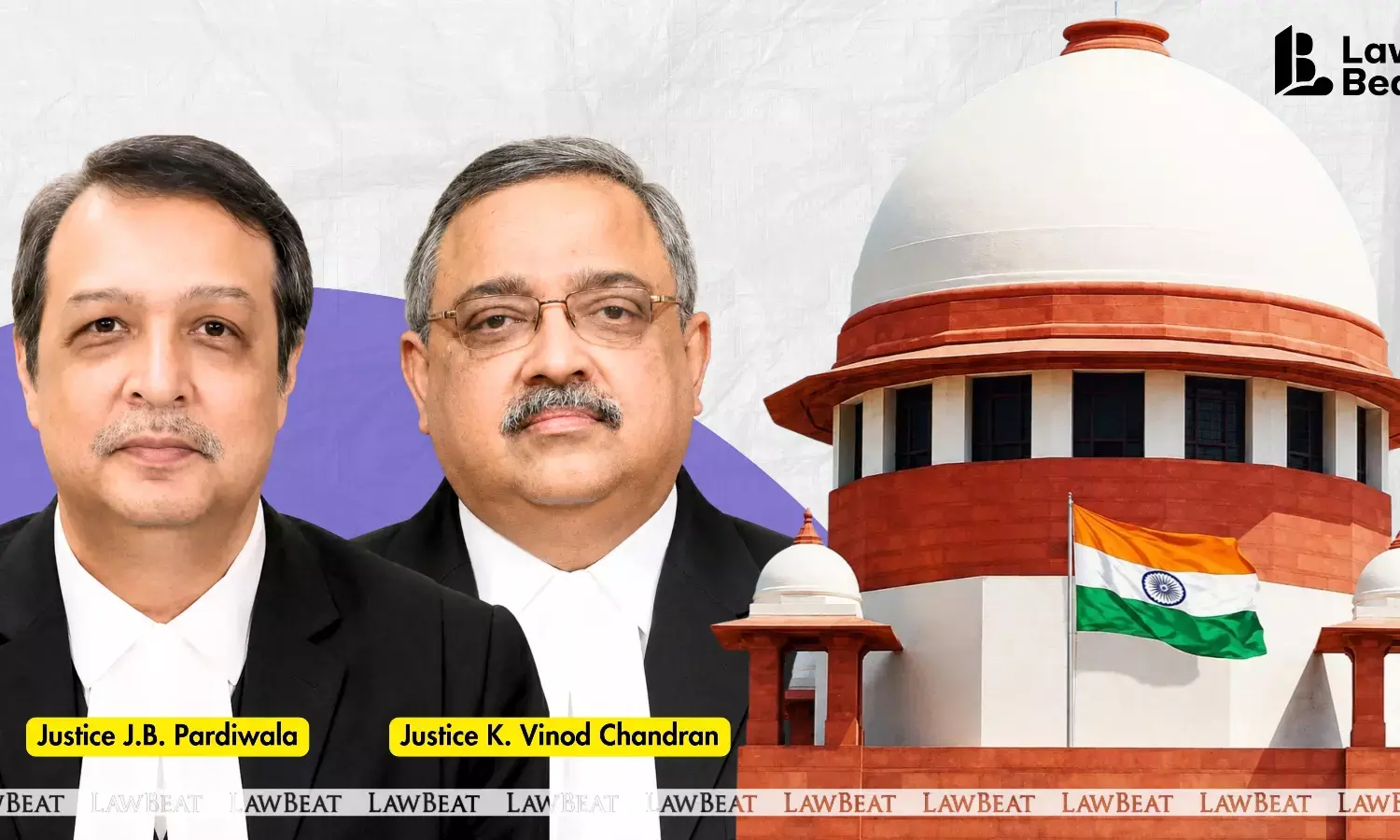
Supreme Court directs Centre to file report on CSAM and steps against social media intermediaries
The Supreme Court on Thursday directed the Union Government to file, within two weeks, a detailed counter/report explaining the steps taken to give meaningful effect to its earlier directions concerning Child Sexual Abuse Material (CSAM) and alleged lapses by social media intermediaries.
The Bench comprising Justice JB Pardiwala and Justice K. Vinod Chandran was hearing a miscellaneous application filed by the Network for Access to Justice and Multidisciplinary Outreach Foundation, seeking criminal action against social media intermediaries for allegedly failing to report CSAM to the authorities.
During the hearing, counsel appearing for the petitioner NGO submitted that several years had passed since the Supreme Court's judgment and that social media intermediaries had been requested to provide information to Indian authorities. “Only Google and Meta have done so,” counsel submitted.
The counsel sought formulation of guidelines and a Standard Operating Procedure (SOP) mandating social media companies and intermediaries to report sexual exploitative and abusive material to local police as well as cyber security authorities.
Justice Pardiwala questioned the Centre over the delay in filing its report.
“Where is your report? Where is your affidavit?” Justice Pardiwala asked.
Additional Solicitor General (ASG) KM Nataraj submitted that the report would be filed within a week.
Justice Pardiwala questioned the request for further time, observing, “Why? For such a serious matter.”
Nataraj responded that the Centre was working on the report and sought a short extension of time.
Justice Pardiwala then said, “Our last order is very clear.”
The Bench also questioned the Centre on the steps taken with social media platforms including Meta. “You all taken this issue seriously with Meta and others?” Justice Pardiwala asked.
The Court noted that its earlier order dated August 14, 2026 had directed the Union Government, through the Ministry of Electronics and Information Technology (MeitY) and the Ministry of Law and Justice, to file its counter/report.
“August 14 was our order. We are on September 24. You still need some time?” Justice Pardiwala asked.
The ASG submitted that the matter was being taken “very seriously” and informed the Court that, in the case of one of the companies, notice had already been issued and proceedings initiated.
Justice Pardiwala further asked the Centre what it proposed to do and what precautions would be taken to ensure that such CSEA material does not surface.
In its order, the Bench noted that despite its August 14 direction, no counter or report had been placed on record.
“Unfortunately, till date, no such counter or report has come on record,” the Court said, adding that “the matter before us is extremely serious.”
The Court granted the two Ministries “one last opportunity” to file their counter/report.
The report has been directed to clearly explain the steps taken by the two Ministries to give meaningful effect to the directions issued by the Supreme Court in the main judgment and the measures taken so far to curb the menace highlighted in the miscellaneous application.
The Court further directed the report to specify the precautions proposed by the Government in future to prevent lapses on the part of social media intermediaries.
The Bench also permitted the petitioner to assist the Court in formulating the proposed SOP and submit a draft. “Let them do it. They will serve you a copy. Study it. You may assist us. If there is any lacuna, if there are any deficiencies, shortcomings, we will take them up,” the Court said.
The Bench directed that the Centre's report be served at least four or five days before the matter is listed. The Court also took note of the presence of a government officer in the courtroom and asked, “Who is this officer? What is his designation?”
The officer was identified as Deepak Goel, Scientist G, Ministry of Electronics and Information Technology. “Just put it down on paper, no? [He] is personally present in the Court today,” the Court observed.
The matter has been listed for October 15, with the Court granting the Centre two weeks to file the report.
A Delhi-based NGO has approached the Supreme Court seeking to intervene in ongoing implementation proceedings arising from the Court's landmark 2024 ruling on intermediary liability for Child Sexual Abuse and Exploitative Material (CSAEM), arguing that a Standard Operating Procedure now being framed for reporting such material must not be allowed to water down platforms' mandatory duty to report offences directly to the police under the POCSO Act.
The backdrop: the September 2024 ruling on intermediary liability
In that judgment, the Supreme Court had held that a social media intermediary's compliance with Section 79 of the Information Technology Act, 2000; the "safe harbour" provision, does not by itself absolve it of liability under the POCSO Act. The Court went on to hold, in paragraph 258 of that ruling, that reporting CSAEM to the US-based National Center for Missing & Exploited Children (NCMEC) does not dispense with an intermediary's obligation to separately report the same to the Special Juvenile Police Unit (SJPU) or local police, as required under Section 19 of the POCSO Act.
The present Miscellaneous Application filed through AoR Sunita Sharma concerns the implementation of that 2024 judgment, including the formulation of an SOP, a centralised reporting mechanism, and protocols for detection, reporting, preservation and investigation of CSAEM by intermediaries and online platforms.
The applicant's core objection: don't let the file eclipse the child
The intervention application argues that any technological or administrative reporting chain must remain anchored in the child-protection framework of the POCSO Act, and not become an end in itself. It submits that upon detection of such material, the first institutional question cannot simply be who uploaded it and from where; it must equally ask: "Who is the child depicted in the material; where is that child; is the child presently safe; and does the child require immediate rescue, care and protection?"
The application draws a distinction between the digital-distribution dimension of such cases: tracing uploads, possession and circulation, and the child-protection dimension, namely identifying the child, investigating the underlying abuse, and ensuring rescue and rehabilitation. It contends that investigation of the former cannot substitute or postpone investigation of the latter, and that direct reporting to the SJPU or local police under Section 19 is what activates both the criminal investigation and the child-protection machinery simultaneously. "No SOP can dilute, defer, substitute or otherwise circumvent the statutory reporting obligation."
Flagging the SOP's drafting process
The application states that it has learnt that an SOP on reporting and handling CSAEM has been deliberated upon and prepared with the involvement of several stakeholders; the petitioner Just Rights for Children Alliance, the National Commission for Protection of Child Rights (NCPCR), the Ministry of Electronics and Information Technology (MeitY), and the Centre for Social Research, which the applicant states is associated with Meta.
The applicant submits that where an entity associated with an intermediary directly affected by the statutory reporting obligations has participated in formulating the SOP, the circumstances and implications of that involvement cannot be overlooked, and argues that an SOP, being an executive or administrative instrument, cannot be drafted to override, dilute, postpone or create exceptions to the mandatory obligations under Sections 19 and 20 of the POCSO Act. On this point, the application states that any such arrangement would, in effect, "amount to absolving or relieving them of a mandatory obligation imposed by statute and affirmed by this Hon'ble Court and would therefore run contrary to the said judgment."
The applicant also notes that the existing reporting architecture; under which CSAEM reports flow from intermediaries to NCMEC, then to India's cybercrime.gov.in/I4C portal, and only thereafter to the concerned local police once jurisdiction is identified, was built into the POCSO Rules in 2018, when local cyber-investigation capacity was still developing. It argues that this multi-layered chain must now operate in addition to, and not as a substitute for, direct reporting to the SJPU or local police, especially given India's subsequently strengthened cyber-investigation framework under the Bharatiya Nagarik Suraksha Sanhita and the Bharatiya Sakshya Adhiniyam.
Case Title: Just Rights for Children Alliance & Anr. v. S. Harish & Ors
Bench: Justice JB Pardiwala and Justice K. Vinod Chandran
Hearing Date: September 24, 2026