
Supreme Court Gives FSSAI ‘Last Chance’ On Front-of-Pack Warning Labels For High Sugar, Salt, Fat Foods
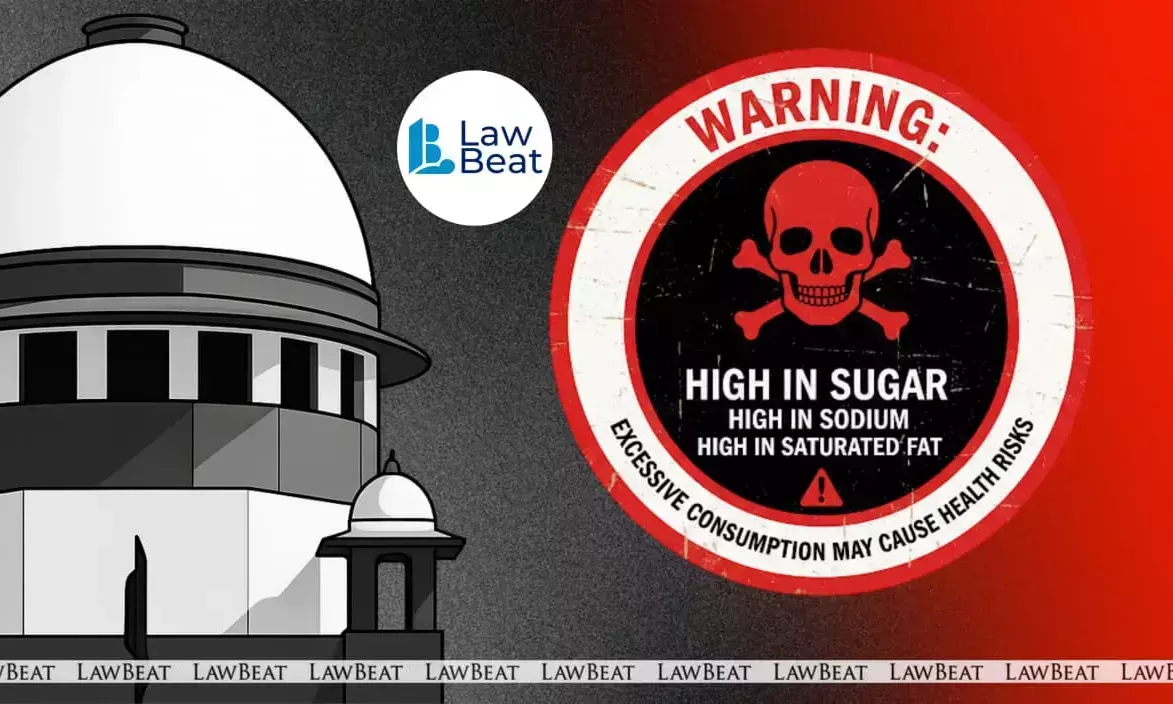
Supreme Court gave the Centre two weeks to decide on front-of-pack warning labels for packaged foods high in sugar, salt and saturated fat
The Supreme Court on Thursday gave the Union Government two weeks to place on record its final decision on introducing front-of-pack warning labels for packaged food products containing high levels of sugar, salt and saturated fat, warning that it would issue further directions if the government failed to comply.
The Bench of Justices JB Pardiwala and K Vinod Chandran was hearing the matter after earlier directing the Food Safety and Standards Authority of India (FSSAI) to consider introducing warning labels to make consumers, particularly children, aware of the nutritional risks associated with packaged foods.
During the hearing, the Bench expressed strong displeasure after counsel for the petitioner drew its attention to the minutes of an FSSAI meeting held on March 7, alleging that the position taken by the food regulator was contrary to the Court's earlier directions.
The Bench questioned Additional Solicitor General (ASG) Brijender Chahar, appearing for the Union Government, over the government's approach.
“Are you taking the court for a toss? Or else we will give you a toss like anything,” the Court remarked.
The Bench said its earlier order was clear and alleged that there was “immense pressure” from corporate houses on the authorities.
“We know the pressure on you. Why are you not abiding by our order? What have you done so far?” the Court asked.
The Bench further asked whether the Union would implement the Court's suggestions on its own or whether the Court would have to pass an order.
ASG Cites impact on Traditional Foods, MSMEs
ASG Chahar sought to explain the government's concerns, submitting that applying warning labels based on international standards could result in several traditional Indian food products carrying a red warning symbol.
He referred to foods such as namkeen and eggs and submitted that the permissible daily limit for fat was 10 grams, while two eggs could contain around 11 grams of fat.
Chahar argued that nutritional standards applicable in developed countries, where diets may contain less sugar and fat, could not necessarily be applied in the same manner to traditional Indian foods.
He also submitted that around one-third of the revenue of MSMEs comes from traditional foods and suggested that imposing such warning labels could have a significant impact on the sector.
The Bench, however, questioned the basis for resisting greater nutritional disclosure.
“Why? You don't want people of this country to remain healthy? More particularly growing children?” the Court asked.
The Bench said consumers were already aware that packaged foods contain sugar, fat and carbohydrates, and emphasised that the purpose of warning labels was to create greater public awareness.
'Manufacturers may not like us, but consumer should know what he is consuming'
The Court observed that manufacturers may not favour warning labels if they affect their business, but ultimately the decision to purchase a product would remain with the consumer.
“Why are you reluctant to do this?” the Bench asked FSSAI.
The Court stressed that the issue was being considered in public interest and was particularly concerned about the health of children who may become accustomed to consuming such products.
The Bench also rejected the suggestion that its concern was directed against any particular food product.
Court questions Manufacturers' intervention
Senior Advocate Maninder Singh, appearing for a manufacturer, sought to participate in the matter.
The Bench, however, told him that manufacturers could not dictate the Court's approach on an issue concerning public health.
“You have no say in this Mr. Singh. You are a manufacturer. There's something to do with the health of citizens. Why are you so desperate?” the Court remarked.
Senior Advocate Devadutt Kamat sought to make submissions concerning the categorisation of food products.
Kamat pointed out that products such as salted cashews and chips could potentially fall under the same warning category despite their differing nutritional profiles. He also suggested that nutritional content should be displayed along with any warning system.
The Court responded that affordability and consumption patterns had to be considered while categorising food products.
“In this country, how many people can afford dry fruits? And how many children buy Kurkure? That makes all the difference,” the Bench observed.
The Court reiterated that it was not targeting any particular product but wanted consumers to know what they were consuming.
'Should India remain an undeveloped country?'
In its order, the Bench referred to its earlier order dated February 10, 2026, and noted the petitioner's reliance on the minutes of the FSSAI meeting held on March 7.
The Court recorded the Union's submission that it was difficult to adopt international standards relating to food packaging.
Rejecting that stance, the Bench said it was concerned primarily with the health of citizens, particularly growing children.
The Court said it did not approve of the Union's position that India could not match international standards, particularly those followed by developed countries.
“Should India remain as an undeveloped country?” the Bench asked, directing the Union to consider the issue. It added that the world should know that India was concerned about the health of its citizens, particularly children.
Union given two weeks; 'Next time we will dictate the judgment'
The Bench said it was once again impressing upon the Union to seriously consider its suggestions and take an appropriate decision at the earliest.
“If the Union does it on its own, well and good, otherwise we will proceed to pass further directions,” the Court said.
The Union has been granted two weeks to place its final decision on record.
The Bench concluded with a stern warning: “This is your last chance. Next time we will dictate the judgment.”
About the PIL
The petitioner, 3S and Our Health Society, has drawn attention of the Court on the alarming rise in the spread of diabetes and associated diseases in our country.
"Diabetes has emerged as a silent epidemic in India, affecting millions of individuals and posing a significant burden on our healthcare system....Shockingly, 1 in 4 individuals in the country is grappling with diabetes, predominantly attributed to obesity", the PIL states.
On the increased consumption of junk foods, it has been submitted that pervasive marketing of these unhealthy products exacerbates the situation, leading to weight gain and elevated intake of sugars, salt, and saturated fat.
Highlighting the potential benefits of implementing Front of Package Labelling (FOPL) with warning labels as proposed by the Food Safety and Standards Authority of India (FSSAI), the plea states, "Front of Package Labelling serves as a powerful tool in empowering consumers to make informed choices about their diet and reducing the adverse impact of commercial interests of big corporates. It enables citizens to easily identify and understand the nutritional content and harmful ingredients present in packaged food and beverages, thereby making healthier choices....".
It has been submitted that the implementation of FOPL with warning labels would not only help tackle the rise in cases of diabetes and associated diseases but also address other non-communicable diseases, including obesity, hypertension, and cardiovascular conditions.
Case Title: 3S and Our Health Society v. Union of India & Ors.
Bench: Justices JB Pardiwala and K Vinod Chandran
Hearing Date: August 13, 2026