
Supreme Court Grants Interim Anticipatory Bail To Senior Doctor In Lucknow Fraud Case
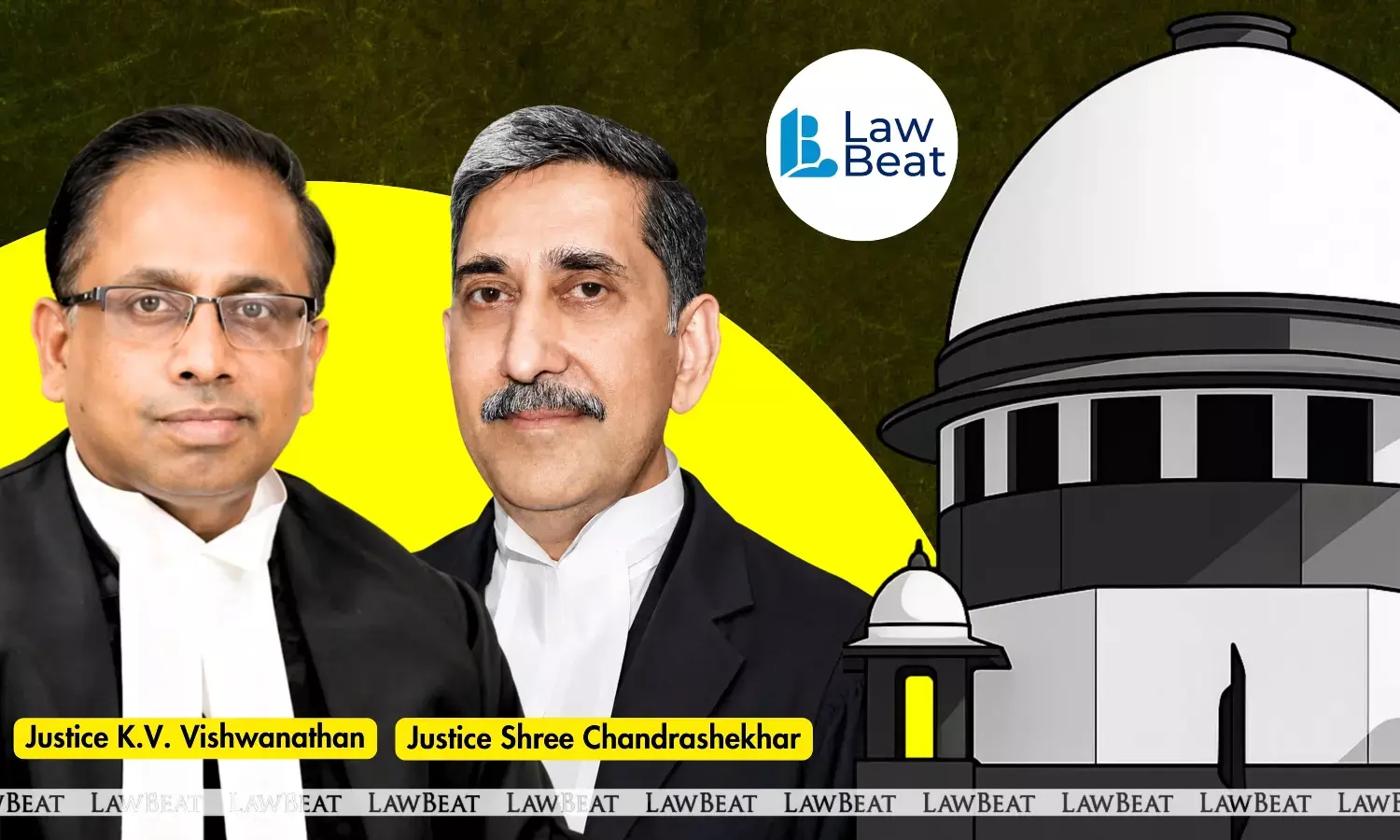
Supreme Court granted interim anticipatory bail to a senior doctor in a Lucknow fraud case while questioning the non-disclosure of his criminal antecedents in the petition
The Supreme Court on Tuesday granted interim protection from arrest to a senior doctor facing criminal proceedings in an alleged fraud case linked to a medical trust and pharmaceutical company, while expressing concern over his failure to prominently disclose his criminal antecedents in the petition.
The Bench of Justices KV Viswanathan and Shree Chandrashekhar issued notice on the doctor's plea seeking quashing of an FIR registered at Hazratganj Police Station in Lucknow and directed that, in the event of his arrest, he shall be released on anticipatory bail, subject to cooperating with the investigation.
The matter has been listed for further hearing on August 24.
Rohatgi defends senior doctor, says FIR stems from business fallout
Senior Advocate Mukul Rohatgi, appearing for the petitioner, submitted that the petitioner is a senior citizen and a doctor who has been associated with several medical colleges and hospitals in Uttar Pradesh since 1985.
He argued that the Investigating Officer's reference to the petitioner's termination from government service in the Animal Husbandry Department a day before retirement was wholly irrelevant to the question of interim protection.
Rohatgi explained that the dispute arose from a pharmaceutical company, Dawa Khana, in which the petitioner's son and the complainant each held 40% shares. According to him, the company had been acquired to supply medicines to hospitals run by a charitable trust.
He told the Court that the petitioner was never a director of the company and had no role in its management.
According to Rohatgi, the complainant allegedly failed to clear payments owed to medicine suppliers, prompting vendors to approach the petitioner because of his standing in the medical fraternity. Upon examining the company's affairs, the petitioner allegedly discovered financial irregularities and subsequently lodged a criminal complaint against the complainant.
Rohatgi further submitted that the complainant had later resigned as a director, fresh directors were inducted, and the necessary changes were duly filed with the Registrar of Companies. He also pointed out that other directors had already secured interim protection from the Allahabad High Court.
Respondent alleges material suppression
Opposing the plea, Senior Advocate Siddharth Dave argued that the petitioner had approached the Supreme Court without making a full and candid disclosure of his criminal antecedents.
Dave submitted that the same issue had been raised before the Allahabad High Court, where the respondent had specifically objected to the petitioner's reliance on interim orders obtained by other directors without disclosing his own criminal history.
Referring to the High Court proceedings, Dave argued that an earlier FIR accused the petitioner of forging documents, opening unauthorised bank accounts and diverting trust funds.
He further submitted that despite the High Court's observations, the petitioner merely stated in his pleadings before the Supreme Court that he had "no active criminal trials and no serious criminal history," instead of fully disclosing all pending criminal proceedings.
Supreme Court questions manner of disclosure
During the hearing, the Bench questioned why the petitioner's criminal cases had not been disclosed in a clear chart at the outset of the petition.
When Rohatgi responded that the matter was a quashing petition and therefore there was nothing further to disclose, the Bench disagreed. "You cannot tuck it away somewhere else. If you are relying upon it, the disclosure should be upfront in the synopsis. We have seen the disclosure," the Court observed.
Rohatgi attempted to draw attention to the respondent's antecedents, but the Bench remarked that those issues were not relevant to the limited question before it.
The hearing also witnessed a light-hearted exchange between the two senior counsel.
Siddharth Dave remarked, "I was surprised when Mr. Rohatgi started arguing so slowly. I thought he had spent all his energies in the NCLAT today. But suddenly his arguments gathered momentum."
Rohatgi responded with a smile, "I used to appear in fifteen matters a day, not just two, My Lords."
The exchange briefly lightened the courtroom before the Bench proceeded to dictate its order.
Interim Protection Granted
Issuing notice to the complainant, the Supreme Court directed that until the next date of hearing, if the petitioner is arrested in connection with FIR No. 62 of 2026 registered at Hazratganj Police Station, Lucknow, he shall be released on anticipatory bail to the satisfaction of the Investigating Officer.
The Court also directed the petitioner to cooperate with the ongoing investigation.
The matter will now be heard on August 24.
Case Title: Amod Kumar Sachan v. State of UP and Anr.
Bench: Justices KV Viswanathan and Shree Chandrashekhar
Order Date: June 30, 2026