
Supreme Court Indicates Committee-Based Review of Assam Eviction Cases; Gauhati High Court Order to Be Modified
Supreme Court of India flags use of AI generated judgments by a Trial Court.
The Supreme Court of India on Monday orally indicated that the impugned orders of the Gauhati High Court in the Assam forest eviction matters would require modification, with the Court proposing a committee-based mechanism to examine eviction cases.
Senior Advocates Chander Uday Singh and Rauf Rahim appeared for the petitioners along with AOR Adeel Ahmed, and Advocates Abdur Razzaque Bhuyan, Katyayani Suhurd, Ali Rahim, Mohsin Rahim, Nekibur Zaman Choudhury, Nasim Akram Mazarbhuiya, and Shehnaz Laskar.
Significantly, the Supreme Court had earlier intervened in the matter. On August 22, 2025, a Bench of Justices P.S. Narasimha and Atul Chandurkar had ordered maintenance of status quo on the proposed eviction drive in Negheribill, Gelajan, Bidyapur, Rajapukhuri, Uriamghat and adjoining areas of Golaghat district. Issuing notice on the residents’ special leave petitions, the Court had directed that no coercive steps be taken pending consideration of the matter.
The residents had challenged eviction notices issued by the authorities in July 2025 under the Assam Forest Regulation, 1891, alleging that their villages fell within the Doyang and South Nambar Reserved Forests. According to the petitioners, the notices granted only seven days’ time to vacate, which they argued was contrary to statutory safeguards and binding judicial precedents mandating fair notice, hearing, and rehabilitation prior to eviction.
Before the Supreme Court, the residents contended that the Gauhati High Court had erred in branding them as trespassers without examining their constitutional and statutory protections. They claimed that their forefathers had settled in the area over seven decades ago and that, over time, families had constructed permanent and semi-permanent houses, cultivated agricultural land, and developed social, economic, and religious institutions.
The petitions highlighted that the residents had been granted electricity connections, ration cards, Aadhaar numbers, and had been continuously enrolled in electoral rolls. Many families had also received housing assistance under the Pradhan Mantri Awas Yojana (Gramin), which, according to them, demonstrated consistent recognition of their residence by the State itself.
The impugned High Court judgment was assailed as raising substantial questions of constitutional and legal importance, including alleged violations of the Scheduled Tribes and Other Traditional Forest Dwellers (Recognition of Forest Rights) Act, 2006, the Right to Fair Compensation and Transparency in Land Acquisition, Rehabilitation and Resettlement Act, 2013, and the Supreme Court’s own directions in In Re: Demolitions, which require due process, prior notice, and safeguards before any demolition action.
The residents further alleged that the demolition drive had rendered entire communities homeless, destroying houses, schools, mosques, hand pumps, and agricultural fields, and amounted to mass dispossession without due process. They claimed violations of fundamental rights under Articles 14, 19, 21, 25, 300A, and the right to education under Article 21A of the Constitution.
In a similar case, the Supreme Court in July 2025, had issued notice on a contempt petition against the eviction and demolition conducted in Hasila Beel revenue village in Goalpara district of Assam. Court was therein told that the eviction and demolition exercise predominantly targeted a minority community, while leaving out similarly placed persons from the majority community untouched, thereby constituting discriminatory implementation and carrying out of the eviction drive by the authorities concerned. The eviction drive allegedly also demolished around five government primary schools, violating the Right to Education under Article 21A of the Constitution and statutory protection under the Right to Education Act, 2009.
Case Title: Abdul Khalek v. The State of Assam
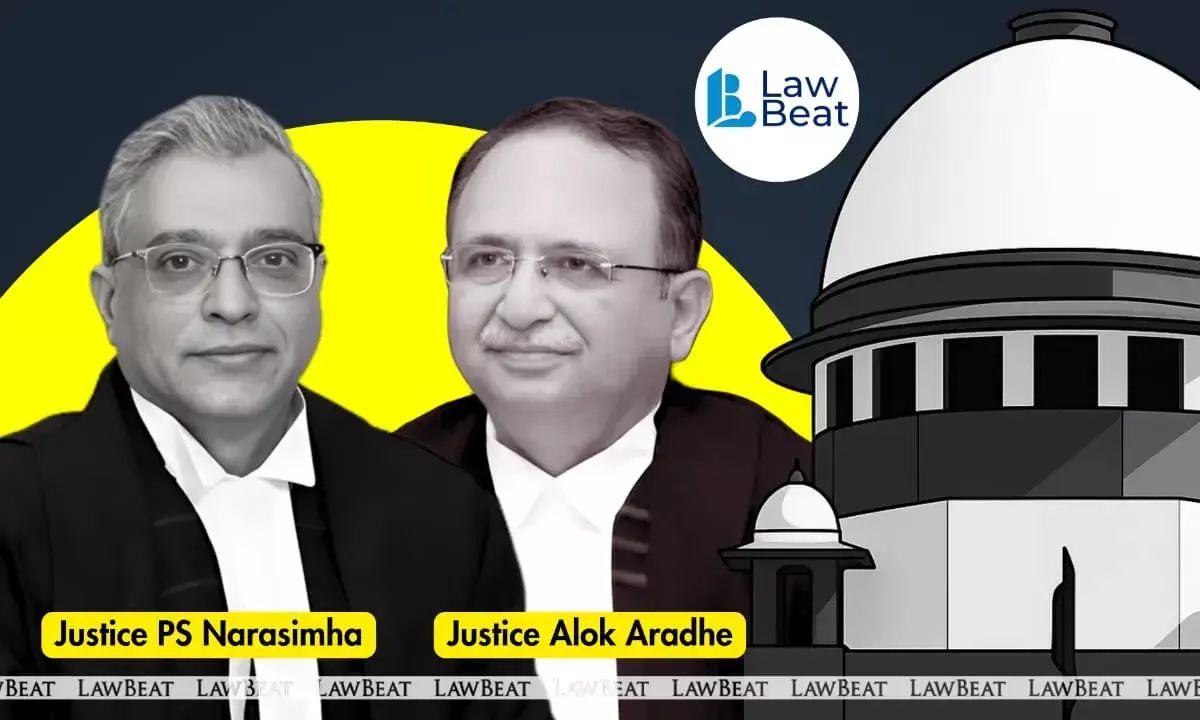
Bench: Justice PS Narasimha and Alok Aradhe
Judgment Date: February 10, 2026