
Supreme Court Issues Notice in Margadarsi Financiers Case, Says Ramoji Rao’s Death No Bar
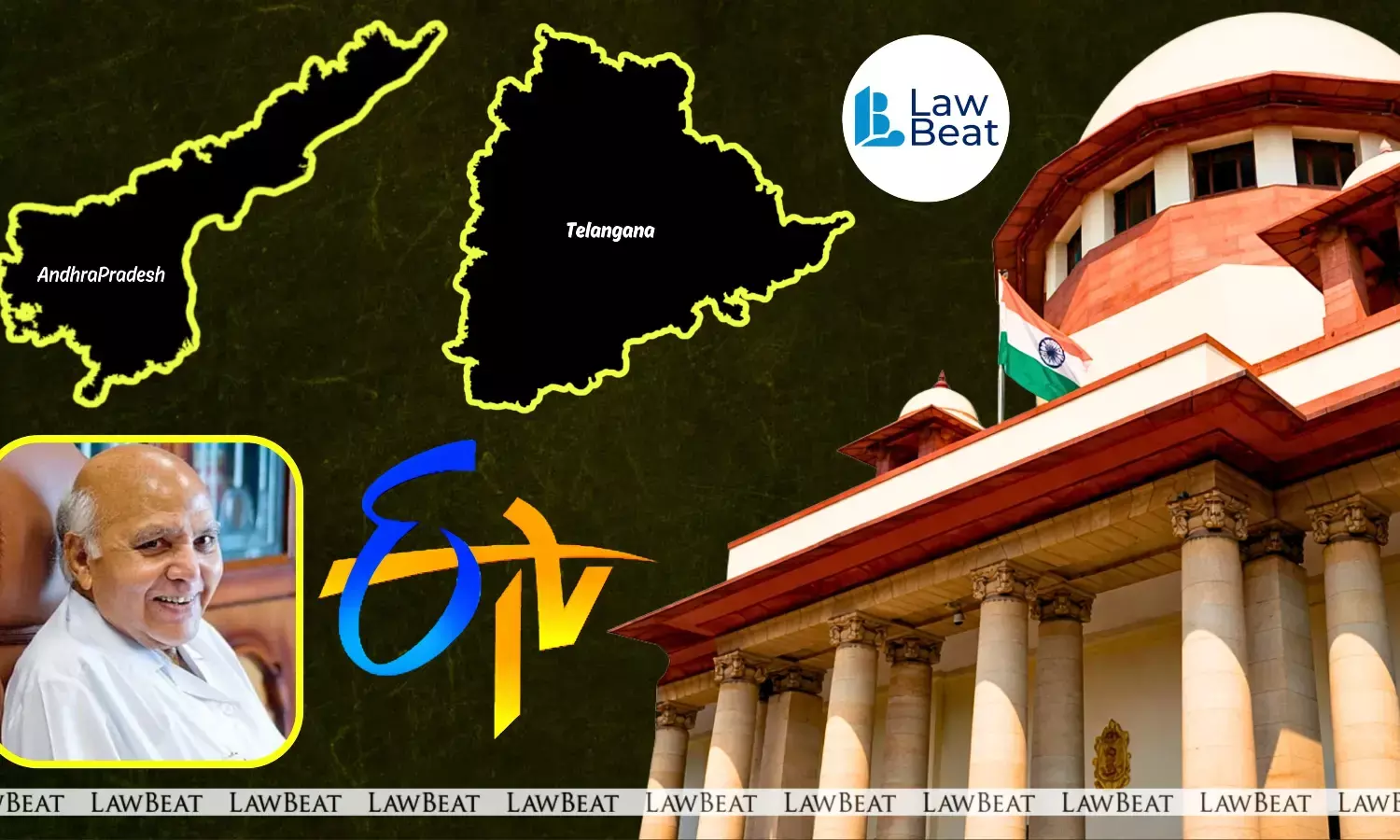
Supreme Court hears Margadarsi Financiers case, indicates asset attachment despite Ramoji Rao’s death
The Supreme Court on Monday issued notice to the States of Telangana and Andhra Pradesh, the Reserve Bank of India (RBI), and Margadarsi Financiers in a case alleging unauthorised collection of public deposits, while indicating that the entity’s assets could be attached despite the death of its proprietor, Ramoji Rao.
The bench led by Justices MM Sundresh and NK Singh made it clear that criminal proceedings involving a continuing financial entity do not abate merely due to the death of an individual.
“Though Ramoji Rao has passed away, the entity Margadarsi Financiers is still continuing,” the Court observed, adding that it may consider directing attachment of the entity’s assets.
Senior Advocate Mukul Rohatgi, appearing for the respondent, argued that the case ought to be closed in view of Rao’s demise. He submitted that an affidavit would be filed to demonstrate that dues to depositors had been settled.
During the hearing, Senior Advocate K. Parameshwar, along with Advocates Ramesh Allanki and Aruna Gupta.
The Court, however, underscored that the central issue was not limited to individual liability but extended to alleged statutory violations by the entity, particularly in relation to handling of public funds.
The matter arises from a Special Leave Petition (SLP) challenging an August 4, 2025 judgment of the Telangana High Court, which quashed criminal proceedings against Margadarsi Financiers in an alleged economic offence involving public deposits.
The petitioner contends that the High Court erred in terminating proceedings at a stage when investigation was still underway, thereby foreclosing inquiry into a larger financial irregularity. It is alleged that Margadarsi Financiers, an unincorporated entity, collected substantial sums from the public in contravention of Section 45S of the RBI Act, 1934.
According to the plea, regulatory concerns over such deposit collection date back decades, yet the entity continued its operations, with collections running into thousands of crores. The petitioner further argues that the High Court failed to comply with a prior remand order of the Supreme Court, which required fresh consideration after inviting claims from bona fide investors. Instead, the High Court is said to have adopted an unduly narrow approach by assessing the complaint as if it were exhaustive, rather than allowing the investigation to unfold. Reliance has been placed on Superintendent of Police, CBI v. Tapan Kumar Singh, where the Court held that an FIR is not expected to be an encyclopaedia of facts.
The plea also highlights Section 58B(5A) of the RBI Act, which provides for penalties including fines up to twice the amount of deposits received in violation of the law. It is argued that this statutory mandate was overlooked while quashing the complaint.
The petitioner urged the Court to restore the criminal proceedings, submitting that the impugned judgment prematurely halted investigation into serious allegations involving public money.
Case Title: Arun Kumar Undavalli v. Margadershi Financiers & Ors.
Bench: Justice MM Sundresh and NK Singh
Hearing Date: May 4, 2026