
Supreme Court Issues Notice On Encroachment Of 3 Historic Darbhanga Ponds, Seeks Response
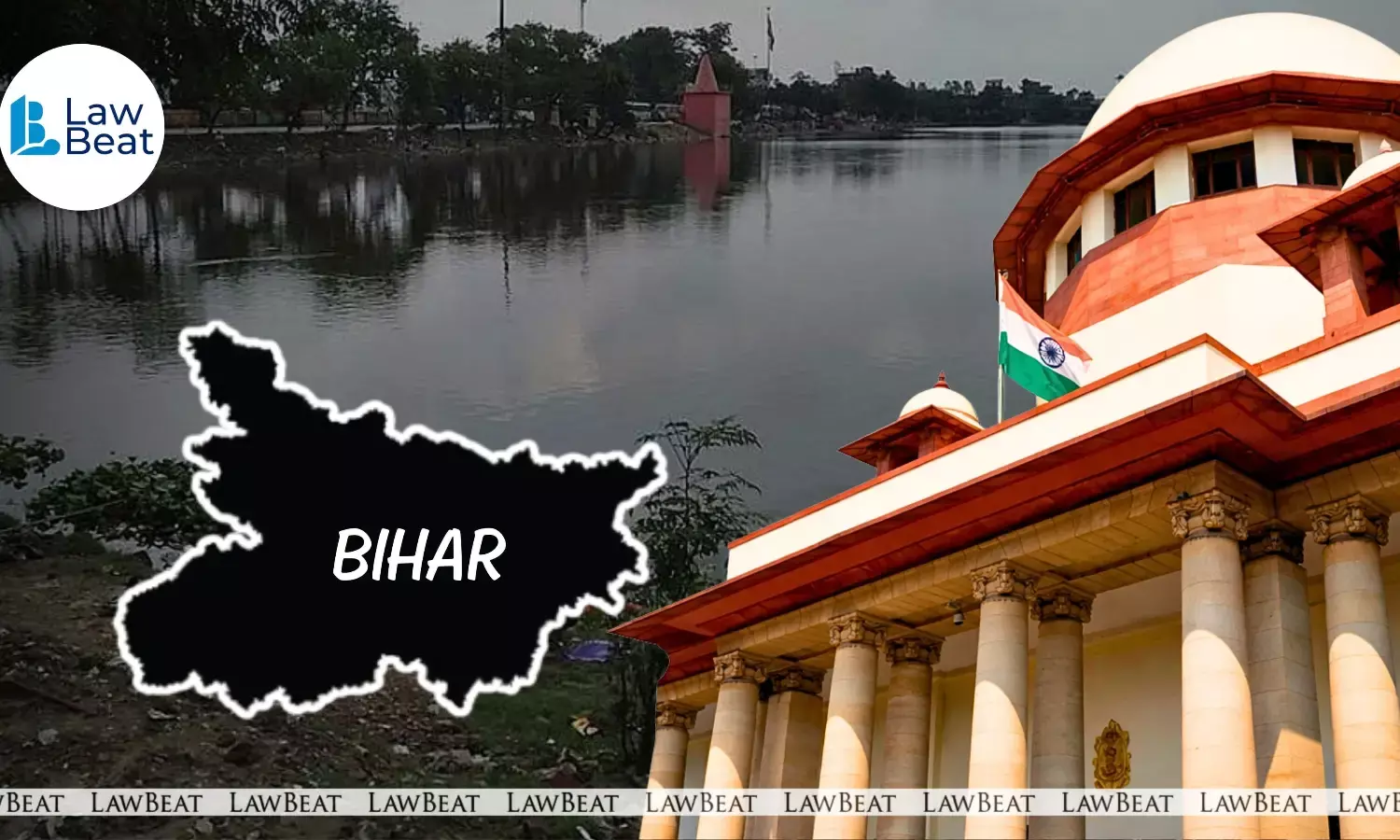
Supreme Court questions encroachment and filling of historic ponds in Bihar’s Darbhanga district
The Supreme Court on Monday expressed strong concern over the alleged large-scale encroachment and filling of three historic ponds in Bihar’s Darbhanga district, terming the situation “shocking” and warranting urgent scrutiny.
The Bench of Justice Vikram Nath and Justice Sandeep Mehta issued notice to the concerned authorities while hearing a writ petition filed by the organisation Talab Bachao Abhiyan.
The Court sought responses on the allegations that the ponds: Gangasagar, Digghi and Harahi; are being systematically filled and encroached upon, despite existing legal protections.
The matter has been listed for further hearing on May 4.
Appearing for the petitioner, Advocate Kamlesh Kumar Mishra, along with Advocates Renu and Swagat, submitted that the three ponds, each over 200–300 years old; constitute significant historical, ecological and cultural assets of the region. It was argued that the water bodies, which collectively span nearly 1.8 kilometres, are being destroyed under the guise of development activities allegedly undertaken by state agencies.
The petition filed through AoR Anurag Ojha contends that truckloads of soil are being continuously dumped into the ponds, leading to irreversible damage. It further alleges that the proposed “beautification” project includes construction of commercial and recreational facilities such as restaurants, toilets and gazebos, effectively altering the character and existence of the water bodies.
According to the plea, these actions are in direct violation of multiple binding judicial directions and environmental regulations. The petitioner has relied on prior orders of the National Green Tribunal mandating the protection and preservation of the ponds, as well as the Wetlands (Conservation and Management) Rules, 2017.
The petition also cites the Supreme Court’s ruling in Jagpal Singh v. State of Punjab, which underscored the obligation of state authorities to safeguard community resources such as ponds from encroachment. Additionally, reference was made to recent directions of the apex court in relation to restoration of water bodies, including orders concerning Ana Sagar Lake in Rajasthan.
It was further submitted that despite proceedings pending before the National Green Tribunal and earlier directions of the Patna High Court for preservation of the ponds, the alleged illegal activities have continued unchecked. The petitioner argued that the ongoing destruction reflects a “complete disregard” of judicial orders and environmental safeguards.
Highlighting the urgency, the plea states that the ponds, constructed during the reign of regional rulers between the 13th and 14th centuries, are not only vital water resources but also part of Bihar’s historical heritage. Their loss, it argues, would result in irreversible ecological and cultural damage.
Taking note of the submissions, the Supreme Court issued notice and sought responses from the authorities involved.
The prayers sought in the plea are:
1. The petition sought directions to immediately stop alleged illegal activities such as soil dumping, filling of ponds, and ongoing construction in and around Gadga Sagar, Pidri, and Harahi ponds in Darbhanga.
2. It requested removal of encroachments, debris, and illegal structures, and restoration of the ponds to their original size and boundaries as per historical records.
3. The plea urged strict compliance with a 2023 National Green Tribunal order on protection of water bodies and removal of encroachments.
4. It sought a declaration that construction of permanent or commercial structures; such as restaurants and recreational facilities, within or around the ponds is illegal and violative of environmental laws, including the Wetlands Rules, 2017.
5. The petitioner asked for ecological restoration of the ponds, including removal of dumped material and proper demarcation and protection of the water spread area.
6. It called for a comprehensive state policy for conservation and protection of ponds and lakes in Bihar, in line with environmental laws and Supreme Court rulings.
7. The plea also sought the constitution of an independent expert committee to inspect the site, assess environmental damage, and recommend remedial and compensatory measures.
Case Title: Talab Bachao Abhiyan v. State of Bihar
Bench: Justices Vikram Nath and Sandeep Mehta
Hearing Date: April 13, 2026