
Supreme Court Judge Calls Out Delhi's Glorification In Indian Legal Culture; Says It Is Not Pinnacle Of Legal Ability
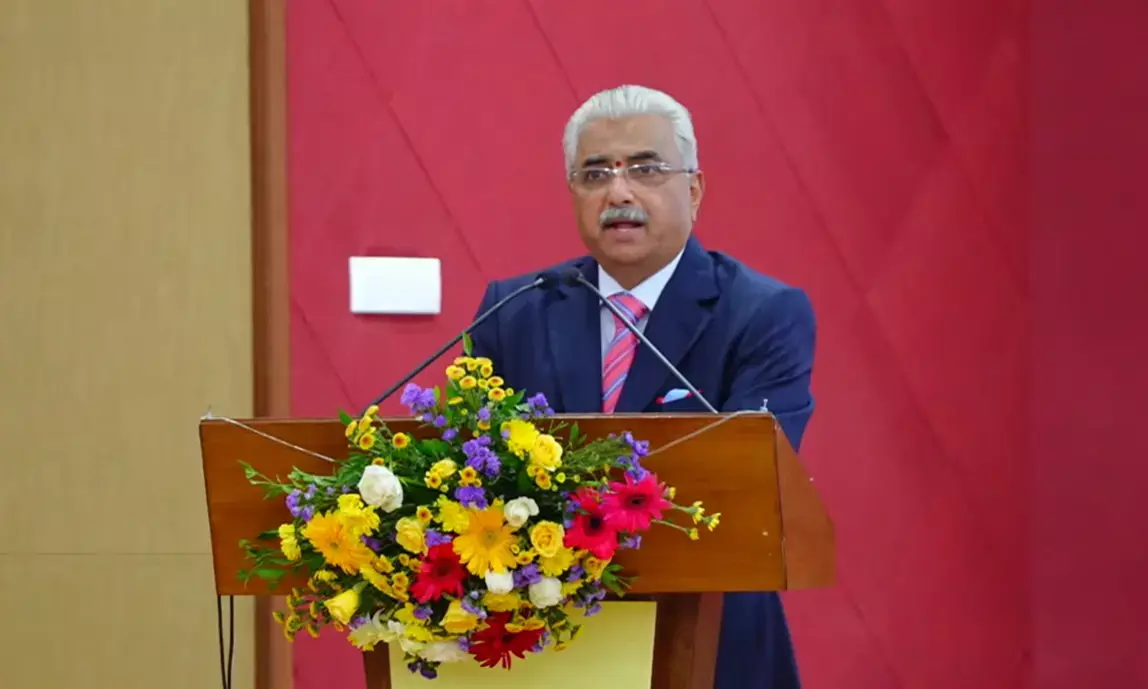
Justice Aravind Kumar spoke at a seminar on Artificial Intelligence: Prevention and Resolution of Disputes held in Bengaluru last month.
Supreme Court judge Justice Aravind Kumar recently said that Delhi is not India and India is not Delhi. Justice Kumar has made this statement in light of Delhi being considered the pinnacle of legal ability of the entire country.
"For too long, Indian culture has Indian legal culture has indulged in a misplaced glorification of Delhi. Because it is the capital, because the Supreme Court sits there, because certain categories of high value and high visibility litigation passed through, an impression has been cultivated that Delhi is the natural pinnacle of legal ability in India. That impression is utterly false," the Supreme Court judge clarified.
While speaking at a Seminar titled 'Artificial Intelligence: Prevention and Resolution of Disputes', which was conducted by the UIA India Chapter in collaboration with Bar Association of India, National Law School of India University, supported by the Karnataka Judicial Academy and the Arbitration & Conciliation Centre at Bengaluru, the judge congratulated the organizers for having chosen Bangalore as the place because it is called the silicon city of India.
"And I say this with additional preface that Delhi is not India, India is not Delhi. And that brings me to a point which in my view must be stated clearly without any hesitation. For too long, Indian culture has Indian legal culture has indulged in a misplaced glorification of Delhi...", Justice Kumar said.
On the notion that Delhi is the pinnacle of legal ability, the judge said that it is institutionally produced, commercially amplified and socially repeated but false.
"Nonetheless, Delhi is equally important. But Delhi is not India and India is not Delhi. This is not a slogan. It is only a corrective measure. A hierarchy of forums does not create a hierarchy of minds. The fact that certain disputes culminate in Delhi does not mean that legal excellence begins there. The fact that final court practice, national tribunals and high value sectors may be concentrated there does not justify the idea that one metropolitan circuit constitutes a superior regal class and that the rest of the country must merely must merely follow. The attitude must go," the judge further said.
Justice Kumar also referred to there being no constitutional caste system among bars. He said that there is no doctrine by which an advocate acquires greater intrinsic worth by proximity to the capital.
"There is no warrant for treating one metropolitan legal culture as be all and end all of Indian dispute resolution. Much of what is often projected as superiority is in truth a byproduct of litigation hierarchy, institutional concentration, visibility and praising power. It should not be mistaken for a monopoly of merit," he added.
Indian law is not manufactured in Delhi and distributed to the rest of the republic, the judge has said. He added that Indian law is argued, shaped, tested, refined, deepened across India, across high courts, district courts, tribunals, commercial courts, arbitrary institutions and bars of great ability that may not always enjoy the same visibility, but are no less serious, no less rigorous and no less vital to the legal life of this country.
Justice Kumar raised this issue in light of AI tools being developed. He said if legal AI tools are built around Delhi-centric data sets, assumptions, visibility and notions of what counts as important lawyering then technology will not democratize the profession and will only merely automate an old distortion.
"It will hardcode metropolitan hierarchy into the future. This must not happen. A model trained on a narrow data set out over fits. A legal future trained on the habits of assumptions of one city will do exactly the same. It will not serve India. It will only reproduce a capital centric imagination and mistake it for national reality. This is not acceptable in a constitutional republic as diverse, federal and multilingual and institutionally distributed as ours", the judge cautioned.