
Supreme Court Questions Challenge To ₹8 Lakh EWS Income Limit For NEET AIQ Quota, Seeks Consolidation Of Similar Cases
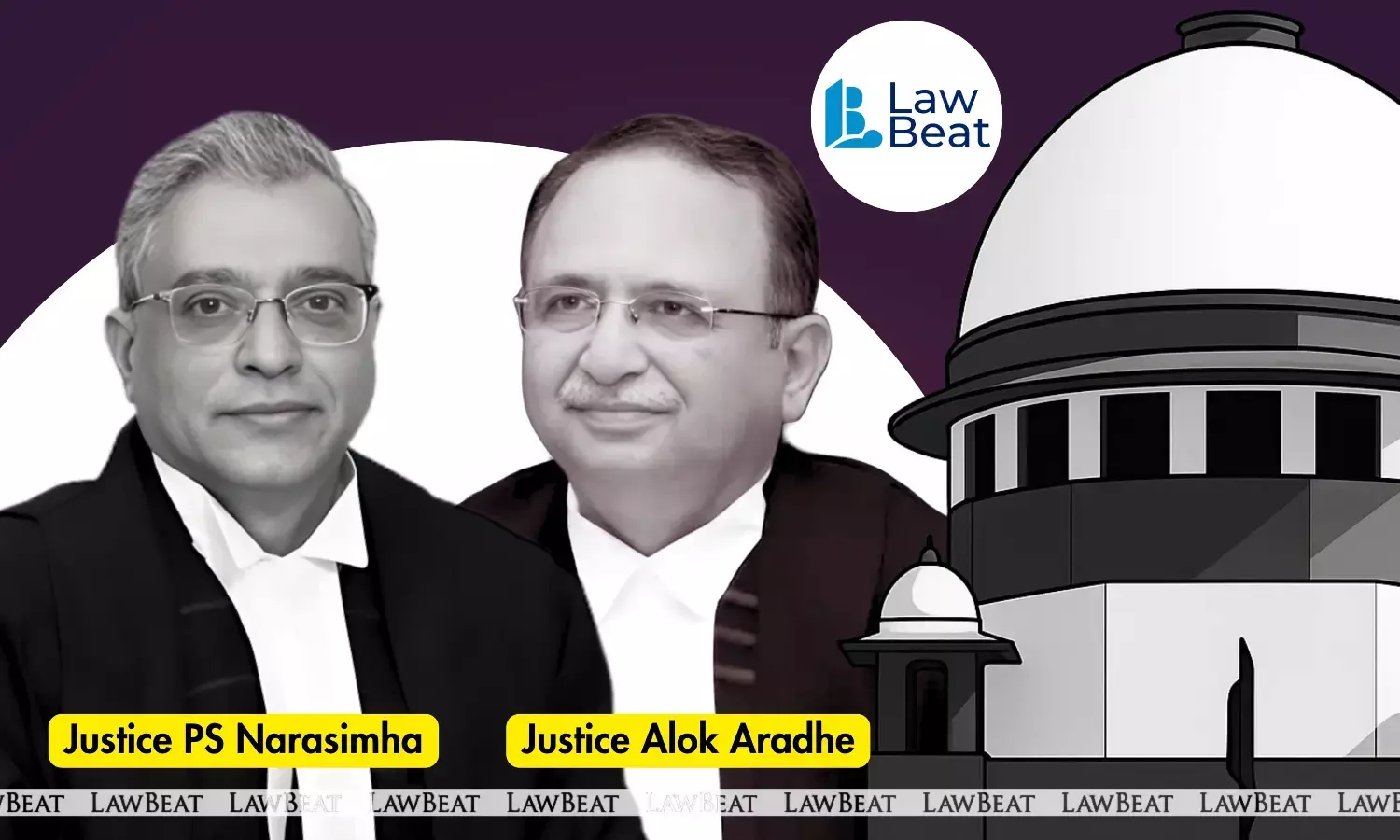
The Supreme Court heard petitions challenging the ₹8 lakh annual family income criterion for EWS reservation in the NEET All India Quota and sought details of all connected matters
The Supreme Court on Tuesday questioned the challenge to the ₹8 lakh annual family income criterion prescribed for determining eligibility under the Economically Weaker Sections (EWS) reservation in the All India Quota (AIQ) for NEET admissions, observing that the threshold appeared to be a prima facie reasonable criterion.
The Bench of Justice P.S. Narasimha and Justice Alok Aradhe was hearing petitions challenging the constitutional validity of the ₹8 lakh annual income threshold and the criteria framed pursuant to the recommendations of the Pandey Committee.
At the outset, Advocate Tanvi Dubey, appearing for the petitioners, sought an adjournment.
The Bench, however, questioned the continuing relevance of the petition relating to the 2021 admission session. "What remains in this? This relates to the 2021 session," the Court asked.
Dubey responded that the challenge to the Pandey Committee's criteria and the Office Memorandum prescribing the family income limit still survived.
The Court remarked: "It should be annual family income of ₹8 lakhs. It appears to be a prima facie reasonable criteria. On what grounds have you challenged?"
Dubey clarified that the petitioners were not challenging the constitutional validity of the 10% EWS reservation, which had already been upheld by the Constitution Bench, but only the eligibility criteria adopted by the Centre.
She submitted that the Pandey Committee itself had recommended changes, including doing away with the five-acre agricultural land limit, but those recommendations had not been implemented even after 2021.
When the Bench suggested that the challenge appeared to relate to the overall reservation exceeding 50%, Dubey clarified: "No, the criteria."
The Court observed that each State could have its own criteria and later noted that the dispute was confined to the methodology for identifying EWS beneficiaries.
During the hearing, Advocate Pawan Reley highlighted another issue arising from the EWS income criterion. Referring to his own case, he submitted that although he had secured 550th rank in the UPSC examination, he was denied EWS benefits because his income exceeded the prescribed limit by ₹20,000, allegedly due to the inclusion of standard deduction in salary calculations, contrary to the Office Memorandum.
Taking note of the multiple challenges pending before it, the Bench directed the petitioners to prepare a comprehensive chart identifying the issues involved in each matter.
Passing directions, the Court said: "Please make a list of all the connected matters, what are the issues arising in each of those matters and then tell us what needs to be done."
The Court directed Advocate Tanvi Dubey to prepare a tabulated statement of the issues arising for consideration and ascertain whether similar petitions challenging the Pandey Committee criteria for identifying the EWS category are pending before the Supreme Court.
The matter has been listed for hearing on August 11.
Case Title: Neil Aurelio Nunes v. Union of India
Bench: Justice P.S. Narasimha and Justice Alok Aradhe
Hearing Date: July 28, 2026