
Supreme Court Refuses Relief To Son Evicted Under Senior Citizens Act, Says “Let Father Live In Peace”
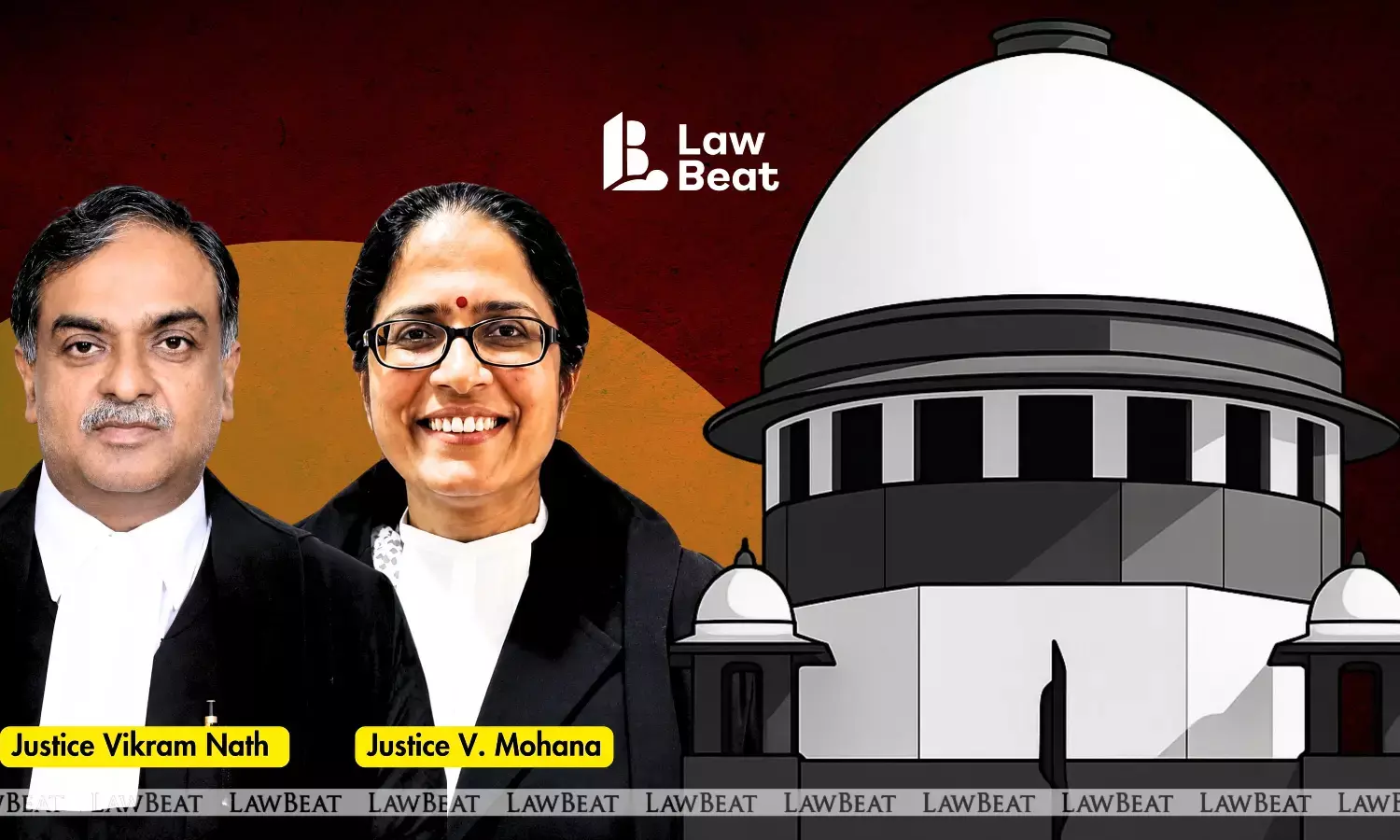
Supreme Court declines to interfere in eviction dispute between father and son under Senior Citizens Act
The Supreme Court on Thursday refused to entertain a plea filed by a Rajasthan man challenging an eviction order passed under the Maintenance and Welfare of Parents and Senior Citizens Act, 2007, while expressing disapproval over the ongoing property dispute between him and his elderly father.
The Bench of Justice Vikram Nath and Justice V. Mohana dismissed the Special Leave Petition (SLP) after a brief hearing marked by sharp observations from the Court.
“What kind of a son are you? Fighting with your own father!? It’s very unfortunate. Go and take care of your father. Let him live in peace for whatever remainder period of his life,” Justice Nath remarked.
When the Advocate Varun Bhati appearing for the petitioner argued that he too had a right in the disputed property, Justice Nath responded, “No. Next case.”
Bhati further submitted that he had a wife and son to support, but the Court declined to intervene and dismissed the plea.
The challenge was directed against a Rajasthan High Court judgment affirming an eviction order passed by the Sub-Divisional Officer-cum-Maintenance Tribunal, Bilara, in favour of the petitioner's father, a senior citizen.
The dispute concerned a residential property at Bilara in Rajasthan. The petitioner contended that the house was an ancestral and undivided family property originally purchased in 1986 in the name of his grandmother. According to him, after her death, the property devolved upon multiple legal heirs and could not be treated as the exclusive property of his father.
He argued that he had been residing in the property along with his wife and two children for years and claimed coparcenary and co-ownership rights. The petitioner also asserted that the eviction order had effectively dispossessed his family from their only residence.
The father had approached the Maintenance Tribunal under the Senior Citizens Act seeking eviction of his son from the premises, alleging harassment and seeking protection of his right to reside peacefully in the house.
The Tribunal allowed the application in February 2024 and directed the son to vacate the premises. The order was subsequently upheld by both the Single Judge and Division Bench of the Rajasthan High Court.
Before the Supreme Court, the petitioner argued that the Senior Citizens Act could not be used as a substitute for a civil court to determine disputed questions of title, co-ownership and inheritance rights. He further contended that eviction under the Act was intended to be an exceptional remedy and not a mechanism to resolve family property disputes.
The plea filed through AoR Arjun Singh Bhati also raised concerns regarding the impact of the eviction on the petitioner’s wife and children and questioned whether a co-owner could be dispossessed through summary proceedings under the Senior Citizens Act without a full-fledged civil adjudication.
However, the Supreme Court was not persuaded to interfere with the High Court's decision and dismissed the petition, effectively affirming the eviction order passed in favour of the senior citizen father.
Case Title: Ramesh Kumar Soni v. Sampat Raj Soni
Bench: Justices Vikram Nath and V. Mohana
Hearing Date: June 4, 2026