
Supreme Court Refuses To Cancel Lalu Prasad Yadav's Bail In Deoghar Fodder Scam, Orders Expedited Hearing Of Appeals
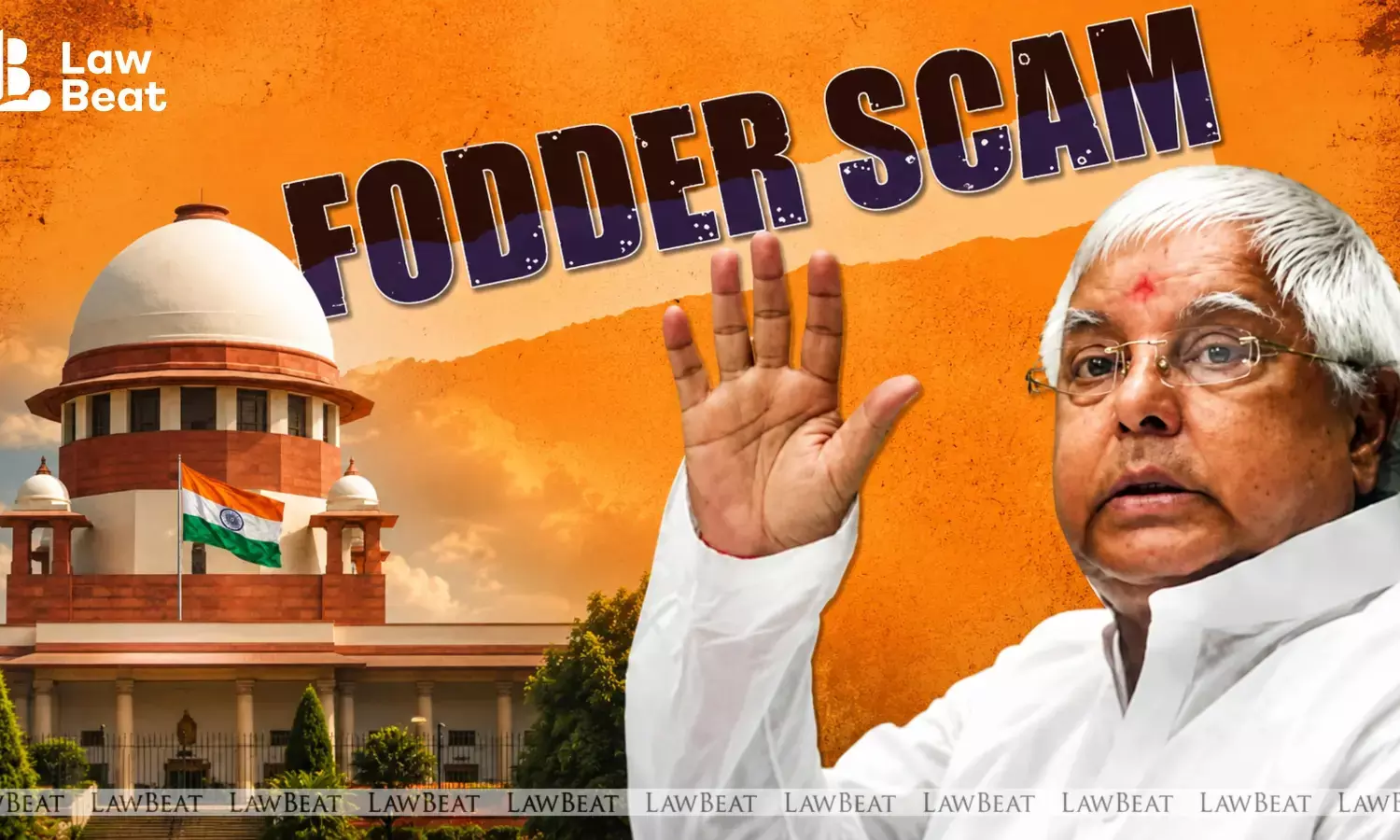
The Supreme Court refused to interfere with Lalu Prasad Yadav's bail in the Deoghar fodder scam case and asked the Jharkhand High Court to expedite the hearing of the pending appeals
The Supreme Court on Tuesday refused to interfere with the bail granted to RJD chief Lalu Prasad Yadav in the Deoghar fodder scam case, while directing the Jharkhand High Court to expedite the hearing of the criminal appeals pending since 2018.
The Bench led by Justice M.M. Sundresh and Justice PB Varale observed that it was not inclined to interfere with the bail order, particularly as nearly seven years had elapsed since the appeals were filed.
The Court requested the Jharkhand High Court to take up the pending appeals on an expedited basis.
During the hearing, Additional Solicitor General (ASG) S.V. Raju, appearing for the State of Jharkhand, challenged the High Court's order granting bail to Yadav.
Raju contended that the High Court had erroneously proceeded on the premise that Yadav had completed 50% of his sentence, arguing that the finding was factually incorrect. He submitted that Section 427 of the Code of Criminal Procedure (CrPC) governed the manner in which sentences in separate trials operate and that they could not automatically run concurrently.
"The High Court says he has undergone half of the sentence without considering that this is not a concurrent sentence," the ASG argued, adding that the trial court had incorrectly treated multiple convictions as a single sentence.
When Justice Sundresh asked about the status of the appeals, Raju replied that they had remained unheard and alleged that Yadav had delayed the proceedings. The Bench indicated that it would request the High Court to decide the appeals within six months.
Opposing the State's plea, Senior Advocate Kapil Sibal, appearing for Lalu Prasad Yadav, argued that the prosecution's interpretation of Section 427 CrPC was legally unsustainable. Sibal submitted that the provision would become relevant only at the stage of final adjudication and not while considering suspension of sentence or bail. He further argued that the High Court had consistently applied a uniform standard in sentence suspension matters.
"The judge says if a convict has completed half of the sentence, I will grant bail. That is the discretion of the judge," Sibal submitted.
After considering the submissions, the Supreme Court declined to interfere with the High Court's order granting bail to Yadav and requested the Jharkhand High Court to hear and dispose of the pending appeals at the earliest.
Intrestingly, in February this year, the Court had observed that the accused persons in the Deoghar fodder scam case, including former Bihar Chief Minister Lalu Prasad Yadav, are now well into their senior years, with many in their 60s, 70s and even 80s.
Before the High Court
Notably, in July 2025, the Jharkhand High Court had admitted the Central Bureau of Investigation's appeal seeking an increase in the sentence awarded to Lalu Prasad Yadav in connection with the Deoghar Treasury Scam. The Deoghar Treasury Scam is part of the larger Fodder Scam, which occurred when Lalu was in charge of the Animal Husbandry Department. In the instant case, he had fraudulently withdrawn INR 89.27 lakh from the Deoghar treasury between 1990 and 1994.
Lalu Prasad Yadav was convicted in December 2017 by a special CBI court in Ranchi for offences under various provisions of the Indian Penal Code and the Prevention of Corruption Act. He was sentenced to seven years’ imprisonment for his role in the fraudulent withdrawal of ₹89 lakh from the Deoghar treasury between 1991 and 1994, when he was the Chief Minister of Bihar.
Before the High Court, the CBI had filed an appeal against the trial court's sentence order, arguing that the punishment awarded to Lalu was not enough, as the offence is of a serious nature. The CBI also stated that when the alleged offence occurred, Jharkhand was part of Bihar. The investigative agency is now seeking an increased sentence, noting that it is an economic offence committed by a public servant who was then in charge of the office. The agency has further added that the investigation into the offence revealed that the RJD chief was aware of the defalcation in the Deoghar treasury. Despite this, the CBI contended that the trial court awarded a sentence of only three and a half years, whereas the offence itself carries a maximum sentence of seven years.