
Supreme Court Refuses To Entertain PIL Challenging Curbs On Journalists, YouTubers Entering Govt Schools In Rajasthan, UP
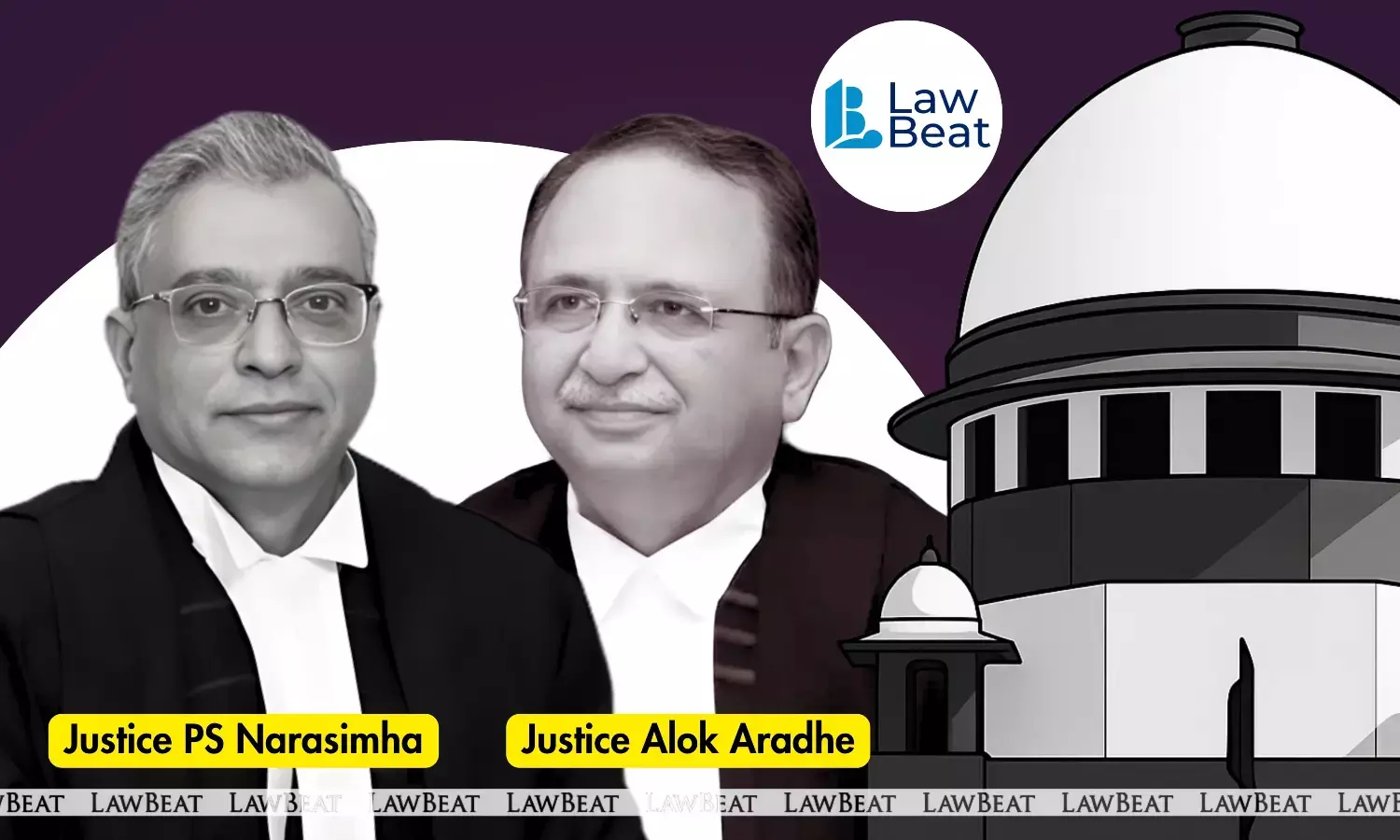
Supreme Court declines to entertain a PIL challenging Rajasthan and UP circulars restricting journalists, YouTubers and outsiders from entering government schools without permission
The Supreme Court has declined to entertain a Public Interest Litigation challenging circulars issued by the Rajasthan and Uttar Pradesh education departments that restrict the entry of outsiders, journalists, YouTubers, social-media users and civil-society representatives into government schools, along with curbs on photography, videography, interviews, audio recording and live-streaming on school premises.
The Bench of Justice P.S. Narasimha and Justice Alok Aradhe, hearing the writ petition filed under Article 32 of the Constitution, was unequivocal in its refusal.
"We are not inclined to entertain the writ petition filed under Article 32 of the Constitution of India," the Bench said in its September 1 order.
About the Petition
The plea was filed by Advocate Narendra Mishra and had earlier been mentioned before a Bench led by Chief Justice of India Surya Kant on August 25 for urgent listing.
The petitioner specifically challenged an August 16, 2026 circular issued by Rajasthan's Director of Secondary Education, which requires outsiders to obtain the school principal's prior permission before entering government school premises, along with prior written permission for any photography, videography, interviews, audio recording or live-streaming.
A parallel challenge was directed at an August 19 order by the District Basic Education Officer, Ayodhya, directing that outsiders, YouTubers and persons linked to social media not enter council schools or record photos and videos without approval; an order the petition said had also been replicated in Azamgarh, Ballia, Basti, Balrampur, Shamli and Agra.
The petitioner argued these curbs were arbitrary and disproportionate, violating Articles 14 (equality), 19(1)(a) (speech and expression), 19(1)(g) (right to practice a profession or occupation), 21 (life and personal liberty) and 21-A (right to education).
The plea drew a distinction between recording identifiable children; which it did not contest could be restricted; and independently documenting the physical condition of government schools, including alleged deficiencies in buildings, toilets, drinking water and electricity, which it said served a legitimate public-interest purpose. It sought quashing of the orders to the extent they imposed blanket restrictions, and a declaration that any regulation of school-related public documentation must meet the constitutional tests of reasonableness, necessity and proportionality.
The litigation surfaced amid the "School Thik Karo" ("Fix the Schools") campaign run by the Cockroach Janta Party (CJP) to spotlight infrastructure deficiencies in government schools across several states.
The petition cited district-wise data on schools functioning without buildings, functional toilets or drinking-water facilities in Rajasthan, and referenced a mid-August student protest in Alwar over similar demands.
Case Title: Priya Mishra v. Union of India
Bench: Justices PS Narasimha and Alok Aradhe
Order Date: September 1, 2026