
Supreme Court Refuses To Entertain Plea Seeking Reduction In Minimum Age To Contest Lok Sabha, Assembly Elections
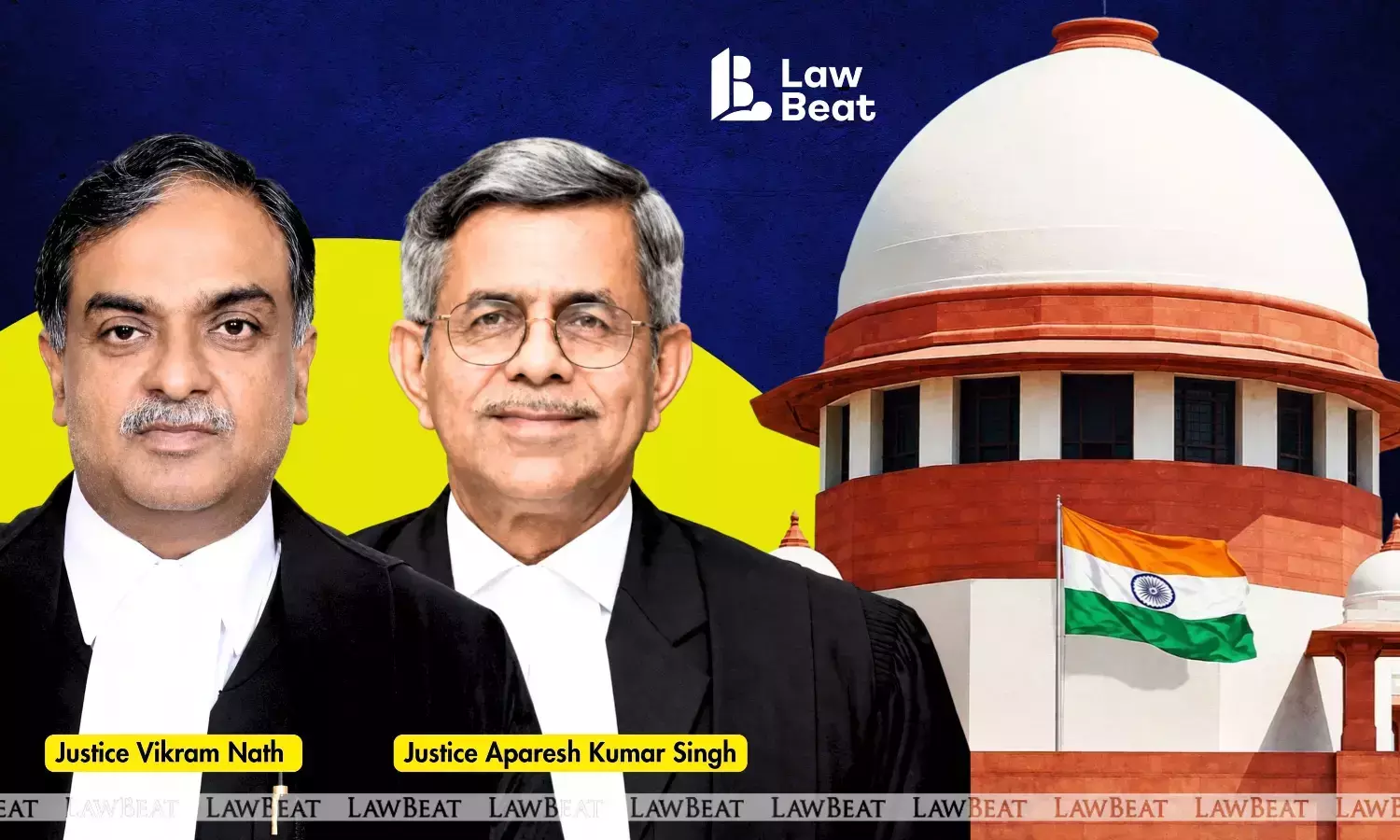
Supreme Court declines to entertain plea seeking reduction in the minimum age for contesting Parliamentary and State Legislative elections
The Supreme Court on Saturday refused to entertain a petition seeking a reduction in the minimum age prescribed for contesting elections to Parliament and State Legislatures, observing that it was not an appropriate petition for the Court to consider.
The Bench of Justice Vikram Nath and Justice Aparesh Kumar Singh was hearing the plea filed in Nalla Suresh Reddy v. Union of India, which sought parity between the minimum voting age and the minimum age required to contest elections.
During the hearing, counsel appearing for the petitioner submitted that the plea raised a "small but very vital issue" concerning the disparity between the voting age and the eligibility age for contesting elections.
The counsel pointed out that the voting age had been reduced from 21 to 18 years through the 61st Constitutional Amendment. However, the minimum age prescribed for contesting elections to the Lok Sabha and State Legislative Assemblies continues to be 25 years, while a candidate must be at least 30 years old to contest elections to the Rajya Sabha and State Legislative Councils.
The petitioner sought a corresponding reduction in the minimum age qualifications for contesting elections.
The Bench, however, was not inclined to entertain the plea.
"This is not an appropriate petition," the Court observed.
Seeking an alternative relief, the petitioner's counsel requested the Bench to direct the concerned authorities to communicate the outcome of a representation already submitted by the petitioner.
The Bench declined to issue such a direction and asked the petitioner to approach the jurisdictional High Court under Article 226 of the Constitution.
"For that, you can go to the High Court under Article 226," the Bench said.
Following the Court's observation, the petitioner's counsel sought permission to withdraw the petition. The Bench accordingly dismissed the matter as withdrawn.
The petition had arrayed the Union of India and the Election Commission of India as respondents.
Articles 84 and 173 of the Constitution prescribe the minimum age qualifications for membership of Parliament and State Legislatures, respectively. Under these provisions, a person must be at least 25 years old to become a member of the Lok Sabha or a State Legislative Assembly, and 30 years old to become a member of the Rajya Sabha or a State Legislative Council.
The voting age, meanwhile, was reduced from 21 to 18 years through the 61st Constitutional Amendment Act, 1988.
Any change to the constitutional age qualifications for membership of Parliament and State Legislatures would require a constitutional amendment.
Case Title: Nalla Suresh Reddy v. Union of India
Bench: Justices Vikram Nath and Aparesh Kumar Singh
Hearing Date: November 28, 2026